













Influence of temperature gradients on charge transport in asymmetric nanochannels
Literature Information
Publication Date
2017-09-25
DOI
10.1039/C7CP03281A
Impact Factor
3.676
Authors
Anne M. Benneker, Hans David Wendt, Rob G. H. Lammertink, Jeffery A. Wood
View Original
Abstract
Charge selective asymmetric nanochannels are used for a variety of applications, such as nanofluidic sensing devices and energy conversion applications. In this paper, we numerically investigate the influence of an applied temperature difference over tapered nanochannels on the resulting charge transport and flow behavior. Using a temperature-dependent formulation of the coupled Poisson–Nernst–Planck and Navier–Stokes equations, various nanochannel geometries are investigated. Temperature has a large influence on the total ion transport, as the diffusivity of ions and viscosity of the solution are strongly affected by temperature. We find that the selectivity of the nanochannels is enhanced with increasing asymmetry ratios, while the total current is reduced at higher asymmetry cases. Most interestingly, we find that applying a temperature gradient along the electric field and along the asymmetry direction of the nanochannel enhances the selectivity of the tapered channels even further, while a temperature gradient countering the electric field reduces the selectivity of the nanochannel. Current rectification is enhanced in asymmetric nanochannels if a temperature gradient is applied, independent of the direction of the temperature difference. However, the degree of rectification is dependent on the direction of the temperature gradient with respect to the channel geometry and the electric field direction. The enhanced selectivity of nanochannels due to applied temperature gradients could result in more efficient operation in energy harvesting or desalination applications, motivating experimental investigations.
Recommended Journals
Related Literature
Composition processing property relationship of vitrimers Based on polyethyleneimine
Natanel Jarach, Daniel Golani, Ofer Asaf, Hanna Dodiuk, Yoav Shamir, Amir Goldbourt, Samuel Kenig, Naum Naveh
2021-04-06
Paper
DOI: 10.1039/D1PY00116G
Heterobimetallic Au(i)/Y(iii) single chain nanoparticles as recyclable homogenous catalysts
Josina L. Bohlen, Bragavie Kulendran, Hannah Rothfuss, Peter W. Roesky
2021-06-28
Paper
DOI: 10.1039/D1PY00552A
The effect of alkyl chain lengths on the red-to-near-infrared emission of boron-fused azomethine conjugated polymers and their film-state stimuli-responsivities
Shunsuke Ohtani, Natsumi Yamada, Masayuki Gon, Kazuo Tanaka, Yoshiki Chujo
2021-04-19
Paper
DOI: 10.1039/D1PY00213A
Well-defined hydrogen and organofunctional polysiloxanes with spiro-fused siloxane backbones
Takahiro Kawatsu, Keita Fuchise, Katsuhiko Takeuchi, Jun-Chul Choi, Kazuhiko Sato, Kazuhiro Matsumoto
2021-03-18
Paper
DOI: 10.1039/D0PY01503B
Correction: Synthesis and structural characterization of bio-based bis(cyclic carbonate)s for the preparation of non-isocyanate polyurethanes
Kamila Błażek, Hynek Beneš, Zuzana Walterová, Sabina Abbrent, Arantxa Eceiza, Tamara Calvo-Correas, Janusz Datta
2021-03-31
Correction
DOI: 10.1039/D1PY90040D
Droplet nucleation in miniemulsion thiol–ene step photopolymerization
Marc Schmutz
2021-03-08
Paper
DOI: 10.1039/D1PY00139F
Mixed solvent synthesis of polydopamine nanospheres for sustainable multilayer flame retardant nanocoating
Simone Lazar, Ruiqing Shen, Yufeng Quan, Bethany Palen, Qingsheng Wang, Christopher J. Ellison
2021-04-01
Paper
DOI: 10.1039/D1PY00111F
You might also like
Compound Q&A
How should waste containing 2-Ethyl-4-Methyl-1H-Imidazole-5-Carbaldehyde (CAS: 88634-80-4) be handled?
Waste containing 2-Ethyl-4-Methyl-1H-Imidazole-5-Carbaldehyde (CAS: 88634-80-4) ...
88634-80-42-Ethyl-4-Methyl-1H-...
Compound Q&A
What industries use Triethoxy(octyl)silane (CAS: 1385031-14-0)?
Triethoxy(octyl)silane (CAS: 1385031-14-0) is widely used in the pharmaceuticals...
1385031-14-0Triethoxy(octyl)sila...
Compound Q&A
Are there alternatives to 3-iodo-7-nitro-1H-indazole (CAS: 864724-64-1) in synthesis?
Several alternatives to 3-iodo-7-nitro-1H-indazole (CAS: 864724-64-1) exist in t...
864724-64-13-iodo-7-nitro-1H-in...
Compound Q&A
Are there alternatives to Benzene, bis[(trimethoxysilyl)ethyl] (CAS: 266317-71-9) in synthesis?
Yes, there are alternatives to Benzene, bis[(trimethoxysilyl)ethyl] (CAS: 266317...
266317-71-9Benzene, bis[(trimet...
Compound Q&A
Is Isothiazole-3-carbonitrile (CAS: 1452-17-1) safe?
Isothiazole-3-carbonitrile (CAS: 1452-17-1) is generally considered safe when us...
1452-17-1Isothiazole-3-carbon...
Compound Q&A
Is (3-Chlorophenyl)methanol (CAS: 873-63-2) safe?
(3-Chlorophenyl)methanol (CAS: 873-63-2) is considered low to moderately toxic. ...
873-63-2(3-Chlorophenyl)meth...
Compound Q&A
How is (2S,3S)-2-Hydroxy-3-({[(2-methyl-2-propanyl)oxy]carbonyl}amino)-3-(2-naphthyl)propanoic acid (CAS: 959583-98-3) typically synthesized?
(2S,3S)-2-Hydroxy-3-({[(2-methyl-2-propanyl)oxy]carbonyl}amino)-3-(2-naphthyl)pr...
959583-98-3(2S,3S)-2-Hydroxy-3-...
Compound Q&A
What precautions should be taken when handling Methyl 2-(bromomethyl)-5-methoxybenzoate (CAS: 788081-99-2)?
Proper handling of methyl 2-(bromomethyl)-5-methoxybenzoate requires the use of ...
788081-99-2Methyl 2-(bromomethy...
Compound Q&A
What is 6,8-Dibromoimidazo[1,2-a]pyridine-2-carboxylic acid (CAS: 904805-36-3)?
6,8-Dibromoimidazo[1,2-a]pyridine-2-carboxylic acid (CAS: 904805-36-3) is an aro...
904805-36-36,8-Dibromoimidazo[1...
Compound Q&A
Is 3-Amino-5-bromo-2-pyridinecarbonitrile (CAS: 573675-27-1) safe?
3-Amino-5-bromo-2-pyridinecarbonitrile is considered safe when handled under pro...
573675-27-13-Amino-5-bromo-2-py...
Source Journal
Physical Chemistry Chemical Physics

CiteScore:
5.5
Self-citation Rate:
10.3%
Articles per Year:
3036
Physical Chemistry Chemical Physics (PCCP) is an international journal co-owned by 19 physical chemistry and physics societies from around the world. This journal publishes original, cutting-edge research in physical chemistry, chemical physics and biophysical chemistry. To be suitable for publication in PCCP, articles must include significant innovation and/or insight into physical chemistry; this is the most important criterion that reviewers and Editors will judge against when evaluating submissions. The journal has a broad scope and welcomes contributions spanning experiment, theory, computation and data science. Topical coverage includes spectroscopy, dynamics, kinetics, statistical mechanics, thermodynamics, electrochemistry, catalysis, surface science, quantum mechanics, quantum computing and machine learning. Interdisciplinary research areas such as polymers and soft matter, materials, nanoscience, energy, surfaces/interfaces, and biophysical chemistry are welcomed if they demonstrate significant innovation and/or insight into physical chemistry. Joined experimental/theoretical studies are particularly appreciated when complementary and based on up-to-date approaches.
Recommended Compounds
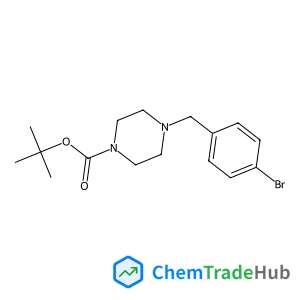
2-Methyl-2-propanyl 4-(4-bromobenzyl)-1-piperazinecarboxylate
CAS Number:
844891-10-7
Molecular Formula:
C16H23BrN2O2

![4-(4-{4-[4-Fluoro-3-(trifluoromethyl)phenyl]-1-methyl-1H-imidazol-2-yl}-1-piperidinyl)-1H-pyrazolo[3,4-d]pyrimidine 4-methylbenzenesulfonate (1:1) structure](https://static.chemtradehub.com/structs/108/1082949-68-5-00b6.webp "4-(4-{4-[4-Fluoro-3-(trifluoromethyl)phenyl]-1-methyl-1H-imidazol-2-yl}-1-piperidinyl)-1H-pyrazolo[3,4-d]pyrimidine 4-methylbenzenesulfonate (1:1) structure")
4-(4-{4-[4-Fluoro-3-(trifluoromethyl)phenyl]-1-methyl-1H-imidazol-2-yl}-1-piperidinyl)-1H-pyrazolo[3,4-d]pyrimidine 4-methylbenzenesulfonate (1:1)
CAS Number:
1082949-68-5
Molecular Formula:
C28H27F4N7O3S
Recommended Suppliers







Disclaimer
This page provides academic journal information for reference and research purposes only. We are not affiliated with any journal publishers and do not handle publication submissions. For publication-related inquiries, please contact the respective journal publishers directly.
If you notice any inaccuracies in the information displayed, please contact us at support@chemtradehub.com. We will promptly review and address your concerns.