


Mixed solvent synthesis of polydopamine nanospheres for sustainable multilayer flame retardant nanocoating
Literature Information
Publication Date
2021-04-01
DOI
10.1039/D1PY00111F
Impact Factor
5.582
Authors
Simone Lazar, Ruiqing Shen, Yufeng Quan, Bethany Palen, Qingsheng Wang, Christopher J. Ellison
View Original
Abstract
Polydopamine has been of great interest in recent years due to its utility for various functional coatings. Unfortunately, traditional deposition methods, such as polymerization from tris(hydroxymethyl)aminomethane [THAM] buffer, require lengthy film formation time. In an effort to overcome this challenge, polydopamine nanospheres were synthesized using a mixed solvent approach and alternately deposited with chitosan via layer-by-layer assembly onto flexible polyurethane foam. This environmentally-benign, multilayer nanocoating results in a 22% decrease in peak heat release rate compared to uncoated polyurethane foam (and eliminates melt dripping), while simultaneously reducing the processing time. This unique processing strategy yields a sustainable flame retardant nanocoating and provides a technological advance for polydopamine utilization.
Recommended Journals

Mini-Reviews in Medicinal Chemistry

Journal of Medical Biochemistry

CrystEngComm

Current Pharmaceutical Biotechnology

Physical Chemistry Chemical Physics

Contact Lens & Anterior Eye

Advanced Engineering Materials

Photochemical & Photobiological Sciences

Environmental Toxicology and Pharmacology

Coloration Technology
Related Literature
Interface morphology driven exchange interaction and magnetization reversal in a Gd/Co multilayer
Yogesh Kumar, M. Gupta
2022-02-16
Paper
DOI: 10.1039/D1CP05711A
First-principles calculations of the BeO monolayer with chemical functionalization
Hanlu Liu, Kehan Feng, Haiming Lu, Xiangkang Meng
2022-03-07
Paper
DOI: 10.1039/D1CP05640A
Functionalized few-layer silicene nanosheets: stability, elastic, structural, and electronic properties
Bruno Ipaves, João F. Justo, Lucy V. C. Assali
2022-03-22
Paper
DOI: 10.1039/D1CP05867C
A long-lived fluorenyl cation: efficiency booster for uncaging and photobase properties
Chahinez Abdellaoui, Volker Hermanns, Maximilian Scheurer, Andreas Dreuw, Alexander Heckel, Josef Wachtveitl
2022-02-08
Paper
DOI: 10.1039/D1CP05292F
Ultralow work function of the electride Sr3CrN3
Cuicui Wang, Miaoting Xu, Keith T. Butler, Lee A. Burton
2022-03-31
Paper
DOI: 10.1039/D1CP05623A
Correction: Is ethaline a deep eutectic solvent?
Vira Agieienko, Richard Buchner
2022-04-19
Correction
DOI: 10.1039/D2CP90068H
Lone pair driven anisotropy in antimony chalcogenide semiconductors
Xinwei Wang, Alex M. Ganose
2022-03-09
Paper
DOI: 10.1039/D1CP05373F
Tunable and switchable multi-functional terahertz metamaterials based on a hybrid vanadium dioxide–graphene integrated configuration
Yi Ren
2022-03-15
Paper
DOI: 10.1039/D1CP05594A
A transferable prediction model of molecular adsorption on metals based on adsorbate and substrate properties
Paolo Restuccia, Ehsan A. Ahmad, Nicholas M. Harrison
2022-06-22
Paper
DOI: 10.1039/D2CP01572B
Zooming in on the initial steps of catalytic NO reduction using metal clusters
Joost M. Bakker, Fumitaka Mafuné
2022-03-04
Perspective
DOI: 10.1039/D1CP05760J
You might also like
Compound Q&A
What precautions should be taken when handling lithium chloride hydrate (1:1:1) (CAS: 16712-20-2)?
When handling lithium chloride hydrate (1:1:1) (CAS: 16712-20-2), it is importan...
16712-20-2Lithium chloride hyd...
Compound Q&A
Is 4-(4H-1,2,4-Triazol-4-yl)piperidine (CAS: 690261-92-8) safe?
4-(4H-1,2,4-Triazol-4-yl)piperidine is generally considered safe for use in phar...
690261-92-84-(4H-1,2,4-Triazol-...
Compound Q&A
How should waste containing 1,3-Thiazole-2-carboxamide (CAS: 16733-85-0) be handled?
Waste containing 1,3-Thiazole-2-carboxamide (CAS: 16733-85-0) should be collecte...
16733-85-01,3-Thiazole-2-carbo...
Compound Q&A
What regulatory guidelines apply to 5-(Difluoromethyl)-2-fluorobenzonitrile (CAS: 934175-58-3)?
5-(Difluoromethyl)-2-fluorobenzonitrile (CAS: 934175-58-3) is subject to regulat...
934175-58-35-(Difluoromethyl)-2...
Compound Q&A
How is Methyl 3-acetamido-2-thiophenecarboxylate (CAS: 22288-79-5) typically synthesized?
Methyl 3-acetamido-2-thiophenecarboxylate can be synthesized by the reaction of ...
22288-79-5Methyl 3-acetamido-2...
Compound Q&A
What is 4-Isoquinolinecarbonitrile (CAS: 34846-65-6)?
4-Isoquinolinecarbonitrile is a chemical compound with the CAS number 34846-65-6...
34846-65-64-Isoquinolinecarbon...
Compound Q&A
How should Methyl 1H-1,2,3-triazole-4-carboxylate (CAS: 877309-59-6) be stored?
Store Methyl 1H-1,2,3-triazole-4-carboxylate (CAS: 877309-59-6) in a cool, dry p...
877309-59-6Methyl 1H-1,2,3-tria...
Compound Q&A
What regulatory guidelines apply to 6-Bromo[1,3]thiazolo[5,4-b]pyridin-2-amine (CAS: 1160791-13-8)?
6-Bromo[1,3]thiazolo[5,4-b]pyridin-2-amine (CAS: 1160791-13-8) is subject to the...
1160791-13-86-Bromo[1,3]thiazolo...
Compound Q&A
Is (2S,3S)-2-Ammonio-3-(3,4-dihydroxyphenyl)-3-hydroxypropanoate (CAS: 23651-95-8) safe?
(2S,3S)-2-Ammonio-3-(3,4-dihydroxyphenyl)-3-hydroxypropanoate (CAS: 23651-95-8) ...
23651-95-8(2S,3S)-2-Ammonio-3-...
Compound Q&A
What are the physical and chemical properties of 7-bromo-3-methyl-3,4-dihydroquinazolin-4-one (CAS: 1293987-84-4)?
7-Bromo-3-methyl-3,4-dihydroquinazolin-4-one is a solid with a crystalline form....
1293987-84-47-bromo-3-methyl-3,4...
Source Journal
Polymer Chemistry

CiteScore:
8.6
Self-citation Rate:
7.3%
Articles per Year:
457
Polymer Chemistry welcomes submissions in all areas of polymer science that have a strong focus on macromolecular chemistry. Manuscripts may cover a broad range of fields, yet no direct application focus is required.
Recommended Compounds
![N-[2-(2-Pyridinyl)ethyl]-1-propanamine structure](https://static.chemtradehub.com/structs/554/55496-57-6-22b4.webp "N-[2-(2-Pyridinyl)ethyl]-1-propanamine structure")
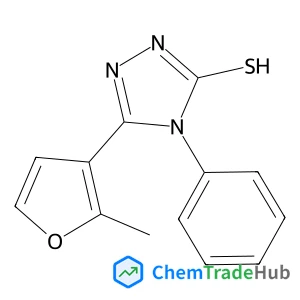
5-(2-Methyl-3-furyl)-4-phenyl-2,4-dihydro-3H-1,2,4-triazole-3-thione
CAS Number:
346464-59-3
Molecular Formula:
C13H11N3OS
Recommended Suppliers






Disclaimer
This page provides academic journal information for reference and research purposes only. We are not affiliated with any journal publishers and do not handle publication submissions. For publication-related inquiries, please contact the respective journal publishers directly.
If you notice any inaccuracies in the information displayed, please contact us at support@chemtradehub.com. We will promptly review and address your concerns.