


Electrochemical evaluation methods of vanadium flow battery electrodes
Literature Information
Publication Date
2017-05-09
DOI
10.1039/C7CP02581E
Impact Factor
3.676
Authors
Lantao Wu, Jianshe Wang, Yi Shen, Le Liu, Jingyu Xi
View Original
Abstract
Various testing methods, such as cyclic voltammetry (CV) and electrochemical impedance spectroscopy (EIS), have been employed to evaluate the electrode performance of vanadium flow batteries (VFB). Due to the variations in the testing devices and characterization parameters in the literature, a number of reported results are incomparable and even sometimes contradictory. In this report, a reliable device is proposed for the electrochemical characterization of electrode materials, and the parameter selection was demonstrated to be critical for achieving reliable evaluation and reducing the effects of side reactions. As for the structure of the graphite felt electrode, volume current density is proposed to replace the area current density as the main evaluation indicator. Furthermore, the effect of side reactions is discussed and the upper limit voltage of 1.60 V is found to be suitable in the charge process of VFB since selecting this value can greatly protect the active sites on the electrode and avoid the capacity fading caused by side reactions.
Recommended Journals

Medicinal Chemistry Research

Journal of Asian Natural Products Research

Bioorganic & Medicinal Chemistry Letters

Bioorganic & Medicinal Chemistry

Herald of the Russian Academy of Sciences

Electroanalysis

Acta Metallurgica Sinica-English Letters

Journal of the Indian Institute of Science

Atomization and Sprays

Critical Reviews in Solid State and Materials Sciences
Related Literature
Homolysis/mesolysis of alkoxyamines activated by chemical oxidation and photochemical-triggered radical reactions at room temperature
Gérard Audran, Mitchell T. Blyth, Michelle L. Coote, Georg Gescheidt, Micael Hardy, Jeffrey Havot, Maxence Holzritter, Samuel Jacoutot, Jean-Patrick Joly, Sylvain R. A. Marque, Tataye Moussounda Moussounda Koumba, Dmytro Neshchadin, Enzo Vaiedelich
2021-10-14
Research Article
DOI: 10.1039/D1QO01276B
Divergent synthesis of new α-glucosidase inhibitors obtained through a vinyl Grignard-mediated carbocyclisation
Ida M. B. Knudsen, Christinne Hedberg, Daisuke Ide, Anne Brinkø, Espen Z. Eikeland, Atsushi Kato, Henrik H. Jensen
2018-08-07
Paper
DOI: 10.1039/C8OB01433G
Ruthenium-catalyzed C–H allylation of arenes with allylic amines
Rui Yan
2018-05-07
Paper
DOI: 10.1039/C8OB00723C
Nickel catalyzed site selective C–H functionalization of α-aryl-thioamides
Debashruti Bandyopadhyay, Annaram Thirupathi, Nagsen Munjaji Dhage, Nirmala Mohanta, S. Peruncheralathan
2018-08-23
Communication
DOI: 10.1039/C8OB01712C
2-Pyridinylmethyl borrowing: base-promoted C-alkylation of (pyridin-2-yl)-methyl alcohols with ketones via cleavage of unstrained C(sp3)–C(sp3) bonds
Chuan-Ming Hong, Fei-Fei Zou, Xin Zhuang, Zhen Luo, Zheng-Qiang Liu, Li-Qing Ren, Qing-Hua Li, Tang-Lin Liu
2021-11-23
Research Article
DOI: 10.1039/D1QO01446C
High pressure-assisted low-loading asymmetric organocatalytic conjugate addition of nitroalkanes to chalcones‡
Agnieszka Cholewiak, Kamil Adamczyk, Michał Kopyt, Adrian Kasztelan, Piotr Kwiatkowski
2018-05-22
Paper
DOI: 10.1039/C8OB00561C
Unexpected cyclization of 2-(2-aminophenyl)indoles with nitroalkenes to furnish indolo[3,2-c]quinolines
Alexander V. Aksenov, Dmitrii A. Aksenov, Nicolai A. Aksenov, Leonid G. Voskressensky
2018-05-22
Paper
DOI: 10.1039/C8OB00588E
Efficient enantioselective synthesis of CF2H-containing dispiro[benzo[b]thiophene-oxindole-pyrrolidine]s via organocatalytic cycloaddition
Yabo Deng, Yongzhen Li, Yalan Wang, Shuo Sun, Sichao Ma, Pengfei Jia, Wenguang Li, Kairong Wang, Wenjin Yan
2021-11-24
Research Article
DOI: 10.1039/D1QO01392K
gem-Difluorovinylation of alkynyl bromoarenes via dual nickel-/palladium-catalyzed cross-electrophile coupling
Haotian Sun, Baojian Xiong, Yuan Yang, Jiangjun Liu, Xuemei Zhang, Zhong Lian
2021-11-23
Research Article
DOI: 10.1039/D1QO01406D
Caged cyclopropenes for controlling bioorthogonal reactivity
Pratik Kumar, Ting Jiang, Sining Li, Omar Zainul, Scott T. Laughlin
2018-05-16
Communication
DOI: 10.1039/C8OB01076E
You might also like
Compound Q&A
What industries use (1R,3S)-1,3-Cyclopentanediol (CAS: 16326-97-9)?
(1R,3S)-1,3-Cyclopentanediol finds applications in various industries. In the ph...
16326-97-9(1R,3S)-1,3-Cyclopen...
Compound Q&A
What precautions should be taken when handling N'-[4-(Dimethylamino)phenyl]-N,N-dimethyl-1,4-benzenediamine (CAS: 637-31-0)?
When handling N'-[4-(Dimethylamino)phenyl]-N,N-dimethyl-1,4-benzenediamine, it i...
637-31-0N'-[4-(Dimethylamino...
Compound Q&A
Are there alternatives to 5-(2,4-Difluorophenyl)-2-methoxypyrimidine (CAS: 1352318-16-1) in synthesis?
There are several alternatives to 5-(2,4-Difluorophenyl)-2-methoxypyrimidine in ...
1352318-16-15-(2,4-Difluoropheny...
Compound Q&A
What regulatory guidelines apply to 1-(3-Methoxyphenoxy)propan-2-ol (CAS: 382141-68-6)?
1-(3-Methoxyphenoxy)propan-2-ol (CAS: 382141-68-6) must comply with the Globally...
382141-68-61-(3-Methoxyphenoxy)...
Compound Q&A
Is Tetrodotoxin Citrate (CAS: 18660-81-6) safe?
Tetrodotoxin Citrate is extremely dangerous and should be handled with extreme c...
18660-81-6Tetrodotoxin Citrate
Compound Q&A
What are the main uses of 2-Methyl-2-propanyl [(1R,3S)-3-hydroxycyclopentyl]carbamate (CAS: 225641-84-9)?
2-Methyl-2-propanyl [(1R,3S)-3-hydroxycyclopentyl]carbamate (CAS: 225641-84-9) i...
225641-84-92-Methyl-2-propanyl ...
Compound Q&A
How should waste containing 4-(2-Hydroxyhexafluoroisopropyl)Benzoic Acid (CAS: 16261-80-6) be handled?
Waste containing 4-(2-Hydroxyhexafluoroisopropyl)Benzoic Acid (CAS: 16261-80-6) ...
16261-80-64-(2-Hydroxyhexafluo...
Compound Q&A
How is 2-Methyl-2-proanyl {(2S)-1-[(benzyloxy)amino]-3-hydroxy-3-methyl-1-oxo-2-butanyl}carbamate (CAS: 102507-19-7) typically synthesized?
2-Methyl-2-proanyl {(2S)-1-[(benzyloxy)amino]-3-hydroxy-3-methyl-1-oxo-2-butanyl...
102507-19-72-Methyl-2-propanyl ...
Compound Q&A
What is Benzeneethanamine, α-ethyl-, hydrochloride (1:1) (CAS: 20735-15-3)?
Benzeneethanamine, α-ethyl-, hydrochloride (1:1) is an organic compound with the...
20735-15-3Benzeneethanamine, α...
Compound Q&A
Are there alternatives to 3-{(E)-[4-(Dimethylamino)phenyl]diazenyl}benzoic acid (CAS: 20691-84-3) in synthesis?
In the synthesis of compounds similar to 3-{(E)-[4-(Dimethylamino)phenyl]diazeny...
20691-84-33-{(E)-[4-(Dimethyla...
Source Journal
Physical Chemistry Chemical Physics

CiteScore:
5.5
Self-citation Rate:
10.3%
Articles per Year:
3036
Physical Chemistry Chemical Physics (PCCP) is an international journal co-owned by 19 physical chemistry and physics societies from around the world. This journal publishes original, cutting-edge research in physical chemistry, chemical physics and biophysical chemistry. To be suitable for publication in PCCP, articles must include significant innovation and/or insight into physical chemistry; this is the most important criterion that reviewers and Editors will judge against when evaluating submissions. The journal has a broad scope and welcomes contributions spanning experiment, theory, computation and data science. Topical coverage includes spectroscopy, dynamics, kinetics, statistical mechanics, thermodynamics, electrochemistry, catalysis, surface science, quantum mechanics, quantum computing and machine learning. Interdisciplinary research areas such as polymers and soft matter, materials, nanoscience, energy, surfaces/interfaces, and biophysical chemistry are welcomed if they demonstrate significant innovation and/or insight into physical chemistry. Joined experimental/theoretical studies are particularly appreciated when complementary and based on up-to-date approaches.
Recommended Compounds
![N-[(1S,2R,4S)-2-Amino-4-(dimethylcarbamoyl)cyclohexyl]-N'-(5-chloro-2-pyridinyl)ethanediamide structure](https://static.chemtradehub.com/structs/480/480452-37-7-0898.webp "N-[(1S,2R,4S)-2-Amino-4-(dimethylcarbamoyl)cyclohexyl]-N'-(5-chloro-2-pyridinyl)ethanediamide structure")
N-[(1S,2R,4S)-2-Amino-4-(dimethylcarbamoyl)cyclohexyl]-N'-(5-chloro-2-pyridinyl)ethanediamide
CAS Number:
480452-37-7
Molecular Formula:
C16H22ClN5O3
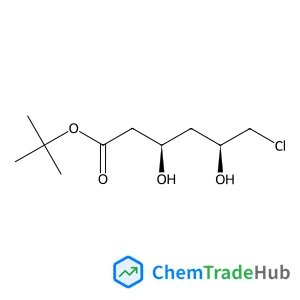
2-Methyl-2-propanyl (3R,5S)-6-chloro-3,5-dihydroxyhexanoate
CAS Number:
154026-93-4
Molecular Formula:
C10H19ClO4
Recommended Suppliers





Disclaimer
This page provides academic journal information for reference and research purposes only. We are not affiliated with any journal publishers and do not handle publication submissions. For publication-related inquiries, please contact the respective journal publishers directly.
If you notice any inaccuracies in the information displayed, please contact us at support@chemtradehub.com. We will promptly review and address your concerns.