












Does the endohedral borospherene supersalt FLi2@B39 maintain the “super” properties of its subunits?
Literature Information
Publication Date
2017-07-24
DOI
10.1039/C7CP02550E
Impact Factor
3.676
Authors
A. J. Stasyuk, M. Solà
View Original
Abstract
The behavior of the entirely unique system represented by superalkaline species incorporated into a superhalogen cage has been studied using density functional theory with hybrid functionals and the triple-ξ quality basis set level of theory. The singlet ground state and triplet excited state of an FLi2@B39 borospherene complex as well as its cationic and anionic doublet ground states have been investigated. Only the encapsulation of FLi2+ into B39 in FLi2@B39+ is a thermodynamically unfavorable process. All other systems are stabilized during encapsulation most likely via an unpaired electron delocalization process and electrostatic interaction. The calculations revealed that superhalogen and superalkaline properties inherent in the separated fragments are lost in FLi2@B39 complexes. The applicability of vertically estimated ionization potentials and electron affinities instead of adiabatic ones for description of such systems has been demonstrated.
Related Literature
Mussel-inspired multifunctional supramolecular hydrogels with self-healing, shape memory and adhesive properties
Wei Lu, To Ngai, Xiaoxia Le, Jing Zheng, Ning Zhao, Youju Huang, Xiufang Wen, Jiawei Zhang, Tao Chen
2016-08-04
Communication
DOI: 10.1039/C6PY01112H
AIE conjugated polyelectrolytes based on tetraphenylethene for efficient fluorescence imaging and lifetime imaging of living cells
Mengxia Gao, Bin Chen, Yinan Wang, Wenjun Zhou, Wallace W. H. Wong, Trevor A. Smith, Zujin Zhao
2017-06-05
Communication
DOI: 10.1039/C7PY00564D
Development of a polymer theranostic for prostate cancer
Barbara E. Rolfe, Pamela J. Russell, Brian W.-C. Tse
2014-09-04
Paper
DOI: 10.1039/C4PY00999A
Long-subchain Janus-dendritic copolymers from locally confined click reaction and generation-dependent micro-phase separation
Peng-Yun Li, Jia-Min Li, Lian-Wei Li, Xiao-Dong Ye, Wei-Dong He
2017-06-06
Paper
DOI: 10.1039/C7PY00551B
Correction: Transition from smectic nanofibers to smectic vesicles in the self-assemblies of PEG-b-liquid crystal polycarbonates
Lu Zhou, Dapeng Zhang, Sabrina Hocine, Alessia Pilone, Sylvain Trépout, Sergio Marco, Christophe M. Thomas, Jia Guo
2017-08-11
Correction
DOI: 10.1039/C7PY90126G
Chemoenzymatic synthesis of a peptide containing nylon monomer units for thermally processable peptide material application
Kenjiro Yazawa, Joan Gimenez-Dejoz, Takaaki Hikima, Keiji Numata
2017-05-23
Communication
DOI: 10.1039/C7PY00770A
Bioinspired polydopamine-induced assembly of ultrafine Fe(OH)3 nanoparticles on halloysite toward highly efficient fire retardancy of epoxy resin via an action of interfacial catalysis
Zhi Li, De-Yi Wang
2017-06-06
Paper
DOI: 10.1039/C7PY00660H
Polymer grafted recyclable magnetic nanoparticles
Lei Wang, Marcus Cole, Junting Li, Yang Zheng, Yung Pin Chen, Kristen P. Miller
2014-09-22
Paper
DOI: 10.1039/C4PY01134A
Novel sulfonated poly(arylene ether sulfone) containing hydroxyl groups for enhanced proton exchange membrane properties
So Young Lee, Sukjae Hong, Jong Hyun Jang, Dirk Henkensmeier, Sung Jong Yoo, Hyoung-Juhn Kim, Sung-Hyun Kim
2014-11-04
Paper
DOI: 10.1039/C4PY01218F
You might also like
Compound Q&A
What are the main uses of 4-Nitrophenyl phosphate disodium salt hexahydrate (CAS: 333338-18-4)?
4-Nitrophenyl phosphate disodium salt hexahydrate is primarily used as a substra...
333338-18-44-Nitrophenyl phosph...
Compound Q&A
What are the main uses of 2-(Trifluoromethyl)-1,3-oxazole-4-carboxylic Acid (CAS: 1060816-01-4)?
2-(Trifluoromethyl)-1,3-oxazole-4-carboxylic Acid (CAS: 1060816-01-4) is widely ...
1060816-01-42-(Trifluoromethyl)-...
Compound Q&A
How should 2-Fluoro-4-biphenylcarboxylic acid (CAS: 137045-30-8) be stored?
2-Fluoro-4-biphenylcarboxylic acid should be stored in a cool, dry place at room...
137045-30-82-Fluoro-4-biphenylc...
Compound Q&A
What industries use Prednisolone-21-Carboxylic Acid (CAS: 61549-70-0)?
Prednisolone-21-Carboxylic Acid is primarily used in the pharmaceutical industry...
61549-70-0Prednisolone-21-Carb...
Compound Q&A
How should 4-(Hydrazinomethyl)-1,2,3-benzenetriol (CAS: 3614-72-0) be stored?
4-(Hydrazinomethyl)-1,2,3-benzenetriol (CAS: 3614-72-0) should be stored in a co...
3614-72-04-(Hydrazinomethyl)-...
Compound Q&A
What industries use 4-Amino-1-methyl-1H-pyrazole-5-carboxylic acid hydrochloride (CAS: 92534-70-8)?
4-Amino-1-methyl-1H-pyrazole-5-carboxylic acid hydrochloride (CAS: 92534-70-8) i...
92534-70-84-Amino-1-methyl-1H-...
Compound Q&A
What regulatory guidelines apply to dehydropachymic acid (CAS: 77012-31-8)?
Dehydropachymic acid (CAS: 77012-31-8) is regulated by various agencies. It fall...
77012-31-8Dehydropachymic acid
Compound Q&A
What is the market or research trend for 6-[(2,2-Dimethylpropanoyl)amino]nicotinic acid (CAS: 898561-66-5)?
The market and research trends for 6-[(2,2-Dimethylpropanoyl)amino]nicotinic aci...
898561-66-56-[(2,2-Dimethylprop...
Compound Q&A
How should 1,10-Phenanthroline-2,9-dicarbaldehyde (CAS: 57709-62-3) be stored?
1,10-Phenanthroline-2,9-dicarbaldehyde should be stored in a cool, dry place awa...
57709-62-31,10-Phenanthroline-...
Compound Q&A
How is 5-Carbamoyl-11-oxo-10,11-dihydro-5H-dibenzo[b,f]azepin-10-yl acetate (CAS: 113952-21-9) typically synthesized?
5-Carbamoyl-11-oxo-10,11-dihydro-5H-dibenzo[b,f]azepin-10-yl acetate can be synt...
113952-21-95-Carbamoyl-11-oxo-1...
Source Journal
Physical Chemistry Chemical Physics

CiteScore:
5.5
Self-citation Rate:
10.3%
Articles per Year:
3036
Physical Chemistry Chemical Physics (PCCP) is an international journal co-owned by 19 physical chemistry and physics societies from around the world. This journal publishes original, cutting-edge research in physical chemistry, chemical physics and biophysical chemistry. To be suitable for publication in PCCP, articles must include significant innovation and/or insight into physical chemistry; this is the most important criterion that reviewers and Editors will judge against when evaluating submissions. The journal has a broad scope and welcomes contributions spanning experiment, theory, computation and data science. Topical coverage includes spectroscopy, dynamics, kinetics, statistical mechanics, thermodynamics, electrochemistry, catalysis, surface science, quantum mechanics, quantum computing and machine learning. Interdisciplinary research areas such as polymers and soft matter, materials, nanoscience, energy, surfaces/interfaces, and biophysical chemistry are welcomed if they demonstrate significant innovation and/or insight into physical chemistry. Joined experimental/theoretical studies are particularly appreciated when complementary and based on up-to-date approaches.
Recommended Compounds
![[(1S,2S,3R,4S,7R,9S,10S,12R,15S)-4,12-Diacetyloxy-15-[(2R,3S)-3-benzamido-3-phenyl-2-(2,2,2-trichloroethoxycarbonyloxy)propanoyl]oxy-1,9-dihydroxy-10,14,17,17-tetramethyl-11-oxo-6-oxatetracyclo[11.3.1.03,10.04,7]heptadec-13-en-2-yl] benzoate structure](https://static.chemtradehub.com/structs/100/100431-55-8-7104.webp "[(1S,2S,3R,4S,7R,9S,10S,12R,15S)-4,12-Diacetyloxy-15-[(2R,3S)-3-benzamido-3-phenyl-2-(2,2,2-trichloroethoxycarbonyloxy)propanoyl]oxy-1,9-dihydroxy-10,14,17,17-tetramethyl-11-oxo-6-oxatetracyclo[11.3.1.03,10.04,7]heptadec-13-en-2-yl] benzoate structure")
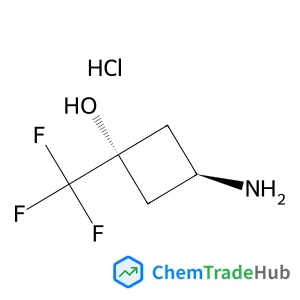
cis-3-Amino-1-(trifluoromethyl)cyclobutanol hydrochloride (1:1)
CAS Number:
1408075-16-0
Molecular Formula:
C5H9ClF3NO
Recommended Suppliers






Disclaimer
This page provides academic journal information for reference and research purposes only. We are not affiliated with any journal publishers and do not handle publication submissions. For publication-related inquiries, please contact the respective journal publishers directly.
If you notice any inaccuracies in the information displayed, please contact us at support@chemtradehub.com. We will promptly review and address your concerns.