












Long-subchain Janus-dendritic copolymers from locally confined click reaction and generation-dependent micro-phase separation
Literature Information
Publication Date
2017-06-06
DOI
10.1039/C7PY00551B
Impact Factor
5.582
Authors
Peng-Yun Li, Jia-Min Li, Lian-Wei Li, Xiao-Dong Ye, Wei-Dong He
View Original
Abstract
In this study, we put forward a divergent synthetic strategy to prepare long-chain Janus-dendritic copolymers with polystyrene (PSt) and poly(tert-butyl acrylate) (PtBA) as each half-dendron. To achieve the exact Janus arrangement, the chemical confinement of half-dendron end-groups and the local confinement of the click reaction were combined. Herein, chemical confinement was satisfied by maintaining one reactant in excess, whereas local confinement was fulfilled through “burying” one reactant. Seesaw macromonomers of PSt and PtBA with one alkynyl group at the chain centre and two bromo groups at the chain ends were used as the constituent units to divergently click onto the related half-dendron. Briefly, the first generation of Janus-dendritic copolymer, J-(PSt)1/(PtBA)1, was synthesized under chemical confinement through click chemistry onto a core molecule with two azido groups. Afterwards, the next two generations of Janus-dendritic copolymers, J-(PSt)2/(PtBA)2 and J-(PSt)3/(PtBA)3, were obtained by click reactions under alternating local and chemical confinement. Fractional precipitation and thin layer chromatography were used to purify the desired products. The variations in chemical composition, end groups, branching units and molecular weight throughout the whole synthesis were monitored with nuclear magnetic resonance spectroscopy, Fourier transfer infrared resonance spectroscopy and gel permeation chromatography. Differential scanning calorimetry, small angle X-ray scattering, atom force microscopy as well as laser light scattering were used to investigate the microphase separation behavior in bulk and the selective solvent. The research results will pave the pathway to polymer synthesis under physical principles and the study of the self-assembly of copolymers with complicated architecture.
Related Literature
FRET probe for detecting two mutations in one EGFR mRNA
Myat Thu, Kouta Yanai, Hajime Shigeto, Shohei Yamamura, Kazunori Watanabe, Takashi Ohtsuki
2023-05-11
Paper
DOI: 10.1039/D3AN00554B
A high-frequency QCM biosensing platform for label-free detection of the SARS-CoV-2 spike receptor-binding domain: an aptasensor and an immunosensor
Qingqing Zhang, Shuping Liu, Xiaohua Zhang, Cuicui Du, Shihui Si, Jinhua Chen
2023-01-20
Communication
DOI: 10.1039/D3AN00008G
CuO nanorod-decorated hemin-graphene with enhanced peroxidase-mimicking performance for the colorimetric and electrochemical determination of 4-aminophenol with a smartphone
Miaomiao Li, Xiuying Peng, Zhiguang Liu, Yan Dai, Yujie Han, Lifang Fan, Yujing Guo
2023-05-10
Paper
DOI: 10.1039/D3AN00327B
Cucurbituril-protected dual-readout gold nanoclusters for sensitive fentanyl detection
Kun Yan, Lancheng Wang, Zhihang Zhu, Shiqi Duan, Zhendong Hua, Peng Xu, Hui Xu, Chi Hu, Youmei Wang, Bin Di
2023-01-31
Paper
DOI: 10.1039/D2AN01748B
Efficient large-scale screening of viral pathogens by fragment length identification of pooled nucleic acid samples (FLIPNAS)
Xianzhen Feng, Xinyu Zhuang, Grace Lui, I-Ming Hsing
2023-03-09
Paper
DOI: 10.1039/D3AN00058C
Mobile multi-configuration clinical translational Raman system for oral cancer application
Siddra Maryam, Sanathana Konugolu Venkata Sekar, M. Daniyal Ghauri, Edward Fahy, Marcelo Saito Nogueira, Huihui Lu, Flavien Beffara, Georges Humbert, Patrick Sheahan, Ray Burke, Kiang Wei Kho, Rekha Gautam, Stefan Andersson-Engels
2023-03-06
Paper
DOI: 10.1039/D2AN01921C
An aptamer array for discriminating tetracycline antibiotics based on binding-enhanced intrinsic fluorescence
Yichen Zhao, Biwen Gao, Yijing Chen, Juewen Liu
2023-03-06
Paper
DOI: 10.1039/D3AN00154G
Development of a modularized aptamer targeting the nuclear T-cell suppressor PAC1
Zixi Hu, Zhongyu Jiang, Zeliang Yang, Liang Liu, Zhenyu Zhu, Yan Jin, Yuxin Yin
2023-05-16
Paper
DOI: 10.1039/D3AN00011G
A simple tandem mass spectrometry method for structural identification of pentose oligosaccharides
Shang-Ting Tsai, Hsu-Chen Hsu
2023-03-07
Paper
DOI: 10.1039/D3AN00068K
You might also like
Compound Q&A
What are the main uses of 4-Nitrophenyl phosphate disodium salt hexahydrate (CAS: 333338-18-4)?
4-Nitrophenyl phosphate disodium salt hexahydrate is primarily used as a substra...
333338-18-44-Nitrophenyl phosph...
Compound Q&A
What are the main uses of 2-(Trifluoromethyl)-1,3-oxazole-4-carboxylic Acid (CAS: 1060816-01-4)?
2-(Trifluoromethyl)-1,3-oxazole-4-carboxylic Acid (CAS: 1060816-01-4) is widely ...
1060816-01-42-(Trifluoromethyl)-...
Compound Q&A
How should 2-Fluoro-4-biphenylcarboxylic acid (CAS: 137045-30-8) be stored?
2-Fluoro-4-biphenylcarboxylic acid should be stored in a cool, dry place at room...
137045-30-82-Fluoro-4-biphenylc...
Compound Q&A
What industries use Prednisolone-21-Carboxylic Acid (CAS: 61549-70-0)?
Prednisolone-21-Carboxylic Acid is primarily used in the pharmaceutical industry...
61549-70-0Prednisolone-21-Carb...
Compound Q&A
How should 4-(Hydrazinomethyl)-1,2,3-benzenetriol (CAS: 3614-72-0) be stored?
4-(Hydrazinomethyl)-1,2,3-benzenetriol (CAS: 3614-72-0) should be stored in a co...
3614-72-04-(Hydrazinomethyl)-...
Compound Q&A
What industries use 4-Amino-1-methyl-1H-pyrazole-5-carboxylic acid hydrochloride (CAS: 92534-70-8)?
4-Amino-1-methyl-1H-pyrazole-5-carboxylic acid hydrochloride (CAS: 92534-70-8) i...
92534-70-84-Amino-1-methyl-1H-...
Compound Q&A
What regulatory guidelines apply to dehydropachymic acid (CAS: 77012-31-8)?
Dehydropachymic acid (CAS: 77012-31-8) is regulated by various agencies. It fall...
77012-31-8Dehydropachymic acid
Compound Q&A
What is the market or research trend for 6-[(2,2-Dimethylpropanoyl)amino]nicotinic acid (CAS: 898561-66-5)?
The market and research trends for 6-[(2,2-Dimethylpropanoyl)amino]nicotinic aci...
898561-66-56-[(2,2-Dimethylprop...
Compound Q&A
How should 1,10-Phenanthroline-2,9-dicarbaldehyde (CAS: 57709-62-3) be stored?
1,10-Phenanthroline-2,9-dicarbaldehyde should be stored in a cool, dry place awa...
57709-62-31,10-Phenanthroline-...
Compound Q&A
How is 5-Carbamoyl-11-oxo-10,11-dihydro-5H-dibenzo[b,f]azepin-10-yl acetate (CAS: 113952-21-9) typically synthesized?
5-Carbamoyl-11-oxo-10,11-dihydro-5H-dibenzo[b,f]azepin-10-yl acetate can be synt...
113952-21-95-Carbamoyl-11-oxo-1...
Source Journal
Polymer Chemistry

CiteScore:
8.6
Self-citation Rate:
7.3%
Articles per Year:
457
Polymer Chemistry welcomes submissions in all areas of polymer science that have a strong focus on macromolecular chemistry. Manuscripts may cover a broad range of fields, yet no direct application focus is required.
Recommended Compounds
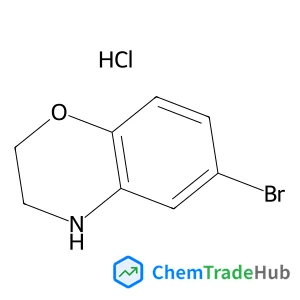
6-Bromo-3,4-dihydro-2H-1,4-benzoxazine hydrochloride (1:1)
CAS Number:
1260803-10-8
Molecular Formula:
C8H9BrClNO
Recommended Suppliers




Disclaimer
This page provides academic journal information for reference and research purposes only. We are not affiliated with any journal publishers and do not handle publication submissions. For publication-related inquiries, please contact the respective journal publishers directly.
If you notice any inaccuracies in the information displayed, please contact us at support@chemtradehub.com. We will promptly review and address your concerns.