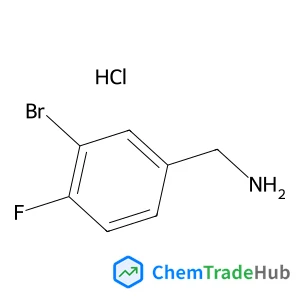
1-(3-Bromo-4-fluorophenyl)methanamine hydrochloride (1:1)
CAS Number:
202865-68-7
Molecular Formula:
C7H8BrClFN
Jay R. Walton, Luis A. Rivera-Rivera, Robert R. Lucchese, John W. Bevan
The concept of chemical bonding is normally presented and simplified through two models: the covalent bond and the ionic bond. Expansion of the ideal covalent and ionic models leads chemists to the concepts of electronegativity and polarizability, and thus to the classification of polar and non-polar bonds. In addition, the intermolecular interactions are normally viewed as physical phenomena without direct correlation to the chemical bond in any simplistic model. Contrary to these traditional concepts of chemical bonding, recently developed canonical approaches demonstrate a unified perspective on the nature of binding in pairwise interatomic interactions. This new canonical model, which is a force-based approach with a basis in fundamental molecular quantum mechanics, confirms much earlier assertions that in fact there are no fundamental distinctions among covalent bonds, ionic bonds, and intermolecular interactions including the hydrogen bond, the halogen bond, and van der Waals interactions.

Saudi Pharmaceutical Journal

Russian Journal of Applied Chemistry

Current Opinion in Colloid & Interface Science

Russian Journal of General Chemistry

Chemistry Education Research and Practice

Journal of Saudi Chemical Society

Russian Journal of Bioorganic Chemistry

Organic Process Research & Development

Journal of Peptide Science

Russian Journal of Coordination Chemistry
Wei Chen
DOI: 10.1039/C3TA12067H
Alexander Weigel, Matthias Pfaffe, Mohsen Sajadi, Rainer Mahrwald, Roberto Improta, Vincenzo Barone, Dario Polli, Giulio Cerullo, Nikolaus P. Ernsting, Fabrizio Santoro
DOI: 10.1039/C2CP41522D
Feika Bian, Huan Wang, Lingyu Sun, Yuxiao Liu, Yuanjin Zhao
DOI: 10.1039/C8TB00946E
Sabrina Aufar Salma, Dong Woo Kim, Cuong Minh Quoc Le, Byung-Hyun Ahn, Gun-Do Kim, Kwon Taek Lim
DOI: 10.1039/C8PY00961A
Qian Cheng, Shengke Li, Chen Sun, Ludan Yue, Ruibing Wang
DOI: 10.1039/C8QM00460A
Hao Su, Yiwen Li, Kan Yue, Zhao Wang, Pengtao Lu, Xueyan Feng, Xue-Hui Dong, Shuo Zhang, Stephen Z. D. Cheng
DOI: 10.1039/C4PY00107A
Jing Li, Zhenzhen Yang, Hanxun Qiu, Yigang Dai, Qingbin Zheng, Guang-Ping Zheng, Junhe Yang
DOI: 10.1039/C3TA12228J
When considering alternatives to 1-(4-Chlorophenyl)-N-hydroxymethanimine (CAS: 3...
This compound should be stored in a cool, dry place away from direct sunlight. I...
3-(4-Bromophenyl)-5-(2-fluorophenyl)-1,2,4-oxadiazole is synthesized through a m...
5-Chloro-2-(4-chlorophenyl)-4-methyl-6-[3-(1-piperidinyl)propoxy]pyrimidine (CAS...
2-Chloro-4-(difluoromethoxy)pyridine is used in the pharmaceutical industry for ...
3-Chloro-6-methylpyridazine (CAS: 1121-79-5) is classified under the Globally Ha...
Several alternatives can be used in the synthesis of Methyl 4,5-dimethyl-2-nitro...
Alternatives to (2E,2'E)-3,3'-(1,4-Phenylene)bisacrylaldehyde include other acry...
3-Amino-5-chloropyridin-2-ol hydrochloride is an organic compound with the CAS n...
When handling 6,7-Difluoro-2,3-dihydro-4H-chromen-4-one, it is essential to wear...

Physical Chemistry Chemical Physics (PCCP) is an international journal co-owned by 19 physical chemistry and physics societies from around the world. This journal publishes original, cutting-edge research in physical chemistry, chemical physics and biophysical chemistry. To be suitable for publication in PCCP, articles must include significant innovation and/or insight into physical chemistry; this is the most important criterion that reviewers and Editors will judge against when evaluating submissions. The journal has a broad scope and welcomes contributions spanning experiment, theory, computation and data science. Topical coverage includes spectroscopy, dynamics, kinetics, statistical mechanics, thermodynamics, electrochemistry, catalysis, surface science, quantum mechanics, quantum computing and machine learning. Interdisciplinary research areas such as polymers and soft matter, materials, nanoscience, energy, surfaces/interfaces, and biophysical chemistry are welcomed if they demonstrate significant innovation and/or insight into physical chemistry. Joined experimental/theoretical studies are particularly appreciated when complementary and based on up-to-date approaches.