












Non-precious Ir–V bimetallic nanoclusters assembled on reduced graphenenanosheets as catalysts for the oxygen reduction reaction
Literature Information
Publication Date
2013-07-25
DOI
10.1039/C3TA12067H
Impact Factor
12.732
Authors
Wei Chen
View Original
Abstract
IrxV bimetallic nanoclusters assembled on reduced graphene nanosheets (IrxV/rGO) with different compositions (x = 2, 11, 14, 21) were synthesized by a simple surfactant-free solution phase process at varied ratios of IrCl3 and NH4VO3 precursors. The structural characterizations confirmed that the synthesized nanoclusters with a clean surface were densely and uniformly assembled on rGO nanosheets with an average size of around 2 nm. The electrochemical measurements demonstrated that the electrocatalytic activities of IrxV/rGO hybrids for the oxygen reduction reaction (ORR) in alkaline media depends on the contents of iridium and vanadium in the nanoclusters. Compared to the pure iridium nanoclusters supported on rGO (Ir/rGO) and other compositions of IrxV/rGO, the Ir2V/rGO exhibited the maximum current density of ORR and superior tolerance against methanol crossover. From the rotating disk (RDE) and rotating ring-disk electrode (RRDE) measurements, the ORR occurs on Ir2V/rGO mainly through an efficient four-electron pathway. Furthermore, based on the structural and electrochemical studies, such Ir2V/rGO hybrids have obvious advantages as cathode electrocatalysts, such as an enhanced surface area due to the small size of Ir2V nanoclusters and their high dispersion on rGO nanosheets, low cost because of the precious metal-free components, and high electrocatalytic performance for the ORR from the synergistic effect of the alloyed Ir–V crystalline phase. It is anticipated that the IrxV nanoclusters assembled on rGO can be used as promising Pt-free cathodes in alkaline fuel cells.
Recommended Journals
Related Literature
A joint molecular networking study of a Smenospongia sponge and a cyanobacterial bloom revealed new antiproliferative chlorinated polyketides
Roberta Teta, Gerardo Della Sala, Germana Esposito, Christopher W. Via, Carmela Mazzoccoli, Matthew J. Bertin, Valeria Costantino, Alfonso Mangoni
2019-04-11
Research Article
DOI: 10.1039/C9QO00074G
An unexpected reaction of aryldiazonium tetrafluoroborates, sodium metabisulfite, and thiourea under photoinduced conditions
Xiaofang Li, Wenlin Xie, Shengqing Ye
2019-04-11
Research Article
DOI: 10.1039/C9QO00410F
Rhodium-catalyzed denitrogenative transannulation of 1,2,3-triazolyl-carbamates: efficient access to 4-aminooxazolidinones
Kuntal Pal, Chandra M. R. Volla
2017-04-17
Research Article
DOI: 10.1039/C7QO00101K
Direct access to benzo[b]fluorenes via a gold-catalysed A3-coupling strategy
Danilo M. Lustosa, Patrick Cieslik, Deborah Hartmann, Tim Bruckhoff, Matthias Rudolph, Frank Rominger, A. Stephen K. Hashmi
2019-03-28
Research Article
DOI: 10.1039/C9QO00260J
Formates plus triazabicyclodecene (TBD): an efficient platform for non-gaseous carbonylation and unexpected hydrogenation
Jinzhong Yao, Linlin Chen, Linfeng Hu, Xiaofang Li, Hongwei Zhou
2019-03-08
Research Article
DOI: 10.1039/C9QO00028C
Synthesis of β-hydroxysulfones through a copper(ii)-catalyzed multicomponent reaction with the insertion of sulfur dioxide
Wenlin Xie, Shengqing Ye
2019-05-06
Research Article
DOI: 10.1039/C9QO00520J
Photoredox/rhodium catalysis in C–H activation for the synthesis of nitrogen containing heterocycles
David C. Fabry, Steffen Mader
2019-03-06
Research Article
DOI: 10.1039/C9QO00206E
A biomimetic strategy for the selective recognition of organophosphates in 100% water: synergies of electrostatic interactions, cavity embedment and metal coordination
Solène Collin, Nicolas Giraud, Elise Dumont, Olivia Reinaud
2019-04-01
Research Article
DOI: 10.1039/C9QO00263D
Selective synthesis of N-protected exo-spiro[oxirane-3,2′-tropanes]
Iryna Vashchenko, Andrii Gerasov, Mykhaylo Vovk, Eduard Rusanov, Volodymyr Fetyukhin, Oleg Lukin
2019-04-11
Research Article
DOI: 10.1039/C9QO00377K
You might also like
Compound Q&A
Are there alternatives to 1-(4-Chlorophenyl)-N-hydroxymethanimine (CAS: 3848-36-0) in synthesis?
When considering alternatives to 1-(4-Chlorophenyl)-N-hydroxymethanimine (CAS: 3...
3848-36-01-(4-Chlorophenyl)-N...
Compound Q&A
How should (1R,9S,10S,12S,14E,16S,19R,20R,21S,22R)-3,9,21-Trihydroxy-5,10,12,14,16,20,22-heptamethyl-23,24-dioxatetracyclo[17.3.1.1~6,9~.0~2,7~]tetracosa-2,5,7,14-tetraen-4-one (CAS: 183202-73-5) be stored?
This compound should be stored in a cool, dry place away from direct sunlight. I...
183202-73-5(1R,9S,10S,12S,14E,1...
Compound Q&A
How is 3-(4-Bromophenyl)-5-(2-fluorophenyl)-1,2,4-oxadiazole (CAS: 419553-16-5) typically synthesized?
3-(4-Bromophenyl)-5-(2-fluorophenyl)-1,2,4-oxadiazole is synthesized through a m...
419553-16-53-(4-Bromophenyl)-5-...
Compound Q&A
How is 5-Chloro-2-(4-chlorophenyl)-4-methyl-6-[3-(1-piperidinyl)propoxy]pyrimidine (CAS: 1639220-19-1) typically synthesized?
5-Chloro-2-(4-chlorophenyl)-4-methyl-6-[3-(1-piperidinyl)propoxy]pyrimidine (CAS...
1639220-19-15-Chloro-2-(4-chloro...
Compound Q&A
What industries use 2-Chloro-4-(difluoromethoxy)pyridine (CAS: 1206978-15-5)?
2-Chloro-4-(difluoromethoxy)pyridine is used in the pharmaceutical industry for ...
1206978-15-52-Chloro-4-(difluoro...
Compound Q&A
What regulatory guidelines apply to 3-Chloro-6-methylpyridazine (CAS: 1121-79-5)?
3-Chloro-6-methylpyridazine (CAS: 1121-79-5) is classified under the Globally Ha...
1121-79-53-Chloro-6-methylpyr...
Compound Q&A
Are there alternatives to Methyl 4,5-dimethyl-2-nitrobenzoate in synthesis?
Several alternatives can be used in the synthesis of Methyl 4,5-dimethyl-2-nitro...
90922-74-0Methyl 4,5-dimethyl-...
Compound Q&A
Are there alternatives to (2E,2'E)-3,3'-(1,4-Phenylene)bisacrylaldehyde in synthesis?
Alternatives to (2E,2'E)-3,3'-(1,4-Phenylene)bisacrylaldehyde include other acry...
63405-68-5(2E,2'E)-3,3'-(1,4-P...
Compound Q&A
What is 3-Amino-5-chloropyridin-2-ol hydrochloride (CAS: 1261906-29-9)?
3-Amino-5-chloropyridin-2-ol hydrochloride is an organic compound with the CAS n...
1261906-29-93-Amino-5-chloropyri...
Compound Q&A
What precautions should be taken when handling 6,7-Difluoro-2,3-dihydro-4H-chromen-4-one (CAS: 1092349-93-3)?
When handling 6,7-Difluoro-2,3-dihydro-4H-chromen-4-one, it is essential to wear...
1092349-93-36,7-Difluoro-2,3-dih...
Source Journal
Journal of Materials Chemistry A

CiteScore:
19.5
Self-citation Rate:
4.7%
Articles per Year:
2211
Journal of Materials Chemistry A, B & C cover high quality studies across all fields of materials chemistry. The journals focus on those theoretical or experimental studies that report new understanding, applications, properties and synthesis of materials. The journals have a strong history of publishing quality reports of interest to interdisciplinary communities and providing an efficient and rigorous service through peer review and publication. The journals are led by an international team of Editors-in-Chief and Associate Editors who are all active researchers in their fields. Journal of Materials Chemistry A, B & C are separated by the intended application of the material studied. Broadly, applications in energy and sustainability are of interest to Journal of Materials Chemistry A, applications in biology and medicine are of interest to Journal of Materials Chemistry B, and applications in optical, magnetic and electronic devices are of interest to Journal of Materials Chemistry C. More than one Journal of Materials Chemistry journal may be suitable for certain fields and researchers are encouraged to submit their paper to the journal that they feel best fits for their particular article. Example topic areas within the scope of Journal of Materials Chemistry A are listed below. This list is neither exhaustive nor exclusive. Artificial photosynthesis Batteries Carbon dioxide conversion Catalysis Fuel cells Gas capture/separation/storage Green/sustainable materials Hydrogen generation Hydrogen storage Photocatalysis Photovoltaics Self-cleaning materials Self-healing materials Sensors Supercapacitors Thermoelectrics Water splitting Water treatment
Recommended Compounds
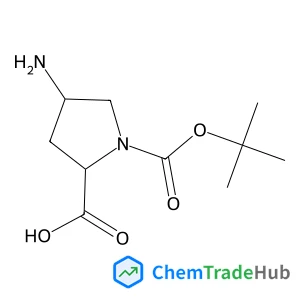
(2R,4R)-1-Boc-4-Aminopyrrolidine-2-carboxylic acid
CAS Number:
132622-98-1
Molecular Formula:
C10H18N2O4
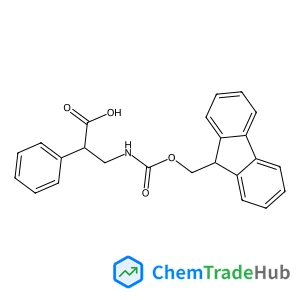
(S)-3-((((9H-Fluoren-9-yl)methoxy)carbonyl)amino)-2-phenylpropanoic acid
CAS Number:
1217663-60-9
Molecular Formula:
C24H21NO4
Recommended Suppliers






Disclaimer
This page provides academic journal information for reference and research purposes only. We are not affiliated with any journal publishers and do not handle publication submissions. For publication-related inquiries, please contact the respective journal publishers directly.
If you notice any inaccuracies in the information displayed, please contact us at support@chemtradehub.com. We will promptly review and address your concerns.