












Mechanistic investigations of confinement effects on the self-assembly of symmetric amphiphilic copolymers in thin films
Literature Information
Publication Date
2017-06-05
DOI
10.1039/C7CP02019H
Impact Factor
3.676
Authors
Dan Mu, Jian-Quan Li, Sheng-Yu Feng
View Original
Abstract
The self-assembly of a copolymer thin film, whose molecular structure is composed of one hydrophobic branch and two hydrophilic branches, gives a cylindrical structure consisting of a hydrophobic core and a hydrophilic outer surface. The confinement-induced loss of entropy leads the copolymer to self-assemble into a hexagonal arrangement of cylindrical structures. This hexagonal arrangement is of two induced self-assembly structures under one-dimensional confinement in thin films, i.e., micellar structures with uniform density of an individual core, as well as lamellar structures with two separated hydrophobic layers and one hydrophilic layer. When the repulsive force of the confinement is greater for the hydrophobic polymeric component than for the hydrophilic polymeric component, the self-assembled density of the cores is broad. A proportional change in the individual volume suggests interactions between the walls and the hydrophobic core, which plays a vital role in the formation of the self-assembled structure. A basic understanding of the one-dimensional confinement investigated in this study serves to elucidate the more complex two- and three-dimensional confinements and provides further insights for the design of nanomaterials with novel morphologies.
Related Literature
Dispersion RAFT polymerization: comparison between the monofunctional and bifunctional macromolecular RAFT agents
Chengqiang Gao, Shentong Li, Quanlong Li, Pengfei Shi, Sayyar Ali Shah, Wangqing Zhang
2014-08-22
Paper
DOI: 10.1039/C4PY01069H
The energy dissipation and Mullins effect of tough polymer/graphene oxide hybrid nanocomposite hydrogels
Ziqing Tang, Feng Chen, Qiang Chen, Lin Zhu, Xiaoqiang Yan, Hong Chen, Baiping Ren, Jia Yang, Gang Qin, Jie Zheng
2017-07-12
Paper
DOI: 10.1039/C7PY01068K
Design of well-defined shape memory networks with high homogeneity: towards advanced shape memory polymeric materials
Yi Pan, Zhaohui Zheng, Xiaobin Ding
2017-06-15
Communication
DOI: 10.1039/C7PY00904F
Thermosensitive spontaneous gradient copolymers with block- and gradient-like features
Ihor Kulai, Jens Ulbrich, Ramiro Guerrero-Santos, Mathias Destarac, Simon Harrisson
2017-04-19
Paper
DOI: 10.1039/C7PY00495H
Fabrication of multi-stimuli responsive supramolecular hydrogels based on host–guest inclusion complexation of a tadpole-shaped cyclodextrin derivative with the azobenzene dimer
Xing Wang, Juan Wang
2017-06-20
Paper
DOI: 10.1039/C7PY00698E
Injectable cationic hydrogels with high antibacterial activity and low toxicity
Hong Du, Xuxia Yao, Xiaodong Li, Zhiquan Shen
2016-08-17
Communication
DOI: 10.1039/C6PY01346E
Ultrafast diffusion-controlled thiol–ene based crosslinking of silicone elastomers with tailored mechanical properties for biomedical applications
2016-08-02
Paper
DOI: 10.1039/C6PY01134A
Enhanced stability of conductive polyacetylene in ladder-like surface-grafted brushes
Michał Szuwarzyński, Karol Wolski, Szczepan Zapotoczny
2016-08-22
Paper
DOI: 10.1039/C6PY00977H
Triazolinedione-“clicked” poly(phosphoester)s: systematic adjustment of thermal properties
Laetitia Vlaminck, Maria M. Velencoso, Filip E. Du Prez, Frederik R. Wurm
2017-06-21
Communication
DOI: 10.1039/C7PY00813A
You might also like
Compound Q&A
What are the main uses of 4-Nitrophenyl phosphate disodium salt hexahydrate (CAS: 333338-18-4)?
4-Nitrophenyl phosphate disodium salt hexahydrate is primarily used as a substra...
333338-18-44-Nitrophenyl phosph...
Compound Q&A
What are the main uses of 2-(Trifluoromethyl)-1,3-oxazole-4-carboxylic Acid (CAS: 1060816-01-4)?
2-(Trifluoromethyl)-1,3-oxazole-4-carboxylic Acid (CAS: 1060816-01-4) is widely ...
1060816-01-42-(Trifluoromethyl)-...
Compound Q&A
How should 2-Fluoro-4-biphenylcarboxylic acid (CAS: 137045-30-8) be stored?
2-Fluoro-4-biphenylcarboxylic acid should be stored in a cool, dry place at room...
137045-30-82-Fluoro-4-biphenylc...
Compound Q&A
What industries use Prednisolone-21-Carboxylic Acid (CAS: 61549-70-0)?
Prednisolone-21-Carboxylic Acid is primarily used in the pharmaceutical industry...
61549-70-0Prednisolone-21-Carb...
Compound Q&A
How should 4-(Hydrazinomethyl)-1,2,3-benzenetriol (CAS: 3614-72-0) be stored?
4-(Hydrazinomethyl)-1,2,3-benzenetriol (CAS: 3614-72-0) should be stored in a co...
3614-72-04-(Hydrazinomethyl)-...
Compound Q&A
What industries use 4-Amino-1-methyl-1H-pyrazole-5-carboxylic acid hydrochloride (CAS: 92534-70-8)?
4-Amino-1-methyl-1H-pyrazole-5-carboxylic acid hydrochloride (CAS: 92534-70-8) i...
92534-70-84-Amino-1-methyl-1H-...
Compound Q&A
What regulatory guidelines apply to dehydropachymic acid (CAS: 77012-31-8)?
Dehydropachymic acid (CAS: 77012-31-8) is regulated by various agencies. It fall...
77012-31-8Dehydropachymic acid
Compound Q&A
What is the market or research trend for 6-[(2,2-Dimethylpropanoyl)amino]nicotinic acid (CAS: 898561-66-5)?
The market and research trends for 6-[(2,2-Dimethylpropanoyl)amino]nicotinic aci...
898561-66-56-[(2,2-Dimethylprop...
Compound Q&A
How should 1,10-Phenanthroline-2,9-dicarbaldehyde (CAS: 57709-62-3) be stored?
1,10-Phenanthroline-2,9-dicarbaldehyde should be stored in a cool, dry place awa...
57709-62-31,10-Phenanthroline-...
Compound Q&A
How is 5-Carbamoyl-11-oxo-10,11-dihydro-5H-dibenzo[b,f]azepin-10-yl acetate (CAS: 113952-21-9) typically synthesized?
5-Carbamoyl-11-oxo-10,11-dihydro-5H-dibenzo[b,f]azepin-10-yl acetate can be synt...
113952-21-95-Carbamoyl-11-oxo-1...
Source Journal
Physical Chemistry Chemical Physics

CiteScore:
5.5
Self-citation Rate:
10.3%
Articles per Year:
3036
Physical Chemistry Chemical Physics (PCCP) is an international journal co-owned by 19 physical chemistry and physics societies from around the world. This journal publishes original, cutting-edge research in physical chemistry, chemical physics and biophysical chemistry. To be suitable for publication in PCCP, articles must include significant innovation and/or insight into physical chemistry; this is the most important criterion that reviewers and Editors will judge against when evaluating submissions. The journal has a broad scope and welcomes contributions spanning experiment, theory, computation and data science. Topical coverage includes spectroscopy, dynamics, kinetics, statistical mechanics, thermodynamics, electrochemistry, catalysis, surface science, quantum mechanics, quantum computing and machine learning. Interdisciplinary research areas such as polymers and soft matter, materials, nanoscience, energy, surfaces/interfaces, and biophysical chemistry are welcomed if they demonstrate significant innovation and/or insight into physical chemistry. Joined experimental/theoretical studies are particularly appreciated when complementary and based on up-to-date approaches.
Recommended Compounds
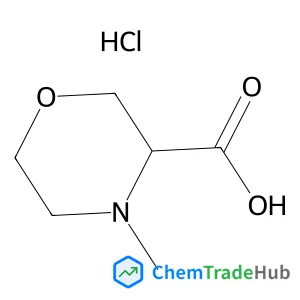
4-Methyl-3-morpholinecarboxylic acid hydrochloride (1:1)
CAS Number:
1240518-90-4
Molecular Formula:
C6H12ClNO3
Recommended Suppliers






Disclaimer
This page provides academic journal information for reference and research purposes only. We are not affiliated with any journal publishers and do not handle publication submissions. For publication-related inquiries, please contact the respective journal publishers directly.
If you notice any inaccuracies in the information displayed, please contact us at support@chemtradehub.com. We will promptly review and address your concerns.