












Ultrafast diffusion-controlled thiol–ene based crosslinking of silicone elastomers with tailored mechanical properties for biomedical applications
Literature Information
Publication Date
2016-08-02
DOI
10.1039/C6PY01134A
Impact Factor
5.582
Authors
View Original
Abstract
Polysiloxanes are commonly used in a wide range of applications, but their crosslinking is typically relatively slow, requires metal catalysts (for hydrosilylation or to catalyse condensation) and depends on storage and curing conditions (humidity level). Thiol–ene “click” chemistry, on the other hand, is a promising strategy to post-functionalise and cross-link polymers or to introduce different biofunctionalities for applications in the biomedical field. In the present work, we explore the use of the photo-initiated thiol–ene reaction to cross-link a side-chain thiol-functionalised poly(dimethylsiloxane) (PDMS) with telechelic vinyl-PDMS chains at ambient temperature. We investigate the impact of different curing parameters on the network properties and gelation kinetics, using in situ photo-rheology. It is shown that the curing reaction occurs rapidly and very efficiently even in the presence of oxygen in the system. Whilst the mechanical properties of the cross-linked networks are strongly affected by the ratios between thiol and alkene moieties, the molecular weight, and therefore viscosity, of starting macromonomers and UV light intensity showed very small variation in the resulting storage moduli of the formed PDMS networks. The potential of using such materials in biomedical applications and cell culture were highlighted by the good cytocompatibility of thiol–ene PDMS substrates with varying mechanical properties. In addition, by utilising remaining thiol-moieties in the cross-linked networks, strong adhesion between thiol–ene matrices and the acrylate pre-treated glass surfaces was established, in mild conditions. These findings indicate an ability to systematically tailor the mechanical properties of the resulting networks whilst manipulating their surface functionalities, attractive features for a range of applications including 3D printing, microfabrication and cell culture.
Related Literature
Light controlled reversible Michael addition of cysteine: a new tool for dynamic site-specific labeling of proteins
Soham Maity, Courtney Bingham, Wei Sheng, Nona Ehyaei, Debarshi Chakraborty, Setare Tahmasebi-Nick, Thomas E. Kimmel, Chrysoula Vasileiou, James H. Geiger, Babak Borhan
2023-01-25
Paper
DOI: 10.1039/D2AN01395A
On the mechanism of the bipolar reference electrode
Nicole L. Walker
2023-02-23
Paper
DOI: 10.1039/D3AN00107E
Paper-based microfluidics in sweat detection: from design to application
Wei Liu, Lu Fang
2023-02-20
Minireview
DOI: 10.1039/D2AN01818G
Increasing the peroxidase-like activity of the MIL-100(Fe) nanozyme by encapsulating Keggin-type 12-phosphomolybdate and covering three-dimensional graphene
Yupu Wei, Jinghui Shen, Jinlong Zhuo, Mingqi Xu, Yunliang Wang
2023-05-16
Paper
DOI: 10.1039/D3AN00038A
Spatial distribution and comparative analysis of Aconitum alkaloids in Fuzi using DESI-MSI and UHPLC-QTOF-MS
Huixia Zhang, Liu Yang, Xin Chen, Shuai Zhang, Shiqi Chen, Daowen Li, Cun Li, Haiyang Jiang
2023-03-13
Paper
DOI: 10.1039/D2AN02051C
Os(ii/iii) complex supports pH-insensitive electrochemical DNA-based sensing with superior operational stability than the benchmark methylene blue reporter
Miguel Aller Pellitero, Nandini Kundu, Jonathan Sczepanski
2023-01-05
Paper
DOI: 10.1039/D2AN01901A
Mass spectrometry-based quantitation combined with time-dependent metabolomics to discover metabolic features in human neurogenesis using neural constructs generated from neural progenitor cells
Xin Wang, Zhenye Gao, Wenxiu Zhou
2022-12-16
Paper
DOI: 10.1039/D2AN01162J
Autodisplay of streptococcal protein G for construction of an orientation-controlled immunoaffinity layer
Joachim Jose
2023-01-17
Paper
DOI: 10.1039/D2AN01753A
“Lighting up” fluoride: cellular imaging and zebrafish model interrogations using a simple ESIPT-based mycophenolic acid precursor-based probe
Neha Jain, Prasad M. Sonawane, Haoyan Liu, Arkaprava Roychaudhury, Youngseob Lee, Jongkeol An, Donghyeon Kim, Dongwook Kim, Yunsu Kim, Yeu-Chun Kim, Kyung-Bin Cho, Hee-Sung Park, Cheol-Hee Kim
2023-05-15
Paper
DOI: 10.1039/D3AN00646H
Surface plasmon resonance detection of UV irradiation-induced DNA damage and photoenzymatic repair processes through specific interaction between consensus double-stranded DNA and p53 protein
Yuhan He, Sijia Chen, Guoyang Xie, Xinyao Yi, Jianxiu Wang
2022-12-26
Paper
DOI: 10.1039/D2AN01847K
You might also like
Compound Q&A
What are the main uses of 4-Nitrophenyl phosphate disodium salt hexahydrate (CAS: 333338-18-4)?
4-Nitrophenyl phosphate disodium salt hexahydrate is primarily used as a substra...
333338-18-44-Nitrophenyl phosph...
Compound Q&A
What are the main uses of 2-(Trifluoromethyl)-1,3-oxazole-4-carboxylic Acid (CAS: 1060816-01-4)?
2-(Trifluoromethyl)-1,3-oxazole-4-carboxylic Acid (CAS: 1060816-01-4) is widely ...
1060816-01-42-(Trifluoromethyl)-...
Compound Q&A
How should 2-Fluoro-4-biphenylcarboxylic acid (CAS: 137045-30-8) be stored?
2-Fluoro-4-biphenylcarboxylic acid should be stored in a cool, dry place at room...
137045-30-82-Fluoro-4-biphenylc...
Compound Q&A
What industries use Prednisolone-21-Carboxylic Acid (CAS: 61549-70-0)?
Prednisolone-21-Carboxylic Acid is primarily used in the pharmaceutical industry...
61549-70-0Prednisolone-21-Carb...
Compound Q&A
How should 4-(Hydrazinomethyl)-1,2,3-benzenetriol (CAS: 3614-72-0) be stored?
4-(Hydrazinomethyl)-1,2,3-benzenetriol (CAS: 3614-72-0) should be stored in a co...
3614-72-04-(Hydrazinomethyl)-...
Compound Q&A
What industries use 4-Amino-1-methyl-1H-pyrazole-5-carboxylic acid hydrochloride (CAS: 92534-70-8)?
4-Amino-1-methyl-1H-pyrazole-5-carboxylic acid hydrochloride (CAS: 92534-70-8) i...
92534-70-84-Amino-1-methyl-1H-...
Compound Q&A
What regulatory guidelines apply to dehydropachymic acid (CAS: 77012-31-8)?
Dehydropachymic acid (CAS: 77012-31-8) is regulated by various agencies. It fall...
77012-31-8Dehydropachymic acid
Compound Q&A
What is the market or research trend for 6-[(2,2-Dimethylpropanoyl)amino]nicotinic acid (CAS: 898561-66-5)?
The market and research trends for 6-[(2,2-Dimethylpropanoyl)amino]nicotinic aci...
898561-66-56-[(2,2-Dimethylprop...
Compound Q&A
How should 1,10-Phenanthroline-2,9-dicarbaldehyde (CAS: 57709-62-3) be stored?
1,10-Phenanthroline-2,9-dicarbaldehyde should be stored in a cool, dry place awa...
57709-62-31,10-Phenanthroline-...
Compound Q&A
How is 5-Carbamoyl-11-oxo-10,11-dihydro-5H-dibenzo[b,f]azepin-10-yl acetate (CAS: 113952-21-9) typically synthesized?
5-Carbamoyl-11-oxo-10,11-dihydro-5H-dibenzo[b,f]azepin-10-yl acetate can be synt...
113952-21-95-Carbamoyl-11-oxo-1...
Source Journal
Polymer Chemistry

CiteScore:
8.6
Self-citation Rate:
7.3%
Articles per Year:
457
Polymer Chemistry welcomes submissions in all areas of polymer science that have a strong focus on macromolecular chemistry. Manuscripts may cover a broad range of fields, yet no direct application focus is required.
Recommended Compounds
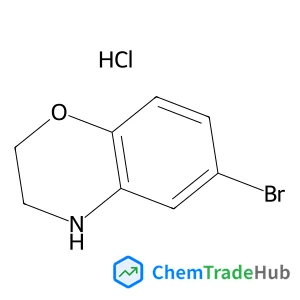
6-Bromo-3,4-dihydro-2H-1,4-benzoxazine hydrochloride (1:1)
CAS Number:
1260803-10-8
Molecular Formula:
C8H9BrClNO
phosphoryl}methyl 4-methylbenzenesulfonate structure](https://static.chemtradehub.com/structs/864/864068-45-1-ba7c.webp "{[3-(Hexadecyloxy)propoxy](hydroxy)phosphoryl}methyl 4-methylbenzenesulfonate structure")
{[3-(Hexadecyloxy)propoxy](hydroxy)phosphoryl}methyl 4-methylbenzenesulfonate
CAS Number:
864068-45-1
Molecular Formula:
C27H49O7PS
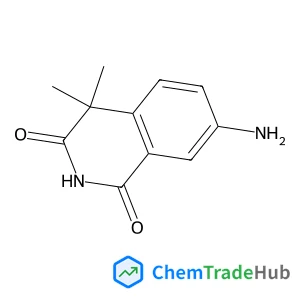
1,3(2H,4H)-Isoquinolinedione, 7-amino-4,4-dimethyl-
CAS Number:
14576-22-8
Molecular Formula:
C11H12N2O2
Recommended Suppliers






Disclaimer
This page provides academic journal information for reference and research purposes only. We are not affiliated with any journal publishers and do not handle publication submissions. For publication-related inquiries, please contact the respective journal publishers directly.
If you notice any inaccuracies in the information displayed, please contact us at support@chemtradehub.com. We will promptly review and address your concerns.