












Cyclodextrin-assisted modulation of the photophysical properties and acidity constant of pyrene-armed calix[4]arene
Literature Information
Publication Date
2017-07-25
DOI
10.1039/C7CP01894K
Impact Factor
3.676
Authors
V. S. Kalyani, D. D. Malkhede
View Original
Abstract
The supramolecular interaction of cyclodextrin homologues with a pyrene-armed calixarene has been investigated. p-tert-Butylcalix[4]arene-di-4-(pyren-1-yl)butanoic acid (PCX4) has been synthesized and characterized by 1H NMR, FT-IR and mass spectrometry. The modulation in the photophysical properties, especially the monomer and excimer emission behaviour of the pyrene group in PCX4 with β-cyclodextrin (β-CD) and γ-cyclodextrin (γ-CD), has been explored in aqueous solutions by using optical absorption, steady-state and time-resolved fluorescence measurements. Steady-state fluorescence studies illustrate that upon gradual addition of γ-CD to the PCX4 solution, initially there is a decrease in the monomer emission (at 378, 398 and 420 nm) along with the appearance of weak excimer emission at 482 nm. Beyond a particular concentration of γ-CD (>1.2 mM), PCX4 shows strong excimer emission along with an increase in the monomer emission, indicating two types of interaction modes between PCX4 and γ-CD. Fluorescence anisotropy measurements confirm intramolecular excimer formation with a lower concentration of γ-CD, whereas it predominantly becomes an intermolecular excimer beyond 1.2 mM of γ-CD. On the other hand, the monomer emission of the pyrene group of PCX4 increases in the presence of β-cyclodextrin having lower cavity sizes due to the formation of a 1 : 1 complex. For the first time, the intrinsic fluorescence from the pyrene moiety of PCX4 is employed to determine the pKa value of PCX4 and it is ∼6.1. The cyclodextrin-encapsulated PCX4 brings a 1.2 unit downward pKa shift. Along with the pH-responsive interconversion of monomer to excimer emission of γ-CD complexed PCX4, this system can find applications in ratiometric sensing and optical supramolecular pH-sensors.
Related Literature
Tailoring degree of esterification and branching of poly(glycerol sebacate) by energy efficient microwave irradiation
Chi Ching Lau, Mustafa Kemal Bayazit, Junwang Tang
2017-06-12
Paper
DOI: 10.1039/C7PY00862G
AIE conjugated polyelectrolytes based on tetraphenylethene for efficient fluorescence imaging and lifetime imaging of living cells
Mengxia Gao, Bin Chen, Yinan Wang, Wenjun Zhou, Wallace W. H. Wong, Trevor A. Smith, Zujin Zhao
2017-06-05
Communication
DOI: 10.1039/C7PY00564D
Thiophene-benzothiadiazole based D–A1–D–A2 type alternating copolymers for polymer solar cells
Quoc Viet Hoang, Mohammad Afsar Uddin, Han Young Woo
2017-05-23
Paper
DOI: 10.1039/C7PY00696A
One-pot preparation of BAB triblock copolymer nano-objects through bifunctional macromolecular RAFT agent mediated dispersion polymerization
Yaqing Qu, Shuang Wang, Habib Khan, Chengqiang Gao, Heng Zhou
2016-02-09
Paper
DOI: 10.1039/C5PY01917F
A facile route to well-defined imidazolium-based poly(ionic liquid)s of enhanced conductivity via RAFT
Karol Erfurt, Anna Chrobok, Andrzej Zięba
2017-08-02
Paper
DOI: 10.1039/C7PY01046J
You might also like
Compound Q&A
What are the main uses of 4-Nitrophenyl phosphate disodium salt hexahydrate (CAS: 333338-18-4)?
4-Nitrophenyl phosphate disodium salt hexahydrate is primarily used as a substra...
333338-18-44-Nitrophenyl phosph...
Compound Q&A
What are the main uses of 2-(Trifluoromethyl)-1,3-oxazole-4-carboxylic Acid (CAS: 1060816-01-4)?
2-(Trifluoromethyl)-1,3-oxazole-4-carboxylic Acid (CAS: 1060816-01-4) is widely ...
1060816-01-42-(Trifluoromethyl)-...
Compound Q&A
How should 2-Fluoro-4-biphenylcarboxylic acid (CAS: 137045-30-8) be stored?
2-Fluoro-4-biphenylcarboxylic acid should be stored in a cool, dry place at room...
137045-30-82-Fluoro-4-biphenylc...
Compound Q&A
What industries use Prednisolone-21-Carboxylic Acid (CAS: 61549-70-0)?
Prednisolone-21-Carboxylic Acid is primarily used in the pharmaceutical industry...
61549-70-0Prednisolone-21-Carb...
Compound Q&A
How should 4-(Hydrazinomethyl)-1,2,3-benzenetriol (CAS: 3614-72-0) be stored?
4-(Hydrazinomethyl)-1,2,3-benzenetriol (CAS: 3614-72-0) should be stored in a co...
3614-72-04-(Hydrazinomethyl)-...
Compound Q&A
What industries use 4-Amino-1-methyl-1H-pyrazole-5-carboxylic acid hydrochloride (CAS: 92534-70-8)?
4-Amino-1-methyl-1H-pyrazole-5-carboxylic acid hydrochloride (CAS: 92534-70-8) i...
92534-70-84-Amino-1-methyl-1H-...
Compound Q&A
What regulatory guidelines apply to dehydropachymic acid (CAS: 77012-31-8)?
Dehydropachymic acid (CAS: 77012-31-8) is regulated by various agencies. It fall...
77012-31-8Dehydropachymic acid
Compound Q&A
What is the market or research trend for 6-[(2,2-Dimethylpropanoyl)amino]nicotinic acid (CAS: 898561-66-5)?
The market and research trends for 6-[(2,2-Dimethylpropanoyl)amino]nicotinic aci...
898561-66-56-[(2,2-Dimethylprop...
Compound Q&A
How should 1,10-Phenanthroline-2,9-dicarbaldehyde (CAS: 57709-62-3) be stored?
1,10-Phenanthroline-2,9-dicarbaldehyde should be stored in a cool, dry place awa...
57709-62-31,10-Phenanthroline-...
Compound Q&A
How is 5-Carbamoyl-11-oxo-10,11-dihydro-5H-dibenzo[b,f]azepin-10-yl acetate (CAS: 113952-21-9) typically synthesized?
5-Carbamoyl-11-oxo-10,11-dihydro-5H-dibenzo[b,f]azepin-10-yl acetate can be synt...
113952-21-95-Carbamoyl-11-oxo-1...
Source Journal
Physical Chemistry Chemical Physics

CiteScore:
5.5
Self-citation Rate:
10.3%
Articles per Year:
3036
Physical Chemistry Chemical Physics (PCCP) is an international journal co-owned by 19 physical chemistry and physics societies from around the world. This journal publishes original, cutting-edge research in physical chemistry, chemical physics and biophysical chemistry. To be suitable for publication in PCCP, articles must include significant innovation and/or insight into physical chemistry; this is the most important criterion that reviewers and Editors will judge against when evaluating submissions. The journal has a broad scope and welcomes contributions spanning experiment, theory, computation and data science. Topical coverage includes spectroscopy, dynamics, kinetics, statistical mechanics, thermodynamics, electrochemistry, catalysis, surface science, quantum mechanics, quantum computing and machine learning. Interdisciplinary research areas such as polymers and soft matter, materials, nanoscience, energy, surfaces/interfaces, and biophysical chemistry are welcomed if they demonstrate significant innovation and/or insight into physical chemistry. Joined experimental/theoretical studies are particularly appreciated when complementary and based on up-to-date approaches.
Recommended Compounds
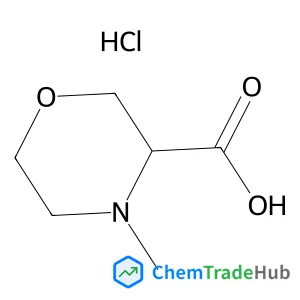
4-Methyl-3-morpholinecarboxylic acid hydrochloride (1:1)
CAS Number:
1240518-90-4
Molecular Formula:
C6H12ClNO3

Recommended Suppliers





Disclaimer
This page provides academic journal information for reference and research purposes only. We are not affiliated with any journal publishers and do not handle publication submissions. For publication-related inquiries, please contact the respective journal publishers directly.
If you notice any inaccuracies in the information displayed, please contact us at support@chemtradehub.com. We will promptly review and address your concerns.