












Reaction mechanism and product branching ratios of the CH + C3H4 reactions: a theoretical study
Literature Information
Publication Date
2017-05-05
DOI
10.1039/C7CP01873H
Impact Factor
3.676
Authors
Joao Marcelo Ribeiro, Alexander M. Mebel
View Original
Abstract
Two ground-state CH radical reactions with the C3H4 isomers allene and methylacetylene occurring along the C4H5 potential energy surface (PES) were studied to probe the reaction mechanisms and final product distributions. The calculations were performed using a CCSD(T)-F12//B2PLYPD3 PES in combination with the 1-D chemical master equation. The reaction between the CH radical and allene was found to lead to exclusive “funneling” of the energized C4H5 intermediates into linear C4H5 configurations before reaching the exit channels, regardless of the specific nature of the initial bimolecular reactive encounter. In the case of the CH radical reaction with methylacetylene, energized C4H5 three-membered ring structures underwent H loss in significant amounts resulting in the production of a cyclic C4H4 methylenecyclopropene product, in accordance with experiments. The theoretical product distribution at room temperature for methylacetylene + CH was ∼35% methylenecyclopropene, ∼36% vinylacetylene, and ∼28% 1,2,3-butatriene, which is in agreement with the available experimental data. The distribution for allene + CH was ∼93% vinylacetylene, ∼4% 1,2,3-butatriene and ∼3% acetylene + vinyl, which overestimates the experimental yield of vinylacetylene and underestimates that of 1,2,3-butatriene by ∼10%. The possible reasons for this slight quantitative deviation of the theoretical results obtained within statistical treatment from the experiment are discussed.
Recommended Journals
Related Literature
Sequence-specific electrochemical detection of Alicyclobacillus acidoterrestrisDNA using electroconductive polymer-modified fluorine tin oxide electrodes
Katlin Ivon Barrios Eguiluz, Giancarlo Richard Salazar-Banda, Maribel Elizabeth Funes-Huacca, Juliana Vieira Alberice, Emanuel Carrilho, Sergio Antonio Spinola Machado, Luis Alberto Avaca
2008-10-29
Paper
DOI: 10.1039/B809080G
Multiple sized europium(III) chelate-dyed polystyrene particles as donors in FRET – an application for sensitive protein quantification utilizing competitive adsorption
Antti Valanne, Jouko Peltonen, Tero Soukka, Pekka Hänninen, Harri Härmä
2009-03-02
Paper
DOI: 10.1039/B821210D
Nucleic acid biosensors for environmental pollution monitoring
Ilaria Palchetti, Marco Mascini
2008-06-02
Critical Review
DOI: 10.1039/B802920M
Split hybridisation probes for electrochemical typing of single-nucleotide polymorphisms
Fausto Lucarelli, Silvia Capponcelli, Giovanna Marrazza, Luca Sangiorgi, Marco Mascini
2008-10-18
Paper
DOI: 10.1039/B806514D
Electrochemiluminescence detection based on Ruthenium(II) tris(bipyridine) immobilised in sulfonic-functionalised titania nanoparticles by ion exchange strategy
Fan Yang
2009-08-05
Paper
DOI: 10.1039/B903434J
Imprinted polymers for chiral resolution of (±)-ephedrine. Part 2: probing pre-polymerisation equilibria in different solvents by NMR‡
Richard J. Ansell, Dongyao Wang, Janice K. L. Kuah
2008-09-03
Paper
DOI: 10.1039/B806376A
Electrochemical impedance spectroscopy and surface plasmon resonance studies of DNA hybridization on gold/SiOx interfaces
Maël Manesse, Valerie Stambouli, Rabah Boukherroub
2008-07-01
Paper
DOI: 10.1039/B804825H
Dihexadecyldimethylammonium hydroxide admicelles on silica for the preconcentration of selected phenols
Guan-Liang Chen, Shing-Yi Suen, Sarah Vied, Kali Pickering, Christopher Perrin, Eric D. Conte
2008-11-06
Paper
DOI: 10.1039/B814224F
A planar waveguide optical sensor employing simple light coupling
Torsten Mayr, Tobias Abel, Barbara Enko, Sergey Borisov, Christian Konrad, Stefan Köstler, Bernhard Lamprecht, Stefan Sax, Emil J. W. List, Ingo Klimant
2009-05-13
Communication
DOI: 10.1039/B904536H
Covalent immobilization of carbohydrates on sol–gel-coated microplates‡
Hei-Leung Pang, Pak-Ho Chan, Zhi-Shu Huang, Lian-Quan Gu, Kwok-Yin Wong
2008-05-06
Paper
DOI: 10.1039/B805346D
You might also like
Compound Q&A
Are there alternatives to 1-(4-Chlorophenyl)-N-hydroxymethanimine (CAS: 3848-36-0) in synthesis?
When considering alternatives to 1-(4-Chlorophenyl)-N-hydroxymethanimine (CAS: 3...
3848-36-01-(4-Chlorophenyl)-N...
Compound Q&A
How should (1R,9S,10S,12S,14E,16S,19R,20R,21S,22R)-3,9,21-Trihydroxy-5,10,12,14,16,20,22-heptamethyl-23,24-dioxatetracyclo[17.3.1.1~6,9~.0~2,7~]tetracosa-2,5,7,14-tetraen-4-one (CAS: 183202-73-5) be stored?
This compound should be stored in a cool, dry place away from direct sunlight. I...
183202-73-5(1R,9S,10S,12S,14E,1...
Compound Q&A
How is 3-(4-Bromophenyl)-5-(2-fluorophenyl)-1,2,4-oxadiazole (CAS: 419553-16-5) typically synthesized?
3-(4-Bromophenyl)-5-(2-fluorophenyl)-1,2,4-oxadiazole is synthesized through a m...
419553-16-53-(4-Bromophenyl)-5-...
Compound Q&A
How is 5-Chloro-2-(4-chlorophenyl)-4-methyl-6-[3-(1-piperidinyl)propoxy]pyrimidine (CAS: 1639220-19-1) typically synthesized?
5-Chloro-2-(4-chlorophenyl)-4-methyl-6-[3-(1-piperidinyl)propoxy]pyrimidine (CAS...
1639220-19-15-Chloro-2-(4-chloro...
Compound Q&A
What industries use 2-Chloro-4-(difluoromethoxy)pyridine (CAS: 1206978-15-5)?
2-Chloro-4-(difluoromethoxy)pyridine is used in the pharmaceutical industry for ...
1206978-15-52-Chloro-4-(difluoro...
Compound Q&A
What regulatory guidelines apply to 3-Chloro-6-methylpyridazine (CAS: 1121-79-5)?
3-Chloro-6-methylpyridazine (CAS: 1121-79-5) is classified under the Globally Ha...
1121-79-53-Chloro-6-methylpyr...
Compound Q&A
Are there alternatives to Methyl 4,5-dimethyl-2-nitrobenzoate in synthesis?
Several alternatives can be used in the synthesis of Methyl 4,5-dimethyl-2-nitro...
90922-74-0Methyl 4,5-dimethyl-...
Compound Q&A
Are there alternatives to (2E,2'E)-3,3'-(1,4-Phenylene)bisacrylaldehyde in synthesis?
Alternatives to (2E,2'E)-3,3'-(1,4-Phenylene)bisacrylaldehyde include other acry...
63405-68-5(2E,2'E)-3,3'-(1,4-P...
Compound Q&A
What is 3-Amino-5-chloropyridin-2-ol hydrochloride (CAS: 1261906-29-9)?
3-Amino-5-chloropyridin-2-ol hydrochloride is an organic compound with the CAS n...
1261906-29-93-Amino-5-chloropyri...
Compound Q&A
What precautions should be taken when handling 6,7-Difluoro-2,3-dihydro-4H-chromen-4-one (CAS: 1092349-93-3)?
When handling 6,7-Difluoro-2,3-dihydro-4H-chromen-4-one, it is essential to wear...
1092349-93-36,7-Difluoro-2,3-dih...
Source Journal
Physical Chemistry Chemical Physics

CiteScore:
5.5
Self-citation Rate:
10.3%
Articles per Year:
3036
Physical Chemistry Chemical Physics (PCCP) is an international journal co-owned by 19 physical chemistry and physics societies from around the world. This journal publishes original, cutting-edge research in physical chemistry, chemical physics and biophysical chemistry. To be suitable for publication in PCCP, articles must include significant innovation and/or insight into physical chemistry; this is the most important criterion that reviewers and Editors will judge against when evaluating submissions. The journal has a broad scope and welcomes contributions spanning experiment, theory, computation and data science. Topical coverage includes spectroscopy, dynamics, kinetics, statistical mechanics, thermodynamics, electrochemistry, catalysis, surface science, quantum mechanics, quantum computing and machine learning. Interdisciplinary research areas such as polymers and soft matter, materials, nanoscience, energy, surfaces/interfaces, and biophysical chemistry are welcomed if they demonstrate significant innovation and/or insight into physical chemistry. Joined experimental/theoretical studies are particularly appreciated when complementary and based on up-to-date approaches.
Recommended Compounds
![2-{[(1R,2S)-2-Aminocyclohexyl]amino}-4-{[3-(2H-1,2,3-triazol-2-yl)phenyl]amino}-5-pyrimidinecarboxamide structure](https://static.chemtradehub.com/structs/137/1370261-96-3-40df.webp "2-{[(1R,2S)-2-Aminocyclohexyl]amino}-4-{[3-(2H-1,2,3-triazol-2-yl)phenyl]amino}-5-pyrimidinecarboxamide structure")
2-{[(1R,2S)-2-Aminocyclohexyl]amino}-4-{[3-(2H-1,2,3-triazol-2-yl)phenyl]amino}-5-pyrimidinecarboxamide
CAS Number:
1370261-96-3
Molecular Formula:
C19H23N9O
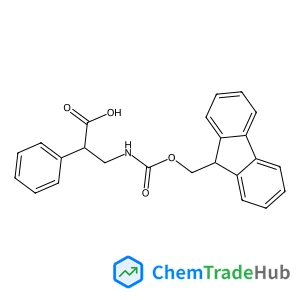
(S)-3-((((9H-Fluoren-9-yl)methoxy)carbonyl)amino)-2-phenylpropanoic acid
CAS Number:
1217663-60-9
Molecular Formula:
C24H21NO4
Recommended Suppliers





Disclaimer
This page provides academic journal information for reference and research purposes only. We are not affiliated with any journal publishers and do not handle publication submissions. For publication-related inquiries, please contact the respective journal publishers directly.
If you notice any inaccuracies in the information displayed, please contact us at support@chemtradehub.com. We will promptly review and address your concerns.