












The mechanism for the formation of OH radicals in condensed-phase water under ultraviolet irradiation
Literature Information
Publication Date
2017-07-18
DOI
10.1039/C7CP01798G
Impact Factor
3.676
Authors
Fan Jin, Min Wei, Chengbu Liu, Yuchen Ma
View Original
Abstract
Irradiation on liquid water and ice by ultraviolet light in the range of 150–200 nm can create volatile OH radicals which react with other organic and inorganic molecules actively. However, the mechanism for OH radical formation in the condensed-phase water in this energy range is still unclear. To uncover this mechanism we studied the excited-state behaviors of ice using first-principles calculations based on many-body Green’s function theory. First, we showed that the long-wavelength optical absorption at the Urbach tail (190–300 nm) can be attributed to inherent hydroxide ions or transient structures formed in the autoionization process. Second, we revealed that creation of the OH radicals can be attributed to two mechanisms. Irradiation by the light at the Urbach tail excites an electron out of the hydroxide ion, leaving a neutral OH radical behind. By the light around 150 nm, OH radicals can be produced barrierlessly via direct water photolysis through concerted proton and electron transfer. Our results provide valuable insights into the excited-state dynamics of condensed-phase water, helping us understand in depth the photocatalytic reactions, radiation biology and chemistry.
Related Literature
Cobalt-catalyzed condensation of sulfonyl azides with o-diisocyanoarenes and anilines: a new approach to N-sulfonyl guanidines
Jin-Ming Yang, Rong Zhang, Shun-Yi Wang, Shun-Jun Ji
2019-08-20
Research Article
DOI: 10.1039/C9QO00815B
β-Sulfonylation of α-bromoenals enabled by N-heterocyclic carbene catalysis
Shiyi Jin, Shuaishuai Fang, Rui Ma, Zheng Liang, Ye Xu, Tao Lu, Ding Du
2019-08-23
Research Article
DOI: 10.1039/C9QO00956F
Rh(iii)-Catalyzed C–H activation/annulation of salicylaldehydes with sulfoxonium ylides for the synthesis of chromones
Libo Cai, Xiaoyi Zhu, Jiayi Chen, Aijun Lin, Hequan Yao
2019-09-19
Research Article
DOI: 10.1039/C9QO00830F
Synthesis of photolabile protecting group (PPG) protected uronic acid building blocks: applications in carbohydrate synthesis with the assistance of a continuous flow photoreactor
Varsha Tiwari, Adesh Kumar Singh, Priyanka Chaudhary, Peter H. Seeberger, Jeyakumar Kandasamy
2019-10-14
Research Article
DOI: 10.1039/C9QO01010F
Stereoselective defluorinative carboxylation of gem-difluoroalkenes with carbon dioxide
Shi-Liang Xie, Xiao-Yuan Cui, Xiao-Tong Gao, Hai-Hong Wu
2019-09-16
Research Article
DOI: 10.1039/C9QO00923J
Organocatalyzed asymmetric formal [3 + 2] cycloaddition of isocyanoacetates with N-itaconimides: facile access to optically active spiropyrroline succinimide derivatives
Mei-Xin Zhao, Qiang Liu, Kun-Ming Yu, Xiao-Li Zhao
2019-10-17
Research Article
DOI: 10.1039/C9QO00939F
C(sp3)–H hydroxylation of fluorenes, oxindoles and benzofuranones with a Mg(NO3)2–HP(O)Ph2 oxidation system
Chen Hu, Gang Hong, Pradip D. Nahide, Yuchen He, Chen Zhou, Marisa C. Kozlowski, Limin Wang
2019-07-19
Research Article
DOI: 10.1039/C9QO00778D
You might also like
Compound Q&A
Is 6-(3-Fluorophenyl)picolinic acid (CAS: 887982-40-3) safe?
6-(3-Fluorophenyl)picolinic acid is generally considered safe for laboratory use...
887982-40-36-(3-Fluorophenyl)pi...
Compound Q&A
What industries use (3R)-3-Pyrrolidinol (CAS: 2799-21-5)?
(3R)-3-Pyrrolidinol is used in the pharmaceutical industry as a precursor for dr...
2799-21-5(3R)-3-Pyrrolidinol
Compound Q&A
What precautions should be taken when handling (4R,5R)-4,5-Diethoxycarbonyl-2,2-dimethyldioxolane (CAS: 59779-75-8)?
When handling (4R,5R)-4,5-Diethoxycarbonyl-2,2-dimethyldioxolane (CAS: 59779-75-...
59779-75-8(4R,5R)-4,5-Diethoxy...
Compound Q&A
How is 1-(6-Chloroimidazo[1,2-b]pyridazin-3-yl)ethanone (CAS: 90734-71-7) typically synthesized?
1-(6-Chloroimidazo[1,2-b]pyridazin-3-yl)ethanone is often synthesized via a mult...
90734-71-71-(6-Chloroimidazo[1...
Compound Q&A
What is the market or research trend for N-Ethyl-3,4-dimethylbenzylamine (CAS: 39180-83-1)?
The market for N-Ethyl-3,4-dimethylbenzylamine (CAS: 39180-83-1) remains steady,...
39180-83-1N-Ethyl-3,4-dimethyl...
Compound Q&A
What is Tert-butyl 3-(pyrrolidin-1-yl)azetidine-1-carboxylate (CAS: 1019008-21-9)?
Tert-butyl 3-(pyrrolidin-1-yl)azetidine-1-carboxylate is a chemical compound wit...
1019008-21-9Tert-butyl 3-(pyrrol...
Compound Q&A
What regulatory guidelines apply to 1-Bromo-3-chloro-2,4-dimethoxybenzene (CAS: 1228956-93-1)?
1-Bromo-3-chloro-2,4-dimethoxybenzene (CAS: 1228956-93-1) falls under the classi...
1228956-93-11-Bromo-3-chloro-2,4...
Compound Q&A
Is 8-Bromo-2-methyl-3,4-dihydroisoquinolin-1(2H)-one (CAS: 1368622-07-4) safe?
The safety of 8-Bromo-2-methyl-3,4-dihydroisoquinolin-1(2H)-one (CAS: 1368622-07...
1368622-07-48-Bromo-2-methyl-3,4...
Compound Q&A
Is Benzyl [(3S)-2,6-dioxo-3-piperidinyl]carbamate (CAS: 22785-43-9) safe?
Benzyl [(3S)-2,6-dioxo-3-piperidinyl]carbamate is generally safe when handled wi...
22785-43-9Benzyl [(3S)-2,6-dio...
Compound Q&A
How should 1-{[4-(4,4,5,5-Tetramethyl-1,3,2-dioxaborolan-2-yl)phenyl]sulfonyl}pyrrolidine (CAS: 928657-21-0) be stored?
1-{[4-(4,4,5,5-Tetramethyl-1,3,2-dioxaborolan-2-yl)phenyl]sulfonyl}pyrrolidine s...
928657-21-01-{[4-(4,4,5,5-Tetra...
Source Journal
Physical Chemistry Chemical Physics

CiteScore:
5.5
Self-citation Rate:
10.3%
Articles per Year:
3036
Physical Chemistry Chemical Physics (PCCP) is an international journal co-owned by 19 physical chemistry and physics societies from around the world. This journal publishes original, cutting-edge research in physical chemistry, chemical physics and biophysical chemistry. To be suitable for publication in PCCP, articles must include significant innovation and/or insight into physical chemistry; this is the most important criterion that reviewers and Editors will judge against when evaluating submissions. The journal has a broad scope and welcomes contributions spanning experiment, theory, computation and data science. Topical coverage includes spectroscopy, dynamics, kinetics, statistical mechanics, thermodynamics, electrochemistry, catalysis, surface science, quantum mechanics, quantum computing and machine learning. Interdisciplinary research areas such as polymers and soft matter, materials, nanoscience, energy, surfaces/interfaces, and biophysical chemistry are welcomed if they demonstrate significant innovation and/or insight into physical chemistry. Joined experimental/theoretical studies are particularly appreciated when complementary and based on up-to-date approaches.
Recommended Compounds
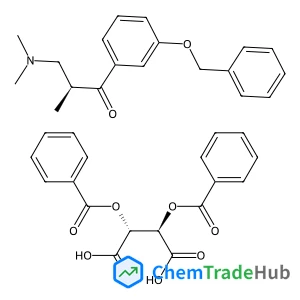
(S)-1-(3-(Benzyloxy)phenyl)-3-(dimethylamino)-2-methylpropan-1-one (2r,3r)-2,3-bis(benzoyloxy)succinate
CAS Number:
1004315-81-4
Molecular Formula:
C37H37NO10
Recommended Suppliers







Disclaimer
This page provides academic journal information for reference and research purposes only. We are not affiliated with any journal publishers and do not handle publication submissions. For publication-related inquiries, please contact the respective journal publishers directly.
If you notice any inaccuracies in the information displayed, please contact us at support@chemtradehub.com. We will promptly review and address your concerns.