












![5-Bromo-3-isopropyl-1H-pyrrolo[2,3-b]pyridine structure](https://static.chemtradehub.com/structs/125/1256819-54-1-8620.webp "5-Bromo-3-isopropyl-1H-pyrrolo[2,3-b]pyridine structure")
Femtosecond to microsecond observation of the photochemical reaction of 1,2-di(quinolin-2-yl)disulfide with methyl methacrylate
Literature Information
Publication Date
2017-05-03
DOI
10.1039/C7CP01784G
Impact Factor
3.676
Authors
Daisuke Koyama, Paul M. Donaldson, Andrew J. Orr-Ewing
View Original
Abstract
The mechanism of the thiol–ene reaction induced by 330 nm ultraviolet excitation of 1,2-di(quinolin-2-yl)disulfide (QSSQ) in the presence of methyl methacrylate (MMA) is investigated by sub-picosecond to microsecond transient absorption spectroscopy. The measurements, spanning more than seven orders of magnitude of time, directly reveal multiple radical reaction steps. The ground state quinoliene-2-thiyl radical (QS) is formed with a time constant of ∼200 fs by photolysis of QSSQ, followed by (64 ± 1)% decay of the initially formed QS radical because of solvent cage induced geminate recombination and QS dimer formation with a rate coefficient of (3.4 ± 0.2) × 1010 M−1 s−1 in methanol solution. In MMA solution, the carbon centered radical QS-MMA forms with a bimolecular reaction rate coefficient of (2.8 ± 0.2) × 107 M−1 s−1. The distinct infrared band at 1653 cm−1 assigned to the CO stretch mode of the QS-MMA radical decays rapidly in aerated solution, in contrast to observations in a solution purged of O2 by N2 bubbling. This decay is attributed to reaction of the QS-MMA radicals with molecular oxygen, producing peroxy radicals. Kinetic analysis of the intensity of the band at 1653 cm−1 reveals a bimolecular reaction rate coefficient of (3.3 ± 0.3) × 109 M−1 s−1 for the reaction of the QS-MMA radicals with molecular oxygen, and indicates that this reaction step is reversible.
Recommended Journals
Related Literature
The thermal response of lead sensitized terbium emission in group II sulfide nanoparticles: importance of spatial proximity and band gap engineering
Madhumita Bhar, Nayan Bhunia, Prasun Mukherjee
2023-11-27
Paper
DOI: 10.1039/D3NJ04206E
Synthesis of functionalized disiloxanes with nonconventional fluorescence via oxa-Michael addition reaction
Rui Wang, Shengyu Feng, Gang Yi, Dengxu Wang
2023-11-23
Paper
DOI: 10.1039/D3NJ04004F
CdS QDs decorated on 3D flower-like Sn3O4: a hierarchical photocatalyst with boosted charge separation for hydrogen production
Pengfei Tan, Lu Yang, Hele Liu, Binhua Zhou, Jun Pan
2023-11-20
Paper
DOI: 10.1039/D3NJ03611A
A biomimetic phototherapeutic nanoagent based on bacterial double-layered membrane vesicles for comprehensive treatment of oral squamous cell carcinoma
Qian Chen, Tianhe Shan, Yanjie Liang, Yujing Xu, Enyu Shi, Yue Wang, Changyi Li, Mingxin Cao
2023-11-10
Paper
DOI: 10.1039/D3TB02046K
Advancement in total hip implant: a comprehensive review of mechanics and performance parameters across diverse novelties
Md Mohiuddin Soliman, Mohammad Tariqul Islam, Muhammad E. H. Chowdhury, Farayi Musharavati, Touhidul Alam, Norbahiah Misran, Sakib Mahmud, Amith Khandakar
2023-10-11
Review Article
DOI: 10.1039/D3TB01469J
Photoelectrochemical properties of p-type CuBi2O4 prepared by spray pyrolysis of carbon-free precursor aqueous solution combined with post-annealing treatment
Kaisei Wakishima, Tomohiro Higashi, Kenji Yoshino
2023-11-22
Paper
DOI: 10.1039/D3NJ04878K
Application of exosomes as nanocarriers in cancer therapy
Jiawei Hu, Junfei Zhu, Jingjing Chai, Yudie Zhao, Jiajie Luan, Yan Wang
2023-10-23
Review Article
DOI: 10.1039/D3TB01991H
You might also like
Compound Q&A
Is 6-(3-Fluorophenyl)picolinic acid (CAS: 887982-40-3) safe?
6-(3-Fluorophenyl)picolinic acid is generally considered safe for laboratory use...
887982-40-36-(3-Fluorophenyl)pi...
Compound Q&A
What industries use (3R)-3-Pyrrolidinol (CAS: 2799-21-5)?
(3R)-3-Pyrrolidinol is used in the pharmaceutical industry as a precursor for dr...
2799-21-5(3R)-3-Pyrrolidinol
Compound Q&A
What precautions should be taken when handling (4R,5R)-4,5-Diethoxycarbonyl-2,2-dimethyldioxolane (CAS: 59779-75-8)?
When handling (4R,5R)-4,5-Diethoxycarbonyl-2,2-dimethyldioxolane (CAS: 59779-75-...
59779-75-8(4R,5R)-4,5-Diethoxy...
Compound Q&A
How is 1-(6-Chloroimidazo[1,2-b]pyridazin-3-yl)ethanone (CAS: 90734-71-7) typically synthesized?
1-(6-Chloroimidazo[1,2-b]pyridazin-3-yl)ethanone is often synthesized via a mult...
90734-71-71-(6-Chloroimidazo[1...
Compound Q&A
What is the market or research trend for N-Ethyl-3,4-dimethylbenzylamine (CAS: 39180-83-1)?
The market for N-Ethyl-3,4-dimethylbenzylamine (CAS: 39180-83-1) remains steady,...
39180-83-1N-Ethyl-3,4-dimethyl...
Compound Q&A
What is Tert-butyl 3-(pyrrolidin-1-yl)azetidine-1-carboxylate (CAS: 1019008-21-9)?
Tert-butyl 3-(pyrrolidin-1-yl)azetidine-1-carboxylate is a chemical compound wit...
1019008-21-9Tert-butyl 3-(pyrrol...
Compound Q&A
What regulatory guidelines apply to 1-Bromo-3-chloro-2,4-dimethoxybenzene (CAS: 1228956-93-1)?
1-Bromo-3-chloro-2,4-dimethoxybenzene (CAS: 1228956-93-1) falls under the classi...
1228956-93-11-Bromo-3-chloro-2,4...
Compound Q&A
Is 8-Bromo-2-methyl-3,4-dihydroisoquinolin-1(2H)-one (CAS: 1368622-07-4) safe?
The safety of 8-Bromo-2-methyl-3,4-dihydroisoquinolin-1(2H)-one (CAS: 1368622-07...
1368622-07-48-Bromo-2-methyl-3,4...
Compound Q&A
Is Benzyl [(3S)-2,6-dioxo-3-piperidinyl]carbamate (CAS: 22785-43-9) safe?
Benzyl [(3S)-2,6-dioxo-3-piperidinyl]carbamate is generally safe when handled wi...
22785-43-9Benzyl [(3S)-2,6-dio...
Compound Q&A
How should 1-{[4-(4,4,5,5-Tetramethyl-1,3,2-dioxaborolan-2-yl)phenyl]sulfonyl}pyrrolidine (CAS: 928657-21-0) be stored?
1-{[4-(4,4,5,5-Tetramethyl-1,3,2-dioxaborolan-2-yl)phenyl]sulfonyl}pyrrolidine s...
928657-21-01-{[4-(4,4,5,5-Tetra...
Source Journal
Physical Chemistry Chemical Physics

CiteScore:
5.5
Self-citation Rate:
10.3%
Articles per Year:
3036
Physical Chemistry Chemical Physics (PCCP) is an international journal co-owned by 19 physical chemistry and physics societies from around the world. This journal publishes original, cutting-edge research in physical chemistry, chemical physics and biophysical chemistry. To be suitable for publication in PCCP, articles must include significant innovation and/or insight into physical chemistry; this is the most important criterion that reviewers and Editors will judge against when evaluating submissions. The journal has a broad scope and welcomes contributions spanning experiment, theory, computation and data science. Topical coverage includes spectroscopy, dynamics, kinetics, statistical mechanics, thermodynamics, electrochemistry, catalysis, surface science, quantum mechanics, quantum computing and machine learning. Interdisciplinary research areas such as polymers and soft matter, materials, nanoscience, energy, surfaces/interfaces, and biophysical chemistry are welcomed if they demonstrate significant innovation and/or insight into physical chemistry. Joined experimental/theoretical studies are particularly appreciated when complementary and based on up-to-date approaches.
Recommended Compounds

2,3,6-Tri-O-acetyl-4-O-(2,3,4,6-tetra-O-acetyl-beta-D-galactopyranosyl)-alpha-D-glucopyranosyl bromide
CAS Number:
4753-07-5
Molecular Formula:
C26H35BrO17
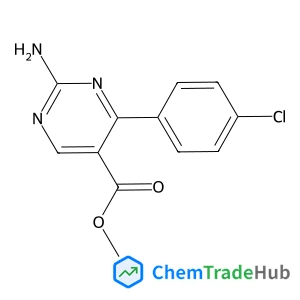
Methyl 2-amino-4-(4-chlorophenyl)-5-pyrimidinecarboxylate
CAS Number:
1133115-56-6
Molecular Formula:
C12H10ClN3O2
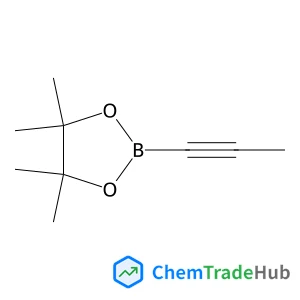
4,4,5,5-Tetramethyl-2-(1-propyn-1-YL)-1,3,2-dioxaborolane
CAS Number:
347389-75-7
Molecular Formula:
C9H15BO2
Recommended Suppliers




Disclaimer
This page provides academic journal information for reference and research purposes only. We are not affiliated with any journal publishers and do not handle publication submissions. For publication-related inquiries, please contact the respective journal publishers directly.
If you notice any inaccuracies in the information displayed, please contact us at support@chemtradehub.com. We will promptly review and address your concerns.