












Signal loss in 1D magic-angle spinning exchange NMR (CODEX): radio-frequency limitations and intermediate motions
Literature Information
Publication Date
2009-07-17
DOI
10.1039/B906527J
Impact Factor
3.676
Authors
Christiane Hackel, Cornelius Franz, Anja Achilles, Kay Saalwächter, Detlef Reichert
View Original
Abstract
The popular 1D MAS exchange experiment CODEX suffers limitations due to signal loss during the finite recoupling periods, during which the magnetization evolves in the transverse plane. Here, we address the origins and possible improvements of this problem, aimed at (i) an optimization of the signal-to-noise ratio in the experiments, as well as harnessing intermediate-motion induced signal loss for obtaining approximate information on (ii) correlation times and (iii) potential distributions, where the latter are often found in polymeric systems. First, we show that the intensity of the signal is sensitive to the radiofrequency (rf) parameters of the carbon recoupling and proton decoupling, and care must be taken to gain optimal signal intensity. Optimum conditions are found for recoupling pulses being as short as possible for large chemical shift anisotropy (CSA) values, and approaching a ratio of 3 between the nutation frequencies for protonated carbons, calling for an individual adjustment in each case. Second, we demonstrate that the effect of intermediate motions can be studied semi-quantitatively by combining CODEX data with its constant-time modification CONTRA, which allows for a tuning of the signal loss due to intermediate motions. Third, for the case of samples featuring a distribution of correlation times, we propose a procedure to obtain an estimate of the proportion of molecular segments in the sample for which the CODEX data are representative, i.e., which share of segments moves truly in the slow-motion regime. The procedure involves the combination of CODEX data with a cross-polarisation (CP) reference experiment for an estimate of the full sample magnetization; it is demonstrated on the example of semi-crystalline poly(ethylene oxide).
Recommended Journals
Related Literature
A ‘smart’ approach towards the formation of multifunctional nano-assemblies by simple mixing of block copolymers having a common temperature sensitive segment
Mitsuhiro Ebara, Naokazu Idota, Ravin Narain
2012-02-15
Paper
DOI: 10.1039/C2PY00589A
Spectroscopic study of side-chain melting and crystallization of regioregular poly(3-dodecylthiophene)
Yan Guo, Ying Jin, Zhaohui Su
2012-02-03
Communication
DOI: 10.1039/C2PY00582D
Benzoxazine-based phosphinated bisphenols and their application in preparing flame-retardant, low dielectric cyanate ester thermosets
Hou Chien Chang, Hung Tse Lin, Ching Hsuan Lin
2012-02-01
Paper
DOI: 10.1039/C2PY00528J
Fast and scalable production of hyperbranched polythioether-ynes by a combination of thiol-halogen click-like coupling and thiol-yne click polymerization
Jin Han, Bo Zhao, Aijin Tang, Yanqin Gao, Chao Gao
2011-10-25
Paper
DOI: 10.1039/C1PY00367D
Novel polymer nanocomposites from bioinspired green aqueous functionalization of BNNTs
Vijay Kumar Thakur, Jian Yan, Meng-Fang Lin, Chunyi Zhi, Dmitri Golberg, Yoshio Bando, Raymond Sim
2012-01-31
Paper
DOI: 10.1039/C2PY00612J
Functional block copolymernanoparticles: toward the next generation of delivery vehicles
Maxwell J. Robb, Luke A. Connal, Bongjae F. Lee, Nathaniel A. Lynd
2012-04-18
Paper
DOI: 10.1039/C2PY20131C
A new story of cyclodextrin as a bulky pendent group causing uncommon behaviour to random copolymers in solution
Fuji Sakai, Guosong Chen, Ming Jiang
2012-01-31
Paper
DOI: 10.1039/C2PY00614F
Electrochemical investigations on anticorrosive and electrochromic properties of electroactive polyurea
Tzu-Chun Yeh, Tsao-Cheng Huang, Hsiu-Ying Huang, Yu-Pei Huang, Yu-Ting Cai, Shih-Ting Lin, Yen Wei, Jui-Ming Yeh
2012-05-28
Paper
DOI: 10.1039/C2PY20061A
You might also like
Compound Q&A
Are there alternatives to 1-(4-Chlorophenyl)-N-hydroxymethanimine (CAS: 3848-36-0) in synthesis?
When considering alternatives to 1-(4-Chlorophenyl)-N-hydroxymethanimine (CAS: 3...
3848-36-01-(4-Chlorophenyl)-N...
Compound Q&A
How should (1R,9S,10S,12S,14E,16S,19R,20R,21S,22R)-3,9,21-Trihydroxy-5,10,12,14,16,20,22-heptamethyl-23,24-dioxatetracyclo[17.3.1.1~6,9~.0~2,7~]tetracosa-2,5,7,14-tetraen-4-one (CAS: 183202-73-5) be stored?
This compound should be stored in a cool, dry place away from direct sunlight. I...
183202-73-5(1R,9S,10S,12S,14E,1...
Compound Q&A
How is 3-(4-Bromophenyl)-5-(2-fluorophenyl)-1,2,4-oxadiazole (CAS: 419553-16-5) typically synthesized?
3-(4-Bromophenyl)-5-(2-fluorophenyl)-1,2,4-oxadiazole is synthesized through a m...
419553-16-53-(4-Bromophenyl)-5-...
Compound Q&A
How is 5-Chloro-2-(4-chlorophenyl)-4-methyl-6-[3-(1-piperidinyl)propoxy]pyrimidine (CAS: 1639220-19-1) typically synthesized?
5-Chloro-2-(4-chlorophenyl)-4-methyl-6-[3-(1-piperidinyl)propoxy]pyrimidine (CAS...
1639220-19-15-Chloro-2-(4-chloro...
Compound Q&A
What industries use 2-Chloro-4-(difluoromethoxy)pyridine (CAS: 1206978-15-5)?
2-Chloro-4-(difluoromethoxy)pyridine is used in the pharmaceutical industry for ...
1206978-15-52-Chloro-4-(difluoro...
Compound Q&A
What regulatory guidelines apply to 3-Chloro-6-methylpyridazine (CAS: 1121-79-5)?
3-Chloro-6-methylpyridazine (CAS: 1121-79-5) is classified under the Globally Ha...
1121-79-53-Chloro-6-methylpyr...
Compound Q&A
Are there alternatives to Methyl 4,5-dimethyl-2-nitrobenzoate in synthesis?
Several alternatives can be used in the synthesis of Methyl 4,5-dimethyl-2-nitro...
90922-74-0Methyl 4,5-dimethyl-...
Compound Q&A
Are there alternatives to (2E,2'E)-3,3'-(1,4-Phenylene)bisacrylaldehyde in synthesis?
Alternatives to (2E,2'E)-3,3'-(1,4-Phenylene)bisacrylaldehyde include other acry...
63405-68-5(2E,2'E)-3,3'-(1,4-P...
Compound Q&A
What is 3-Amino-5-chloropyridin-2-ol hydrochloride (CAS: 1261906-29-9)?
3-Amino-5-chloropyridin-2-ol hydrochloride is an organic compound with the CAS n...
1261906-29-93-Amino-5-chloropyri...
Compound Q&A
What precautions should be taken when handling 6,7-Difluoro-2,3-dihydro-4H-chromen-4-one (CAS: 1092349-93-3)?
When handling 6,7-Difluoro-2,3-dihydro-4H-chromen-4-one, it is essential to wear...
1092349-93-36,7-Difluoro-2,3-dih...
Source Journal
Physical Chemistry Chemical Physics

CiteScore:
5.5
Self-citation Rate:
10.3%
Articles per Year:
3036
Physical Chemistry Chemical Physics (PCCP) is an international journal co-owned by 19 physical chemistry and physics societies from around the world. This journal publishes original, cutting-edge research in physical chemistry, chemical physics and biophysical chemistry. To be suitable for publication in PCCP, articles must include significant innovation and/or insight into physical chemistry; this is the most important criterion that reviewers and Editors will judge against when evaluating submissions. The journal has a broad scope and welcomes contributions spanning experiment, theory, computation and data science. Topical coverage includes spectroscopy, dynamics, kinetics, statistical mechanics, thermodynamics, electrochemistry, catalysis, surface science, quantum mechanics, quantum computing and machine learning. Interdisciplinary research areas such as polymers and soft matter, materials, nanoscience, energy, surfaces/interfaces, and biophysical chemistry are welcomed if they demonstrate significant innovation and/or insight into physical chemistry. Joined experimental/theoretical studies are particularly appreciated when complementary and based on up-to-date approaches.
Recommended Compounds
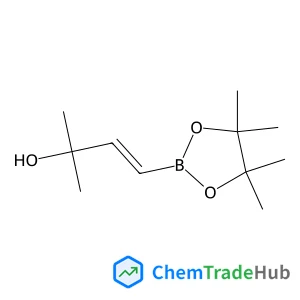
(E)-2-methyl-4-(4,4,5,5-tetramethyl-1,3,2-dioxaborolan-2-yl)but-3-en-2-ol
CAS Number:
581802-26-8
Molecular Formula:
C11H21BO3
![2-{[(1R,2S)-2-Aminocyclohexyl]amino}-4-{[3-(2H-1,2,3-triazol-2-yl)phenyl]amino}-5-pyrimidinecarboxamide structure](https://static.chemtradehub.com/structs/137/1370261-96-3-40df.webp "2-{[(1R,2S)-2-Aminocyclohexyl]amino}-4-{[3-(2H-1,2,3-triazol-2-yl)phenyl]amino}-5-pyrimidinecarboxamide structure")
2-{[(1R,2S)-2-Aminocyclohexyl]amino}-4-{[3-(2H-1,2,3-triazol-2-yl)phenyl]amino}-5-pyrimidinecarboxamide
CAS Number:
1370261-96-3
Molecular Formula:
C19H23N9O
Recommended Suppliers







Disclaimer
This page provides academic journal information for reference and research purposes only. We are not affiliated with any journal publishers and do not handle publication submissions. For publication-related inquiries, please contact the respective journal publishers directly.
If you notice any inaccuracies in the information displayed, please contact us at support@chemtradehub.com. We will promptly review and address your concerns.