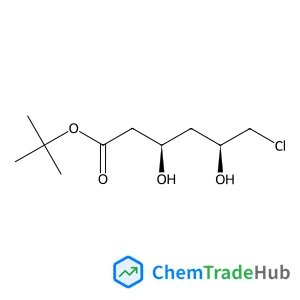
2-Methyl-2-propanyl (3R,5S)-6-chloro-3,5-dihydroxyhexanoate
CAS Number:
154026-93-4
Molecular Formula:
C10H19ClO4
Min Jia, Dapeng Yang, Chikowore Panashe, Yuye Yang, Jianjun Wang
First principles calculations based on density functional theory were carried out to study the electronic and magnetic properties of C2N nanoribbons (C2NNRs). The electronic structure could be modified by different methods using saturated or co-saturated H, O, and F on the edges, which can provide a new pathway at the nanoscale for fabricating 2D spintronic materials. It was found that the pristine armchair C2NNR (A-C2NNR) is a nonmagnetic semiconductor with a direct band gap, while the pristine zigzag C2NNRs (Z-C2NNRs) can show either magnetic semiconductor with an indirect band gap or magnetic metallic behavior depending on its ribbon widths. A-C2NNRs with one type of atom (H, O or F) saturated on the edges are nonmagnetic, while H and O (F and O) co-saturated A-C2NNRs show magnetic ground states. H and O (F and O) co-saturated Z-C2NNRs share a larger magnetic moment compared to the case with H, O and F saturated on the edges. Furthermore, O-saturated Z-C2NNR is a spin “gapless” semiconductor. Additionally, there is no need to spin flip in the process of electronic transition near the Fermi level. Therefore, C2NNRs might have potential applications in photoelectronic and spinelectronic devices.

Medicinal Chemistry Research

Journal of Asian Natural Products Research

Main Group Chemistry

Herald of the Russian Academy of Sciences

Biocatalysis and Biotransformation

Polycyclic Aromatic Compounds

Chinese Journal of Chemistry

Journal of the Indian Institute of Science

Colloid Journal

Critical Reviews in Solid State and Materials Sciences
Gui-Min Xue, Chen-Guang Zhao, Jin-Feng Xue, Hui Chen, Zhen-Zhu Zhao, Ying-Ying Si, Kun Du, Yan-Le Zhi, Wei-Sheng Feng
DOI: 10.1039/D1QO01404H
Rabiul Alam, Abu Saleh Musha Islam, Mihir Sasmal, Atul Katarkar, Mahammad Ali
DOI: 10.1039/C8OB00822A
Verena Klaus, Stéphane Wittmann, Hans M. Senn, J. Stephen Clark
DOI: 10.1039/C8OB00924D
Jian Huang, Wei Chen, Jiazhi Liang, Qin Yang, Zhihong Deng, Zhibin Song, Yiyuan Peng
DOI: 10.1039/D1QO01186C
Dominik Göbel, Nils Clamor, Boris J. Nachtsheim
DOI: 10.1039/C8OB01072B
Yao Peng, Jian Lei, Renhua Qiu, Lingteng Peng, Chak-Tong Au, Shuang-Feng Yin
DOI: 10.1039/C8OB00907D
Xiaoyu Xing, Yan Zhao
DOI: 10.1039/C8OB00786A
Xie-Huang Sheng, Cheng-Cheng Cui, Chao Shan, Yu-Zhen Li, Duo-Hong Sheng, Bin Sun, De-Zhan Chen
DOI: 10.1039/C8OB00546J
Guo-Shu Chen, Jia-Hui Li, Shu-Jie Chen, Wen-Xia Lin, Hai Ren, Dong-Sheng Deng, Yun-Lin Liu
DOI: 10.1039/D1QO01078F
Xinxin Han, Xin Liu, Yueyun Bao, Hunahuan Song, Yu-Rou Zhao, Xiaoying Wang, Junjie Zhang, Le Liu, Xin-Hua Duan, Jinbo Hu, Mingyou Hu
DOI: 10.1039/D1QO01654G
(1R,3S)-1,3-Cyclopentanediol finds applications in various industries. In the ph...
When handling N'-[4-(Dimethylamino)phenyl]-N,N-dimethyl-1,4-benzenediamine, it i...
There are several alternatives to 5-(2,4-Difluorophenyl)-2-methoxypyrimidine in ...
1-(3-Methoxyphenoxy)propan-2-ol (CAS: 382141-68-6) must comply with the Globally...
Tetrodotoxin Citrate is extremely dangerous and should be handled with extreme c...
2-Methyl-2-propanyl [(1R,3S)-3-hydroxycyclopentyl]carbamate (CAS: 225641-84-9) i...
Waste containing 4-(2-Hydroxyhexafluoroisopropyl)Benzoic Acid (CAS: 16261-80-6) ...
2-Methyl-2-proanyl {(2S)-1-[(benzyloxy)amino]-3-hydroxy-3-methyl-1-oxo-2-butanyl...
Benzeneethanamine, α-ethyl-, hydrochloride (1:1) is an organic compound with the...
In the synthesis of compounds similar to 3-{(E)-[4-(Dimethylamino)phenyl]diazeny...

Physical Chemistry Chemical Physics (PCCP) is an international journal co-owned by 19 physical chemistry and physics societies from around the world. This journal publishes original, cutting-edge research in physical chemistry, chemical physics and biophysical chemistry. To be suitable for publication in PCCP, articles must include significant innovation and/or insight into physical chemistry; this is the most important criterion that reviewers and Editors will judge against when evaluating submissions. The journal has a broad scope and welcomes contributions spanning experiment, theory, computation and data science. Topical coverage includes spectroscopy, dynamics, kinetics, statistical mechanics, thermodynamics, electrochemistry, catalysis, surface science, quantum mechanics, quantum computing and machine learning. Interdisciplinary research areas such as polymers and soft matter, materials, nanoscience, energy, surfaces/interfaces, and biophysical chemistry are welcomed if they demonstrate significant innovation and/or insight into physical chemistry. Joined experimental/theoretical studies are particularly appreciated when complementary and based on up-to-date approaches.
![N-[(5,6-Dichloro-1H-benzimidazol-2-yl)methyl]-9-(1-methyl-1H-pyrazol-4-yl)-2-(4-morpholinyl)-9H-purin-6-amine structure](https://static.chemtradehub.com/structs/238/2387704-62-1-25f4.webp "N-[(5,6-Dichloro-1H-benzimidazol-2-yl)methyl]-9-(1-methyl-1H-pyrazol-4-yl)-2-(4-morpholinyl)-9H-purin-6-amine structure")
![N-[(1S,2R,4S)-2-Amino-4-(dimethylcarbamoyl)cyclohexyl]-N'-(5-chloro-2-pyridinyl)ethanediamide structure](https://static.chemtradehub.com/structs/480/480452-37-7-0898.webp "N-[(1S,2R,4S)-2-Amino-4-(dimethylcarbamoyl)cyclohexyl]-N'-(5-chloro-2-pyridinyl)ethanediamide structure")