












Experimental and theoretical studies on fluvastatin primary photoproduct formation
Literature Information
Publication Date
2017-06-16
DOI
10.1039/C7CP01094J
Impact Factor
3.676
Authors
Dorota Jarmużek, Marcin Hoffmann, Tomasz Siodła, Kinga Salus, Donata Pluskota-Karwatka
View Original
Abstract
Fluvastatin (FLV) belongs to the group of compounds referred to as statins, also known as 3-hydroxy-3-methylglutaryl-coenzyme A (HMG-CoA) reductase inhibitors. Statins act as cholesterol-lowering agents and are among the most frequently prescribed drugs. They upregulate low-density lipoprotein receptors in the liver by binding to the active site of HMG-CoA reductase, which is the key enzyme in cholesterol biosynthesis. Statins have been detected as contaminants in natural waters and are susceptible to degradation upon exposure to light. Fluvastatin is extremely sensitive to light; upon irradiation it forms a range of photoproducts. In this study the fluvastatin molar absorption coefficient and the quantum yield of the drug photodegradation were determined. The FLV photodegradation quantum yield value determined in this work (Φ = 0.13 ± 0.02) was found to be significantly larger than that previously reported in the literature. Our results also showed that the generation of singlet oxygen is not involved in the drug photodecomposition indicating that the excited triplet state of fluvastatin is not populated efficiently. Moreover, experimental methods and DFT calculations were applied to get insight into the possible mechanisms of fluvastatin primary photoproduct formation. Using the transient absorption spectroscopy technique, the transient species formed immediately after the drug excitation were followed, and the scheme for fluvastatin primary photochemistry was suggested. The primary photoproducts were identified on the basis of spectroscopic and spectrometric methods. A new mechanism for photooxygenation leading to the formation of one of the identified photoproducts (FP2) was proposed and a new approach to the formation of the other photoproduct (FP1) was provided. The theoretical mechanistic explanation of the photoproduct formation is in excellent agreement with the experimental data.
Related Literature
Fabrication of multi-stimuli responsive supramolecular hydrogels based on host–guest inclusion complexation of a tadpole-shaped cyclodextrin derivative with the azobenzene dimer
Xing Wang, Juan Wang
2017-06-20
Paper
DOI: 10.1039/C7PY00698E
The effect of the backbone structure on the thermoelectric properties of donor–acceptor conjugated polymers
Luhai Wang, Chengjun Pan, Ansheng Liang, Xiaoyan Zhou, Wenqiao Zhou, Tao Wan, Lei Wang
2017-07-20
Communication
DOI: 10.1039/C7PY01005B
Design of well-defined shape memory networks with high homogeneity: towards advanced shape memory polymeric materials
Yi Pan, Zhaohui Zheng, Xiaobin Ding
2017-06-15
Communication
DOI: 10.1039/C7PY00904F
Mussel-inspired multifunctional supramolecular hydrogels with self-healing, shape memory and adhesive properties
Wei Lu, To Ngai, Xiaoxia Le, Jing Zheng, Ning Zhao, Youju Huang, Xiufang Wen, Jiawei Zhang, Tao Chen
2016-08-04
Communication
DOI: 10.1039/C6PY01112H
Multifunctional porous Tröger's base polymers with tetraphenylethene units: CO2 adsorption, luminescence and sensing properties
Yuanzheng Cui, Yuchuan Liu, Jiancong Liu, Jianfeng Du, Yue Yu, Shun Wang, Zhiqiang Liang, Jihong Yu
2017-07-25
Paper
DOI: 10.1039/C7PY00856B
Self-assembled micelles prepared from amphiphilic copolymers bearing cell outer membrane phosphorylcholine zwitterions for a potential anti-phagocytic clearance carrier
Yuping Zhao, Guiqiang He, Weihong Guo, Lili Bao, Meijun Yi, Yongkuan Gong, Shiping Zhang
2016-08-24
Paper
DOI: 10.1039/C6PY00845C
AIE conjugated polyelectrolytes based on tetraphenylethene for efficient fluorescence imaging and lifetime imaging of living cells
Mengxia Gao, Bin Chen, Yinan Wang, Wenjun Zhou, Wallace W. H. Wong, Trevor A. Smith, Zujin Zhao
2017-06-05
Communication
DOI: 10.1039/C7PY00564D
Thermoresponsivity of polymer solution derived from a self-attractive urea unit and a self-repulsive lipophilic ion unit
Shogo Amemori, Kazuya Iseda, Shizuka Anan, Toshikazu Ono
2017-06-12
Paper
DOI: 10.1039/C7PY00591A
Oximes as reversible links in polymer chemistry: dynamic macromolecular stars
Soma Mukherjee, Abhijeet P. Bapat, Megan R. Hill, Brent S. Sumerlin
2014-10-09
Paper
DOI: 10.1039/C4PY01282H
Facile synthesis of histidine functional poly(N-isopropylacrylamide): zwitterionic and temperature responsive materials
Emma R. L. Brisson, Zeyun Xiao, Lucas Levin, George V. Franks, Luke A. Connal
2016-02-11
Paper
DOI: 10.1039/C5PY01915J
You might also like
Compound Q&A
What are the main uses of 4-Nitrophenyl phosphate disodium salt hexahydrate (CAS: 333338-18-4)?
4-Nitrophenyl phosphate disodium salt hexahydrate is primarily used as a substra...
333338-18-44-Nitrophenyl phosph...
Compound Q&A
What are the main uses of 2-(Trifluoromethyl)-1,3-oxazole-4-carboxylic Acid (CAS: 1060816-01-4)?
2-(Trifluoromethyl)-1,3-oxazole-4-carboxylic Acid (CAS: 1060816-01-4) is widely ...
1060816-01-42-(Trifluoromethyl)-...
Compound Q&A
How should 2-Fluoro-4-biphenylcarboxylic acid (CAS: 137045-30-8) be stored?
2-Fluoro-4-biphenylcarboxylic acid should be stored in a cool, dry place at room...
137045-30-82-Fluoro-4-biphenylc...
Compound Q&A
What industries use Prednisolone-21-Carboxylic Acid (CAS: 61549-70-0)?
Prednisolone-21-Carboxylic Acid is primarily used in the pharmaceutical industry...
61549-70-0Prednisolone-21-Carb...
Compound Q&A
How should 4-(Hydrazinomethyl)-1,2,3-benzenetriol (CAS: 3614-72-0) be stored?
4-(Hydrazinomethyl)-1,2,3-benzenetriol (CAS: 3614-72-0) should be stored in a co...
3614-72-04-(Hydrazinomethyl)-...
Compound Q&A
What industries use 4-Amino-1-methyl-1H-pyrazole-5-carboxylic acid hydrochloride (CAS: 92534-70-8)?
4-Amino-1-methyl-1H-pyrazole-5-carboxylic acid hydrochloride (CAS: 92534-70-8) i...
92534-70-84-Amino-1-methyl-1H-...
Compound Q&A
What regulatory guidelines apply to dehydropachymic acid (CAS: 77012-31-8)?
Dehydropachymic acid (CAS: 77012-31-8) is regulated by various agencies. It fall...
77012-31-8Dehydropachymic acid
Compound Q&A
What is the market or research trend for 6-[(2,2-Dimethylpropanoyl)amino]nicotinic acid (CAS: 898561-66-5)?
The market and research trends for 6-[(2,2-Dimethylpropanoyl)amino]nicotinic aci...
898561-66-56-[(2,2-Dimethylprop...
Compound Q&A
How should 1,10-Phenanthroline-2,9-dicarbaldehyde (CAS: 57709-62-3) be stored?
1,10-Phenanthroline-2,9-dicarbaldehyde should be stored in a cool, dry place awa...
57709-62-31,10-Phenanthroline-...
Compound Q&A
How is 5-Carbamoyl-11-oxo-10,11-dihydro-5H-dibenzo[b,f]azepin-10-yl acetate (CAS: 113952-21-9) typically synthesized?
5-Carbamoyl-11-oxo-10,11-dihydro-5H-dibenzo[b,f]azepin-10-yl acetate can be synt...
113952-21-95-Carbamoyl-11-oxo-1...
Source Journal
Physical Chemistry Chemical Physics

CiteScore:
5.5
Self-citation Rate:
10.3%
Articles per Year:
3036
Physical Chemistry Chemical Physics (PCCP) is an international journal co-owned by 19 physical chemistry and physics societies from around the world. This journal publishes original, cutting-edge research in physical chemistry, chemical physics and biophysical chemistry. To be suitable for publication in PCCP, articles must include significant innovation and/or insight into physical chemistry; this is the most important criterion that reviewers and Editors will judge against when evaluating submissions. The journal has a broad scope and welcomes contributions spanning experiment, theory, computation and data science. Topical coverage includes spectroscopy, dynamics, kinetics, statistical mechanics, thermodynamics, electrochemistry, catalysis, surface science, quantum mechanics, quantum computing and machine learning. Interdisciplinary research areas such as polymers and soft matter, materials, nanoscience, energy, surfaces/interfaces, and biophysical chemistry are welcomed if they demonstrate significant innovation and/or insight into physical chemistry. Joined experimental/theoretical studies are particularly appreciated when complementary and based on up-to-date approaches.
Recommended Compounds
![(2E)-3-(3-Chlorophenyl)-N-{2-[4-(methylsulfonyl)-1-piperazinyl]-2-oxoethyl}acrylamide structure](https://static.chemtradehub.com/structs/250/2505001-54-5-c1e9.webp "(2E)-3-(3-Chlorophenyl)-N-{2-[4-(methylsulfonyl)-1-piperazinyl]-2-oxoethyl}acrylamide structure")
(2E)-3-(3-Chlorophenyl)-N-{2-[4-(methylsulfonyl)-1-piperazinyl]-2-oxoethyl}acrylamide
CAS Number:
2505001-54-5
Molecular Formula:
C16H20ClN3O4S
![1-[(4-Methylphenyl)sulfonyl]-3-(4,4,5,5-tetramethyl-1,3,2-dioxaborolan-2-yl)-1H-pyrrolo[2,3-b]pyridine-5-carbonitrile structure](https://static.chemtradehub.com/structs/143/1434747-57-5-fc0d.webp "1-[(4-Methylphenyl)sulfonyl]-3-(4,4,5,5-tetramethyl-1,3,2-dioxaborolan-2-yl)-1H-pyrrolo[2,3-b]pyridine-5-carbonitrile structure")
1-[(4-Methylphenyl)sulfonyl]-3-(4,4,5,5-tetramethyl-1,3,2-dioxaborolan-2-yl)-1H-pyrrolo[2,3-b]pyridine-5-carbonitrile
CAS Number:
1434747-57-5
Molecular Formula:
C21H22BN3O4S
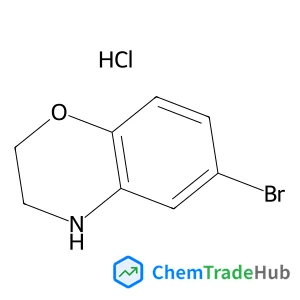
6-Bromo-3,4-dihydro-2H-1,4-benzoxazine hydrochloride (1:1)
CAS Number:
1260803-10-8
Molecular Formula:
C8H9BrClNO
Recommended Suppliers






Disclaimer
This page provides academic journal information for reference and research purposes only. We are not affiliated with any journal publishers and do not handle publication submissions. For publication-related inquiries, please contact the respective journal publishers directly.
If you notice any inaccuracies in the information displayed, please contact us at support@chemtradehub.com. We will promptly review and address your concerns.