













Structure and dynamics of [NH2(CH3)2]3Sb2Cl9 by means of 1H NMR relaxometry – quadrupolar relaxation enhancement effects
Literature Information
Publication Date
2017-04-13
DOI
10.1039/C7CP00788D
Impact Factor
3.676
Authors
M. Florek-Wojciechowska, R. Jakubas, D. Kruk
View Original
Abstract
1H spin–lattice relaxation experiments have been performed for [NH2(CH3)2]3Sb2Cl9 (tris(dimethylammonium)nonachlorodiantimonate(III)) in the temperature range of 253–313 K and a broad range of frequencies – from 4 kHz to 40 MHz. From the analysis of quadrupolar relaxation enhancement effects (quadrupolar peaks) associated with 14N nuclei, two lattice sites characterized by different electric field gradient tensors have been revealed. The 14N quadrupolar couplings and asymmetry parameters at these sites differ by a factor of about two. Three motional processes have been identified and attributed to the overall dynamics of the NH2(CH3)2 cations (slow motion), dynamics of the NH2 groups (intermediate motion) and methyl group rotation (fast motion). It has been shown that the slow dynamics is only weakly temperature dependent, while the intermediate and fast motional processes are characterized by activation energies of 2.92 kJ mol−1 and 0.41 kJ mol−1, respectively. The correlation time of the slow dynamics is of the order of μs, while the intermediate dynamics is faster by 2–3 orders of magnitude (depending on temperature). All correlation times have turned out to be independent of the position of the cations in the lattice (they are the same for both lattice sites). The analysis presented in this work is an example of the potential of the quadrupolar relaxation enhancement effects as a method revealing information on the dynamics and structure of solids.
Related Literature
Multiple sized europium(III) chelate-dyed polystyrene particles as donors in FRET – an application for sensitive protein quantification utilizing competitive adsorption
Antti Valanne, Jouko Peltonen, Tero Soukka, Pekka Hänninen, Harri Härmä
2009-03-02
Paper
DOI: 10.1039/B821210D
Electrochemical impedance spectroscopy and surface plasmon resonance studies of DNA hybridization on gold/SiOx interfaces
Maël Manesse, Valerie Stambouli, Rabah Boukherroub
2008-07-01
Paper
DOI: 10.1039/B804825H
Plasmon-controlled fluorescence: a new paradigm in fluorescence spectroscopy
Joseph R. Lakowicz, Krishanu Ray, Mustafa Chowdhury, Henryk Szmacinski, Yi Fu, Jian Zhang, Kazimierz Nowaczyk
2008-07-16
Critical Review
DOI: 10.1039/B802918K
Self-encapsulation of oxidases as a basic approach to tune the upper detection limit of amperometric biosensors
Arunas Ramanavicius, Almira Ramanaviciene
2008-06-12
Paper
DOI: 10.1039/B801501E
Electrochemiluminescence detection based on Ruthenium(II) tris(bipyridine) immobilised in sulfonic-functionalised titania nanoparticles by ion exchange strategy
Fan Yang
2009-08-05
Paper
DOI: 10.1039/B903434J
Split hybridisation probes for electrochemical typing of single-nucleotide polymorphisms
Fausto Lucarelli, Silvia Capponcelli, Giovanna Marrazza, Luca Sangiorgi, Marco Mascini
2008-10-18
Paper
DOI: 10.1039/B806514D
In situ detection of pterins by SERS
Ross Stevenson, Robert J. Stokes, Donna MacMillan, David Armstrong, Karen Faulds, Roger Wadsworth, Suma Kunuthur, Colin J. Suckling, Duncan Graham
2009-05-20
Paper
DOI: 10.1039/B905562B
Gold nanoparticle-based immunoassay by using non-stripping chemiluminescence detection
Chun-Feng Duan, Yu-Qi Yu, Hua Cui
2008-07-28
Paper
DOI: 10.1039/B807163B
You might also like
Compound Q&A
Are there alternatives to 1-(4-Chlorophenyl)-N-hydroxymethanimine (CAS: 3848-36-0) in synthesis?
When considering alternatives to 1-(4-Chlorophenyl)-N-hydroxymethanimine (CAS: 3...
3848-36-01-(4-Chlorophenyl)-N...
Compound Q&A
How should (1R,9S,10S,12S,14E,16S,19R,20R,21S,22R)-3,9,21-Trihydroxy-5,10,12,14,16,20,22-heptamethyl-23,24-dioxatetracyclo[17.3.1.1~6,9~.0~2,7~]tetracosa-2,5,7,14-tetraen-4-one (CAS: 183202-73-5) be stored?
This compound should be stored in a cool, dry place away from direct sunlight. I...
183202-73-5(1R,9S,10S,12S,14E,1...
Compound Q&A
How is 3-(4-Bromophenyl)-5-(2-fluorophenyl)-1,2,4-oxadiazole (CAS: 419553-16-5) typically synthesized?
3-(4-Bromophenyl)-5-(2-fluorophenyl)-1,2,4-oxadiazole is synthesized through a m...
419553-16-53-(4-Bromophenyl)-5-...
Compound Q&A
How is 5-Chloro-2-(4-chlorophenyl)-4-methyl-6-[3-(1-piperidinyl)propoxy]pyrimidine (CAS: 1639220-19-1) typically synthesized?
5-Chloro-2-(4-chlorophenyl)-4-methyl-6-[3-(1-piperidinyl)propoxy]pyrimidine (CAS...
1639220-19-15-Chloro-2-(4-chloro...
Compound Q&A
What industries use 2-Chloro-4-(difluoromethoxy)pyridine (CAS: 1206978-15-5)?
2-Chloro-4-(difluoromethoxy)pyridine is used in the pharmaceutical industry for ...
1206978-15-52-Chloro-4-(difluoro...
Compound Q&A
What regulatory guidelines apply to 3-Chloro-6-methylpyridazine (CAS: 1121-79-5)?
3-Chloro-6-methylpyridazine (CAS: 1121-79-5) is classified under the Globally Ha...
1121-79-53-Chloro-6-methylpyr...
Compound Q&A
Are there alternatives to Methyl 4,5-dimethyl-2-nitrobenzoate in synthesis?
Several alternatives can be used in the synthesis of Methyl 4,5-dimethyl-2-nitro...
90922-74-0Methyl 4,5-dimethyl-...
Compound Q&A
Are there alternatives to (2E,2'E)-3,3'-(1,4-Phenylene)bisacrylaldehyde in synthesis?
Alternatives to (2E,2'E)-3,3'-(1,4-Phenylene)bisacrylaldehyde include other acry...
63405-68-5(2E,2'E)-3,3'-(1,4-P...
Compound Q&A
What is 3-Amino-5-chloropyridin-2-ol hydrochloride (CAS: 1261906-29-9)?
3-Amino-5-chloropyridin-2-ol hydrochloride is an organic compound with the CAS n...
1261906-29-93-Amino-5-chloropyri...
Compound Q&A
What precautions should be taken when handling 6,7-Difluoro-2,3-dihydro-4H-chromen-4-one (CAS: 1092349-93-3)?
When handling 6,7-Difluoro-2,3-dihydro-4H-chromen-4-one, it is essential to wear...
1092349-93-36,7-Difluoro-2,3-dih...
Source Journal
Physical Chemistry Chemical Physics

CiteScore:
5.5
Self-citation Rate:
10.3%
Articles per Year:
3036
Physical Chemistry Chemical Physics (PCCP) is an international journal co-owned by 19 physical chemistry and physics societies from around the world. This journal publishes original, cutting-edge research in physical chemistry, chemical physics and biophysical chemistry. To be suitable for publication in PCCP, articles must include significant innovation and/or insight into physical chemistry; this is the most important criterion that reviewers and Editors will judge against when evaluating submissions. The journal has a broad scope and welcomes contributions spanning experiment, theory, computation and data science. Topical coverage includes spectroscopy, dynamics, kinetics, statistical mechanics, thermodynamics, electrochemistry, catalysis, surface science, quantum mechanics, quantum computing and machine learning. Interdisciplinary research areas such as polymers and soft matter, materials, nanoscience, energy, surfaces/interfaces, and biophysical chemistry are welcomed if they demonstrate significant innovation and/or insight into physical chemistry. Joined experimental/theoretical studies are particularly appreciated when complementary and based on up-to-date approaches.
Recommended Compounds
![6-Bromo-2,3-dihydro-1H-pyrido[2,3-b][1,4]oxazine structure](https://static.chemtradehub.com/structs/120/1203499-17-5-b4d1.webp "6-Bromo-2,3-dihydro-1H-pyrido[2,3-b][1,4]oxazine structure")
6-Bromo-2,3-dihydro-1H-pyrido[2,3-b][1,4]oxazine
CAS Number:
1203499-17-5
Molecular Formula:
C7H7BrN2O
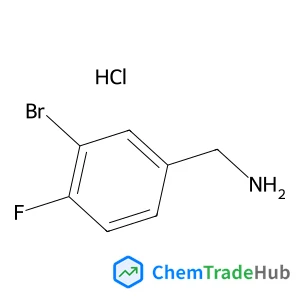
1-(3-Bromo-4-fluorophenyl)methanamine hydrochloride (1:1)
CAS Number:
202865-68-7
Molecular Formula:
C7H8BrClFN
Recommended Suppliers





Disclaimer
This page provides academic journal information for reference and research purposes only. We are not affiliated with any journal publishers and do not handle publication submissions. For publication-related inquiries, please contact the respective journal publishers directly.
If you notice any inaccuracies in the information displayed, please contact us at support@chemtradehub.com. We will promptly review and address your concerns.