













In situ template synthesis of hollow nanospheres assembled from NiCo2S4@C ultrathin nanosheets with high electrochemical activities for lithium storage and ORR catalysis
Literature Information
Publication Date
2017-03-31
DOI
10.1039/C7CP00509A
Impact Factor
3.676
Authors
Xiaoyu Wu, Songmei Li, Bo Wang, Jianhua Liu, Mei Yu
View Original
Abstract
Transition-metal sulfide hollow nanostructures have received intensive attention in energy-related applications due to their unique structural features and high electrochemical activities. Here, a well-designed composite of NiCo2S4@C is successfully fabricated using a facile in situ template removal method. The obtained composite shows unique microstructures of hollow nanospheres (∼650 nm in diameter) assembled from ultrathin NiCo2S4@C nanosheets, in which numerous scattered NiCo2S4 nanoparticles are embedded in ultrathin carbon nanosheets, exhibiting mesoporous features with a high surface area of 247.25 m2 g−1. When used as anode materials for LIBs, NiCo2S4@C hollow nanospheres exhibit a high reversible capacity of 1592 mA h g−1 at a current density of 500 mA g−1, enhanced cycling performance maintaining a capacity of 1178 mA h g−1 after 200 cycles, and a remarkable rate capability. Meanwhile, the hollow nanospheres display excellent catalytic activity as ORR catalysts with a four-electron pathway and superior durability to that of commercial Pt/C catalysts. Their excellent lithium storage and ORR catalysis performance can be attributed to the rational incorporation of high-activity NiCo2S4 and ultrathin carbon nanosheets, as well as unique hollow microstructures, which offer efficient electron/ion transport, an enhanced electroactive material/electrolyte contact area, numerous active sites, and excellent structural stability.
Related Literature
Oxalamide-based bisdiamidophosphites: synthesis, coordination, and application in asymmetric metallocatalysis
Konstantin N. Gavrilov, Igor S. Mikhel, Sergey V. Zheglov, Vladislav K. Gavrilov, Ilya V. Chuchelkin, Ilya D. Firsin, Kirill P. Birin, Ivan S. Pytskii, Ksenia A. Paseshnichenko, Victor A. Tafeenko, Alexei A. Shiryaev
2019-03-28
Research Article
DOI: 10.1039/C9QO00237E
I2-Catalyzed sulfenylation of indoles and pyrroles using triethylammonium thiolates as sulfenylating agents
Wei Fan, Zhen Yang
2017-02-20
Research Article
DOI: 10.1039/C6QO00851H
Organic photoredox catalytic decarboxylative cross-coupling of gem-difluoroalkenes with unactivated carboxylic acids
Hui Yang, Chao Tian, Dongsheng Qiu, Haitao Tian, Guangming Li
2019-05-10
Research Article
DOI: 10.1039/C9QO00495E
Pd(ii)/Ag(i)-Cocatalyzed ortho direct arylation of O-phenylcarbamates with pinacol aryl boronates
Huijun Ma, Tao Wang, Chenying Gao, Guangshen Li, Minghao Zhang
2019-03-05
Research Article
DOI: 10.1039/C9QO00227H
A AgOAc/quinine-derived aminophosphine complex as an efficient catalyst for diastereo- and enantioselective 1,3-dipolar cycloaddition of α,β-unsaturated 7-azaindoline amides and azomethine ylides
Yong You, Jian-Qiang Zhao
2019-04-15
Research Article
DOI: 10.1039/C9QO00347A
Synthesis of β-hydroxysulfones through a copper(ii)-catalyzed multicomponent reaction with the insertion of sulfur dioxide
Wenlin Xie, Shengqing Ye
2019-05-06
Research Article
DOI: 10.1039/C9QO00520J
A biomimetic strategy for the selective recognition of organophosphates in 100% water: synergies of electrostatic interactions, cavity embedment and metal coordination
Solène Collin, Nicolas Giraud, Elise Dumont, Olivia Reinaud
2019-04-01
Research Article
DOI: 10.1039/C9QO00263D
You might also like
Compound Q&A
Are there alternatives to 1-(4-Chlorophenyl)-N-hydroxymethanimine (CAS: 3848-36-0) in synthesis?
When considering alternatives to 1-(4-Chlorophenyl)-N-hydroxymethanimine (CAS: 3...
3848-36-01-(4-Chlorophenyl)-N...
Compound Q&A
How should (1R,9S,10S,12S,14E,16S,19R,20R,21S,22R)-3,9,21-Trihydroxy-5,10,12,14,16,20,22-heptamethyl-23,24-dioxatetracyclo[17.3.1.1~6,9~.0~2,7~]tetracosa-2,5,7,14-tetraen-4-one (CAS: 183202-73-5) be stored?
This compound should be stored in a cool, dry place away from direct sunlight. I...
183202-73-5(1R,9S,10S,12S,14E,1...
Compound Q&A
How is 3-(4-Bromophenyl)-5-(2-fluorophenyl)-1,2,4-oxadiazole (CAS: 419553-16-5) typically synthesized?
3-(4-Bromophenyl)-5-(2-fluorophenyl)-1,2,4-oxadiazole is synthesized through a m...
419553-16-53-(4-Bromophenyl)-5-...
Compound Q&A
How is 5-Chloro-2-(4-chlorophenyl)-4-methyl-6-[3-(1-piperidinyl)propoxy]pyrimidine (CAS: 1639220-19-1) typically synthesized?
5-Chloro-2-(4-chlorophenyl)-4-methyl-6-[3-(1-piperidinyl)propoxy]pyrimidine (CAS...
1639220-19-15-Chloro-2-(4-chloro...
Compound Q&A
What industries use 2-Chloro-4-(difluoromethoxy)pyridine (CAS: 1206978-15-5)?
2-Chloro-4-(difluoromethoxy)pyridine is used in the pharmaceutical industry for ...
1206978-15-52-Chloro-4-(difluoro...
Compound Q&A
What regulatory guidelines apply to 3-Chloro-6-methylpyridazine (CAS: 1121-79-5)?
3-Chloro-6-methylpyridazine (CAS: 1121-79-5) is classified under the Globally Ha...
1121-79-53-Chloro-6-methylpyr...
Compound Q&A
Are there alternatives to Methyl 4,5-dimethyl-2-nitrobenzoate in synthesis?
Several alternatives can be used in the synthesis of Methyl 4,5-dimethyl-2-nitro...
90922-74-0Methyl 4,5-dimethyl-...
Compound Q&A
Are there alternatives to (2E,2'E)-3,3'-(1,4-Phenylene)bisacrylaldehyde in synthesis?
Alternatives to (2E,2'E)-3,3'-(1,4-Phenylene)bisacrylaldehyde include other acry...
63405-68-5(2E,2'E)-3,3'-(1,4-P...
Compound Q&A
What is 3-Amino-5-chloropyridin-2-ol hydrochloride (CAS: 1261906-29-9)?
3-Amino-5-chloropyridin-2-ol hydrochloride is an organic compound with the CAS n...
1261906-29-93-Amino-5-chloropyri...
Compound Q&A
What precautions should be taken when handling 6,7-Difluoro-2,3-dihydro-4H-chromen-4-one (CAS: 1092349-93-3)?
When handling 6,7-Difluoro-2,3-dihydro-4H-chromen-4-one, it is essential to wear...
1092349-93-36,7-Difluoro-2,3-dih...
Source Journal
Physical Chemistry Chemical Physics

CiteScore:
5.5
Self-citation Rate:
10.3%
Articles per Year:
3036
Physical Chemistry Chemical Physics (PCCP) is an international journal co-owned by 19 physical chemistry and physics societies from around the world. This journal publishes original, cutting-edge research in physical chemistry, chemical physics and biophysical chemistry. To be suitable for publication in PCCP, articles must include significant innovation and/or insight into physical chemistry; this is the most important criterion that reviewers and Editors will judge against when evaluating submissions. The journal has a broad scope and welcomes contributions spanning experiment, theory, computation and data science. Topical coverage includes spectroscopy, dynamics, kinetics, statistical mechanics, thermodynamics, electrochemistry, catalysis, surface science, quantum mechanics, quantum computing and machine learning. Interdisciplinary research areas such as polymers and soft matter, materials, nanoscience, energy, surfaces/interfaces, and biophysical chemistry are welcomed if they demonstrate significant innovation and/or insight into physical chemistry. Joined experimental/theoretical studies are particularly appreciated when complementary and based on up-to-date approaches.
Recommended Compounds
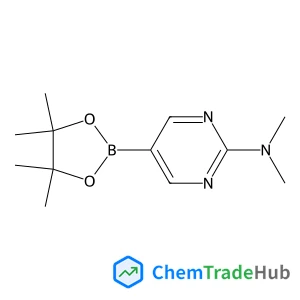
N,N-Dimethyl-5-(4,4,5,5-tetramethyl-1,3,2-dioxaborolan-2-yl)-2-pyrimidinamine
CAS Number:
1032759-30-0
Molecular Formula:
C12H20BN3O2
![(2S)-2-{[(9H-Fluoren-9-ylmethoxy)carbonyl]amino}-4-(methylselanyl)butanoic acid structure](https://static.chemtradehub.com/structs/121/1217852-49-7-f252.webp "(2S)-2-{[(9H-Fluoren-9-ylmethoxy)carbonyl]amino}-4-(methylselanyl)butanoic acid structure")
(2S)-2-{[(9H-Fluoren-9-ylmethoxy)carbonyl]amino}-4-(methylselanyl)butanoic acid
CAS Number:
1217852-49-7
Molecular Formula:
C20H21NO4Se
Recommended Suppliers







Disclaimer
This page provides academic journal information for reference and research purposes only. We are not affiliated with any journal publishers and do not handle publication submissions. For publication-related inquiries, please contact the respective journal publishers directly.
If you notice any inaccuracies in the information displayed, please contact us at support@chemtradehub.com. We will promptly review and address your concerns.