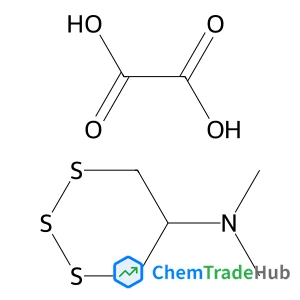
Oxalic acid compound with cyclohexylsulfamothioic O-acid (11)
CAS Number:
31895-22-4
Molecular Formula:
C7H13NO4S3
A graphical abstract is available for this content
Adnan Zulfiqar, Geraint Morgan, Nicholas W. Turner
DOI: 10.1039/C4AN00721B
Palaniappan Subramanian, Ievgen Mazurenko, Yannick Coffinier, Rabah Boukherroub, Sabine Szunerits
DOI: 10.1039/C4AN00146J
Naama Massad-Ivanir, Yossi Mirsky, Amit Nahor, Eitan Edrei, Lisa M. Bonanno-Young, Nadav Ben Dov, Amir Sa'ar
DOI: 10.1039/C4AN00364K
Michael W. Handlogten, Jared F. Stefanick, Peter E. Deak
DOI: 10.1039/C4AN00780H
Shahram Seidi, Maryam Rezazadeh, Yadollah Yamini, Niki Zamani, Sara Esmaili
DOI: 10.1039/C4AN01124D
Zhicheng Long, Anne Olliver, Elisa Brambilla, Bianca Sclavi, Kevin D. Dorfman
DOI: 10.1039/C4AN00877D
Han-Peng Jiang, Jiu-Xia Zhu, Chunyan Peng, Jiajia Gao, Fang Zheng, Yu-Xiu Xiao, Yu-Qi Feng, Bi-Feng Yuan
DOI: 10.1039/C4AN00767K
DOI: 10.1039/C4AN00643G
Kashima Arora, Monika Tomar, Vinay Gupta
DOI: 10.1039/C4AN01029A
Waste containing (6-Bromo-2-naphthyl)oxy](dimethyl)(2-methyl-2-propanyl)silane (...
7-Fluoro-4-isoquinolinecarboxylic acid can be synthesized via a multi-step proce...
2,3,5,6-Tetrabromothieno[3,2-b]thiophene is a crystalline compound with a high m...
1-[4-(Benzylamino)-7,8-dihydro-5H-pyrano[4,3-d]pyrimidin-2-yl]-2-methyl-1H-indol...
The market for imidazo[5,1-d]-1,2,3,5-tetrazine-8-carboxylic acid, 3,4-dihydro-3...
3-(Triisopropylsilyl)propiolaldehyde is a synthetic organic compound with the CA...
6-Nitro-2H-1,4-benzoxazin-3(4H)-one (CAS: 81721-87-1) is subject to various regu...
Waste containing (3-Fluorophenyl)(4-{[(2-methyl-2-propanyl)oxy]carbonyl}-1-piper...
N,N'-4,4'-Biphenyldiyldiisonicotinamide is a white crystalline solid with a mole...
6-Bromo-8-fluoro-2-quinazolinol is primarily used in the pharmaceutical industry...

Reaction Chemistry & Engineering is an interdisciplinary journal reporting cutting-edge research focused on enhancing the understanding and efficiency of reactions. Reaction engineering leverages the interface where fundamental molecular chemistry meets chemical engineering and technology. Challenges in chemistry can be overcome by the application of new technologies, while engineers may find improved solutions for process development from the latest developments in reaction chemistry. Reaction Chemistry & Engineering is a unique forum for researchers whose interests span the broad areas of chemical engineering and chemical sciences to come together in solving problems of importance to wider society. All papers should be written to be approachable by readers across the engineering and chemical sciences. Papers that consider multiple scales, from the laboratory up to and including plant scale, are particularly encouraged.