













Reagentless uric acid biosensor based on Ni microdiscs-loaded NiO thin film matrix
Literature Information
Publication Date
2014-07-21
DOI
10.1039/C4AN01029A
Impact Factor
4.616
Authors
Kashima Arora, Monika Tomar, Vinay Gupta
View Original
Abstract
The development of a noninvasive test for uric acid has been the holy grail of uric acid detection research over the last decade. In the present work, a novel matrix comprising of a NiO thin film (a biocompatible material) loaded with Ni microdiscs was prepared on an ITO-coated glass substrate (Ni/NiO/ITO) with the help of RF sputtering for the reagentless detection of uric acid. The bioelectrode was fabricated by immobilizing uricase using a physical adsorption technique on the surface of the Ni/NiO/ITO electrode. The prepared matrix was found to be efficient in sensing biological processes occurring on the surface of the bioelectrode (Ur/Ni/NiO/ITO) in the presence of the analyte (uric acid) to obtain an electronic output. The biosensor exhibits a high sensitivity (431.09 μA mM−1), low Km value (0.15 mM), high apparent enzyme activity (5.07 × 10⁻² units per cm2), high shelf life (20 weeks) and good selectivity for the detection of uric acid over a wide concentration range (0.05 mM to 1 mM) without any external mediator in the PBS buffer. The obtained results are encouraging for the realization of a reagentless uric acid biosensor with efficient sensing response characteristics.
Related Literature
Thermal decomposition of a hydrotalcite-containing Cu–Zn–Al precursor: thermal methods combined with an in situDRIFT study
I. Melián-Cabrera, M. López Granados, J. L. G. Fierro
2002-05-28
Paper
DOI: 10.1039/B201996E
Doping level change of polythiophene film during its electrochemical growth process
Mingxiao Fu, Gaoquan Shi, Fengen Chen, Xiaoyin Hong
2002-05-07
Paper
DOI: 10.1039/B201041K
Dielectric spectroscopy of ion-pairing and hydration in aqueous tetra-n-alkylammonium halide solutions
Richard Buchner, Christian Hölzl, Jochen Stauber, Josef Barthel
2002-04-29
Paper
DOI: 10.1039/B110361J
Low-frequency depolarized Raman-spectral density of liquid water from femtosecond optical Kerr-effect measurements: Lineshape analysis of restricted translational modes
Kathrin Winkler, Jörg Lindner, Peter Vöhringer
2002-05-01
Paper
DOI: 10.1039/B200299J
Preparation of silica-supported cobalt catalysts through chemisorption of cobalt(ii) and cobalt(iii) acetylacetonate
Aimo Rautiainen, Marina Lindblad, Leif B. Backman, Riikka L. Puurunen
2002-05-09
Paper
DOI: 10.1039/B201168A
Potential energy and free energy surfaces of the formic acid dimer: Correlated ab initio calculations and molecular dynamics simulations
Jana Chocholoušová, Jaroslav Vacek, Pavel Hobza
2002-04-22
Paper
DOI: 10.1039/B110872G
Synthesis and photophysical properties of ruthenium(II) bis(2,2′∶6′,2″-terpyridine) complexes constructed from a diethynylated-thiophene residue
Anthony Harriman, Annabelle Mayeux, Antoinette De Nicola, Raymond Ziessel
2002-04-22
Paper
DOI: 10.1039/B109966N
Template extraction from porous clay heterostructures: Influence on the porosity and the hydrothermal stability of the materials
M. Benjelloun, P. Cool, P. Van Der Voort, E. F. Vansant
2002-05-13
Paper
DOI: 10.1039/B108361A
A spectroscopic and computational exploration of tryptophan–water cluster structures in the gas phase
Lavina C. Snoek, Romano T. Kroemer, John P. Simons
2002-04-22
Paper
DOI: 10.1039/B200059H
Ablation of noble metals in liquids: a method to obtain nanoparticles in a thin polymeric film
Giuseppe Compagnini, Alessandro A. Scalisi, Orazio Puglisi
2002-05-14
Paper
DOI: 10.1039/B109490D
You might also like
Compound Q&A
How should waste containing (6-Bromo-2-naphthyl)oxy](dimethyl)(2-methyl-2-propanyl)silane be handled?
Waste containing (6-Bromo-2-naphthyl)oxy](dimethyl)(2-methyl-2-propanyl)silane (...
100751-65-3[(6-Bromo-2-naphthyl...
Compound Q&A
How is 7-Fluoro-4-isoquinolinecarboxylic acid (CAS: 1841081-40-0) typically synthesized?
7-Fluoro-4-isoquinolinecarboxylic acid can be synthesized via a multi-step proce...
1841081-40-07-Fluoro-4-isoquinol...
Compound Q&A
What are the physical and chemical properties of 2,3,5,6-Tetrabromothieno[3,2-b]thiophene (CAS: 124638-53-5)?
2,3,5,6-Tetrabromothieno[3,2-b]thiophene is a crystalline compound with a high m...
124638-53-52,3,5,6-Tetrabromoth...
Compound Q&A
Is 1-[4-(Benzylamino)-7,8-dihydro-5H-pyrano[4,3-d]pyrimidin-2-yl]-2-methyl-1H-indole-4-carboxamide (CAS: 1542705-92-9) safe?
1-[4-(Benzylamino)-7,8-dihydro-5H-pyrano[4,3-d]pyrimidin-2-yl]-2-methyl-1H-indol...
1542705-92-91-[4-(Benzylamino)-7...
Compound Q&A
What is the market or research trend for imidazo[5,1-d]-1,2,3,5-tetrazine-8-carboxylic acid, 3,4-dihydro-3-methyl-4-oxo- (CAS: 113942-30-6)?
The market for imidazo[5,1-d]-1,2,3,5-tetrazine-8-carboxylic acid, 3,4-dihydro-3...
113942-30-6Imidazo[5,1-d]-1,2,3...
Compound Q&A
What is 3-(Triisopropylsilyl)propiolaldehyde (CAS: 163271-80-5)?
3-(Triisopropylsilyl)propiolaldehyde is a synthetic organic compound with the CA...
163271-80-53-(Triisopropylsilyl...
Compound Q&A
What regulatory guidelines apply to 6-Nitro-2H-1,4-benzoxazin-3(4H)-one (CAS: 81721-87-1)?
6-Nitro-2H-1,4-benzoxazin-3(4H)-one (CAS: 81721-87-1) is subject to various regu...
81721-87-16-Nitro-2H-1,4-benzo...
Compound Q&A
How should waste containing (3-Fluorophenyl)(4-{[(2-methyl-2-propanyl)oxy]carbonyl}-1-piperazinyl)acetic acid (CAS: 885272-91-3) be handled?
Waste containing (3-Fluorophenyl)(4-{[(2-methyl-2-propanyl)oxy]carbonyl}-1-piper...
885272-91-3(3-Fluorophenyl)(4-{...
Compound Q&A
What are the physical and chemical properties of N,N'-4,4'-Biphenyldiyldiisonicotinamide (CAS: 55119-40-9)?
N,N'-4,4'-Biphenyldiyldiisonicotinamide is a white crystalline solid with a mole...
55119-40-9N,N'-4,4'-Biphenyldi...
Compound Q&A
What industries use 6-Bromo-8-fluoro-2-quinazolinol (CAS: 1036756-15-6)?
6-Bromo-8-fluoro-2-quinazolinol is primarily used in the pharmaceutical industry...
1036756-15-66-Bromo-8-fluoro-2-q...
Source Journal
Analyst

CiteScore:
7.8
Self-citation Rate:
5.6%
Articles per Year:
653
Analyst publishes analytical and bioanalytical research that reports premier fundamental discoveries and inventions, and the applications of those discoveries, unconfined by traditional discipline barriers.
Recommended Compounds
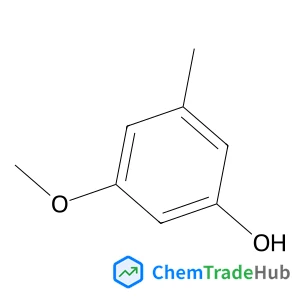
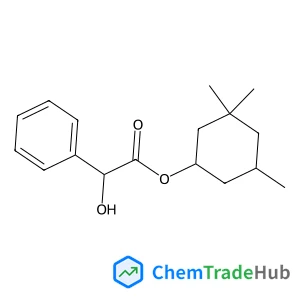
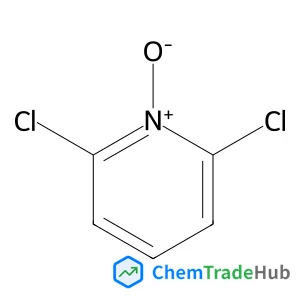
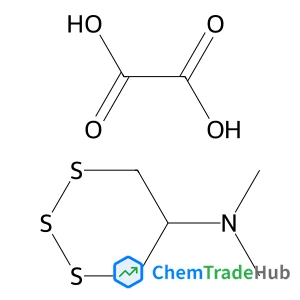
Oxalic acid compound with cyclohexylsulfamothioic O-acid (11)
CAS Number:
31895-22-4
Molecular Formula:
C7H13NO4S3
Recommended Suppliers






Disclaimer
This page provides academic journal information for reference and research purposes only. We are not affiliated with any journal publishers and do not handle publication submissions. For publication-related inquiries, please contact the respective journal publishers directly.
If you notice any inaccuracies in the information displayed, please contact us at support@chemtradehub.com. We will promptly review and address your concerns.