












Versatile and highly efficient oxidative C(sp3)–H bond functionalization of tetrahydroisoquinoline promoted by bifunctional diethyl azodicarboxylate (DEAD): scope and mechanistic insights‡
Literature Information
Publication Date
2016-08-01
DOI
10.1039/C6QO00249H
Impact Factor
5.281
Authors
Takuya Suga, Sunao Iizuka, Takahiko Akiyama
View Original
Abstract
Oxidative C(sp3)–H bond functionalization of the 1-position of tetrahydroisoquinoline (THIQ) derivatives was performed by using diethyl azodicarboxylate (DEAD) as the oxidant. A wide range of nucleophiles, including ketene silyl acetal, silyl enol ether, nitroalkane, dimethyl malonate, terminal alkyne, ketone, phosphonate, trimethylsilyl cyanide, and allylstannane gave very high yields without their excessive use. A mechanistic study revealed that the oxidative and basic nature of DEAD is responsible for its high efficiency.
Recommended Journals
Related Literature
Hydrothermal carbon-based nanostructured hollow spheres as electrode materials for high-power lithium–sulfur batteries
Nicolas Brun, Linghui Yu, Lars Giebeler, Magdalena M. Titirici
2013-02-14
Paper
DOI: 10.1039/C3CP50653C
Efficient conformational sampling of peptides adsorbed onto inorganic surfaces: insights from a quartz binding peptide
Louise B. Wright, Tiffany R. Walsh
2013-02-13
Paper
DOI: 10.1039/C3CP42921K
Properties of water in the region between a tubulin dimer and a single motor head of kinesin
Anna Kuffel, Jan Zielkiewicz
2013-02-01
Paper
DOI: 10.1039/C3CP43828G
Implicit inclusion of atomic polarization in modeling of partitioning between water and lipid bilayers
Joakim P. M. Jämbeck, Alexander P. Lyubartsev
2013-02-11
Paper
DOI: 10.1039/C3CP44472D
Oxidation of carbon monoxide, hydrogen peroxide and water at a boron doped diamond electrode: the competition for hydroxyl radicals
Ana Stefanova, Siegfried Ernst, Helmut Baltruschat
2013-01-29
Paper
DOI: 10.1039/C3CP44643C
Template-free synthesis of 3D Nb3O7F hierarchical nanostructures and enhanced photocatalytic activities
Zheng Wang, Jungang Hou, Chao Yang, Shuqiang Jiao, Kai Huang, Hongmin Zhu
2013-01-24
Paper
DOI: 10.1039/C2CP44326K
Visible light driven overall water splitting using cocatalyst/BiVO4 photoanode with minimized bias
Jingying Shi, Donge Wang, Can Li
2013-01-25
Paper
DOI: 10.1039/C3CP50295C
Hydrogen storage by physisorption on dodecahydro-closo-dodecaboranes
Julia Haug, Guntram Rauhut, Emil Roduner
2013-02-19
Paper
DOI: 10.1039/C3CP43848A
You might also like
Compound Q&A
How should waste containing (6-Bromo-2-naphthyl)oxy](dimethyl)(2-methyl-2-propanyl)silane be handled?
Waste containing (6-Bromo-2-naphthyl)oxy](dimethyl)(2-methyl-2-propanyl)silane (...
100751-65-3[(6-Bromo-2-naphthyl...
Compound Q&A
How is 7-Fluoro-4-isoquinolinecarboxylic acid (CAS: 1841081-40-0) typically synthesized?
7-Fluoro-4-isoquinolinecarboxylic acid can be synthesized via a multi-step proce...
1841081-40-07-Fluoro-4-isoquinol...
Compound Q&A
What are the physical and chemical properties of 2,3,5,6-Tetrabromothieno[3,2-b]thiophene (CAS: 124638-53-5)?
2,3,5,6-Tetrabromothieno[3,2-b]thiophene is a crystalline compound with a high m...
124638-53-52,3,5,6-Tetrabromoth...
Compound Q&A
Is 1-[4-(Benzylamino)-7,8-dihydro-5H-pyrano[4,3-d]pyrimidin-2-yl]-2-methyl-1H-indole-4-carboxamide (CAS: 1542705-92-9) safe?
1-[4-(Benzylamino)-7,8-dihydro-5H-pyrano[4,3-d]pyrimidin-2-yl]-2-methyl-1H-indol...
1542705-92-91-[4-(Benzylamino)-7...
Compound Q&A
What is the market or research trend for imidazo[5,1-d]-1,2,3,5-tetrazine-8-carboxylic acid, 3,4-dihydro-3-methyl-4-oxo- (CAS: 113942-30-6)?
The market for imidazo[5,1-d]-1,2,3,5-tetrazine-8-carboxylic acid, 3,4-dihydro-3...
113942-30-6Imidazo[5,1-d]-1,2,3...
Compound Q&A
What is 3-(Triisopropylsilyl)propiolaldehyde (CAS: 163271-80-5)?
3-(Triisopropylsilyl)propiolaldehyde is a synthetic organic compound with the CA...
163271-80-53-(Triisopropylsilyl...
Compound Q&A
What regulatory guidelines apply to 6-Nitro-2H-1,4-benzoxazin-3(4H)-one (CAS: 81721-87-1)?
6-Nitro-2H-1,4-benzoxazin-3(4H)-one (CAS: 81721-87-1) is subject to various regu...
81721-87-16-Nitro-2H-1,4-benzo...
Compound Q&A
How should waste containing (3-Fluorophenyl)(4-{[(2-methyl-2-propanyl)oxy]carbonyl}-1-piperazinyl)acetic acid (CAS: 885272-91-3) be handled?
Waste containing (3-Fluorophenyl)(4-{[(2-methyl-2-propanyl)oxy]carbonyl}-1-piper...
885272-91-3(3-Fluorophenyl)(4-{...
Compound Q&A
What are the physical and chemical properties of N,N'-4,4'-Biphenyldiyldiisonicotinamide (CAS: 55119-40-9)?
N,N'-4,4'-Biphenyldiyldiisonicotinamide is a white crystalline solid with a mole...
55119-40-9N,N'-4,4'-Biphenyldi...
Compound Q&A
What industries use 6-Bromo-8-fluoro-2-quinazolinol (CAS: 1036756-15-6)?
6-Bromo-8-fluoro-2-quinazolinol is primarily used in the pharmaceutical industry...
1036756-15-66-Bromo-8-fluoro-2-q...
Source Journal
Organic Chemistry Frontiers

CiteScore:
7.8
Self-citation Rate:
8.7%
Articles per Year:
724
Organic Chemistry Frontiers publishes high-quality research from across organic chemistry. Emphases are placed on studies that make significant contributions to the field of organic chemistry by reporting either new or significantly improved protocols or methodologies. Topics include, but are not limited to the following: Organic synthesis Development of synthetic methodologies Catalysis Natural products Functional organic materials Supramolecular and macromolecular chemistry Physical and computational organic chemistry
Recommended Compounds
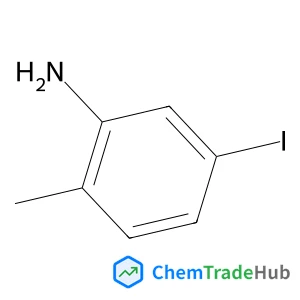
![5-Bromoimidazo[1,2-a]pyridine structure](https://static.chemtradehub.com/structs/692/69214-09-1-d8e2.webp "5-Bromoimidazo[1,2-a]pyridine structure")
Recommended Suppliers




Disclaimer
This page provides academic journal information for reference and research purposes only. We are not affiliated with any journal publishers and do not handle publication submissions. For publication-related inquiries, please contact the respective journal publishers directly.
If you notice any inaccuracies in the information displayed, please contact us at support@chemtradehub.com. We will promptly review and address your concerns.