


Oxidation of carbon monoxide, hydrogen peroxide and water at a boron doped diamond electrode: the competition for hydroxyl radicals
Literature Information
Publication Date
2013-01-29
DOI
10.1039/C3CP44643C
Impact Factor
3.676
Authors
Ana Stefanova, Siegfried Ernst, Helmut Baltruschat
View Original
Abstract
Boron doped diamond (BDD) electrodes have an extremely high over-voltage for oxygen evolution from water, which favours its use in oxidation processes of other compounds at high potentials. We used a rotating ring disc (RRDE) assembly and differential electrochemical mass spectrometry (DEMS) in order to monitor the consumption or the production of species in the course of the electrode processes. By intercepting the intermediate of the electrochemical water oxidation with chemical reactions we demonstrate clearly, albeit indirectly, that in the water oxidation process at BDD above 2.5 V the first step is the formation of ˙OH radicals. The electro-oxidation of CO to CO2 at BDD electrodes proceeds only via a first attack by ˙OH radicals followed by a further electron transfer to the electrode. At potentials below the onset of oxygen evolution from water, H2O2 is oxidised by a direct electron transfer to the BDD electrode, while at higher potentials, two different reactions paths compete for the ˙OH radicals formed in the first electron transfer from water: one, where these ˙OH radicals react with each other followed by further electron transfers leading to O2 on the one hand and one, where ˙OH radicals react with other species like H2O2 or CO with subsequent electron transfers on the other hand.
Recommended Journals

Journal of Medicinal Chemistry

Molecular Pharmacology

Journal of Heterocyclic Chemistry

Journal of Organometallic Chemistry

Science Progress

European Journal of Wood and Wood Products

Journal of Physics and Chemistry of Solids

Pure and Applied Chemistry

Israel Journal of Chemistry

Proceedings of the National Academy of Sciences of the United States of America
Related Literature
A turn-on fluorescent sensor for zinc and cadmium ions based on perylene tetracarboxylic diimide
Xiangjun Liu, Dihua Shangguan
2012-11-19
Paper
DOI: 10.1039/C2AN36203A
Challenges in forensic toxicology of skeletonised human remains
2006-07-20
Forum
DOI: 10.1039/B609130J
Raman spectroscopic monitoring of droplet polymerization in a microfluidic device
Susan E. Barnes, Zuzanna T. Cygan, Jesse K. Yates, Kathryn L. Beers, Eric J. Amis
2006-07-12
Paper
DOI: 10.1039/B603693G
Colloidal gold–polystyrene bead hybrid for chemiluminescent detection of sequence-specific DNA
Aiping Fan, Choiwan Lau, Jianzhong Lu
2007-11-28
Paper
DOI: 10.1039/B714148C
Optical sensor for the visual detection of mercury using mesoporous silica anchoring porphyrin moiety
Tatineni Balaji, Manickam Sasidharan, Hideyuki Matsunaga
2005-06-10
Paper
DOI: 10.1039/B503261J
Molecular composition of iron oxide nanoparticles, precursors for magnetic drug targeting, as characterized by confocal Raman microspectroscopy
Igor Chourpa, Laurence Douziech-Eyrolles, Lazare Ngaboni-Okassa, Jean-François Fouquenet, Simone Cohen-Jonathan, Martin Soucé, Hervé Marchais, Pierre Dubois
2005-08-24
Paper
DOI: 10.1039/B419004A
Composite sequence proteomic analysis of proteinbiomarkers of Campylobacter coli, C. lari and C. concisus for bacterial identification‡
Clifton K. Fagerquist, Emma Yee, William G. Miller
2007-07-20
Paper
DOI: 10.1039/B702859H
Determination of the origin of urinary norandrosterone traces by gas chromatography combustion isotope ratio mass spectrometry
Moritz Hebestreit, Ulrich Flenker, Gregor Fußhöller, Hans Geyer, Ute Güntner, Ute Mareck, Thomas Piper, Mario Thevis, Christiane Ayotte, Wilhelm Schänzer
2006-07-28
Paper
DOI: 10.1039/B603668F
You might also like
Compound Q&A
How should waste containing (6-Bromo-2-naphthyl)oxy](dimethyl)(2-methyl-2-propanyl)silane be handled?
Waste containing (6-Bromo-2-naphthyl)oxy](dimethyl)(2-methyl-2-propanyl)silane (...
100751-65-3[(6-Bromo-2-naphthyl...
Compound Q&A
How is 7-Fluoro-4-isoquinolinecarboxylic acid (CAS: 1841081-40-0) typically synthesized?
7-Fluoro-4-isoquinolinecarboxylic acid can be synthesized via a multi-step proce...
1841081-40-07-Fluoro-4-isoquinol...
Compound Q&A
What are the physical and chemical properties of 2,3,5,6-Tetrabromothieno[3,2-b]thiophene (CAS: 124638-53-5)?
2,3,5,6-Tetrabromothieno[3,2-b]thiophene is a crystalline compound with a high m...
124638-53-52,3,5,6-Tetrabromoth...
Compound Q&A
Is 1-[4-(Benzylamino)-7,8-dihydro-5H-pyrano[4,3-d]pyrimidin-2-yl]-2-methyl-1H-indole-4-carboxamide (CAS: 1542705-92-9) safe?
1-[4-(Benzylamino)-7,8-dihydro-5H-pyrano[4,3-d]pyrimidin-2-yl]-2-methyl-1H-indol...
1542705-92-91-[4-(Benzylamino)-7...
Compound Q&A
What is the market or research trend for imidazo[5,1-d]-1,2,3,5-tetrazine-8-carboxylic acid, 3,4-dihydro-3-methyl-4-oxo- (CAS: 113942-30-6)?
The market for imidazo[5,1-d]-1,2,3,5-tetrazine-8-carboxylic acid, 3,4-dihydro-3...
113942-30-6Imidazo[5,1-d]-1,2,3...
Compound Q&A
What is 3-(Triisopropylsilyl)propiolaldehyde (CAS: 163271-80-5)?
3-(Triisopropylsilyl)propiolaldehyde is a synthetic organic compound with the CA...
163271-80-53-(Triisopropylsilyl...
Compound Q&A
What regulatory guidelines apply to 6-Nitro-2H-1,4-benzoxazin-3(4H)-one (CAS: 81721-87-1)?
6-Nitro-2H-1,4-benzoxazin-3(4H)-one (CAS: 81721-87-1) is subject to various regu...
81721-87-16-Nitro-2H-1,4-benzo...
Compound Q&A
How should waste containing (3-Fluorophenyl)(4-{[(2-methyl-2-propanyl)oxy]carbonyl}-1-piperazinyl)acetic acid (CAS: 885272-91-3) be handled?
Waste containing (3-Fluorophenyl)(4-{[(2-methyl-2-propanyl)oxy]carbonyl}-1-piper...
885272-91-3(3-Fluorophenyl)(4-{...
Compound Q&A
What are the physical and chemical properties of N,N'-4,4'-Biphenyldiyldiisonicotinamide (CAS: 55119-40-9)?
N,N'-4,4'-Biphenyldiyldiisonicotinamide is a white crystalline solid with a mole...
55119-40-9N,N'-4,4'-Biphenyldi...
Compound Q&A
What industries use 6-Bromo-8-fluoro-2-quinazolinol (CAS: 1036756-15-6)?
6-Bromo-8-fluoro-2-quinazolinol is primarily used in the pharmaceutical industry...
1036756-15-66-Bromo-8-fluoro-2-q...
Source Journal
Physical Chemistry Chemical Physics

CiteScore:
5.5
Self-citation Rate:
10.3%
Articles per Year:
3036
Physical Chemistry Chemical Physics (PCCP) is an international journal co-owned by 19 physical chemistry and physics societies from around the world. This journal publishes original, cutting-edge research in physical chemistry, chemical physics and biophysical chemistry. To be suitable for publication in PCCP, articles must include significant innovation and/or insight into physical chemistry; this is the most important criterion that reviewers and Editors will judge against when evaluating submissions. The journal has a broad scope and welcomes contributions spanning experiment, theory, computation and data science. Topical coverage includes spectroscopy, dynamics, kinetics, statistical mechanics, thermodynamics, electrochemistry, catalysis, surface science, quantum mechanics, quantum computing and machine learning. Interdisciplinary research areas such as polymers and soft matter, materials, nanoscience, energy, surfaces/interfaces, and biophysical chemistry are welcomed if they demonstrate significant innovation and/or insight into physical chemistry. Joined experimental/theoretical studies are particularly appreciated when complementary and based on up-to-date approaches.
Recommended Compounds



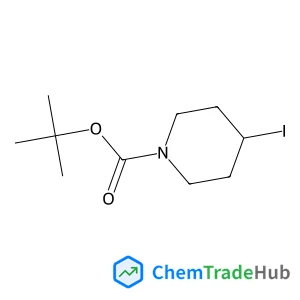
2-Methyl-2-propanyl 4-iodo-1-piperidinecarboxylate
CAS Number:
301673-14-3
Molecular Formula:
C10H18INO2
Recommended Suppliers






Disclaimer
This page provides academic journal information for reference and research purposes only. We are not affiliated with any journal publishers and do not handle publication submissions. For publication-related inquiries, please contact the respective journal publishers directly.
If you notice any inaccuracies in the information displayed, please contact us at support@chemtradehub.com. We will promptly review and address your concerns.