












Layer-by-layer self-assembly and disassembly of single charged inorganic small molecules: towards surface patterning
Literature Information
Publication Date
2013-07-16
DOI
10.1039/C3CP52217B
Impact Factor
3.676
Authors
Mengjiao Cheng, Chao Jiang, Zhiyi Ding, Yajun Zhang, Yu Fu, Feng Shi
View Original
Abstract
The patterning of layer-by-layer (LbL) polyelectrolyte multilayers with metal ions is important for the facile fabrication of circuits or selective catalysis. The strategy includes two issues: the incorporation of metal ions and their controlled assembly–disassembly, which require a good understanding of the assembly mechanism. Therefore, we explored the LbL assembly between a polycation, poly-(diallyldimethylammonium chloride) (PDDA) and an inorganic single charged molecule, [AuCl4]−, which could assemble at pH = 3.7 and disassemble at lower pH values. Moreover, we have demonstrated that the driving force in the assembly is a ligand-to-metal charge transfer interaction. Combining the controlled assembly–disassembly of PDDA–[AuCl4]− multilayers and photolithography, we obtained a surface pattern of PDDA–[AuCl4]− multilayers.
Recommended Journals
Related Literature
A new type of bromide anion conducting solid
Nobuhito Imanaka, Yasuhiro Kato
2003-05-02
Communication
DOI: 10.1039/B300691C
Cyclodehydrogenation of di- and tetra(benzimidazol-2-yl)benzenes to give model heteroaromatic discotic systems
Weicheng Wu, Andrew. C. Grimsdale, Klaus Müllen
2003-04-07
Communication
DOI: 10.1039/B301512M
Ensemble hybridisation – a new method for exploring sequence dependent fluorescence of dye–nucleic acid conjugates
Olaf Köhler, Dilip Venkatrao Jarikote, Oliver Seitz
2004-10-14
Communication
DOI: 10.1039/B411877D
Block copolymer libraries: modular versatility of the macromolecular Lego® system
Bas G. G. Lohmeijer, Daan Wouters, Zhihui Yin, Ulrich S. Schubert
2004-10-25
Communication
DOI: 10.1039/B411777H
Selective growth of a less stable polymorph of 2-iodo-4-nitroaniline on a self-assembled monolayer template
Rupa Hiremath, Stephen W. Varney, Jennifer A. Swift
2004-10-15
Communication
DOI: 10.1039/B411649F
Synthesis and characterization of a benzene-centered, phthalocyanine hexamer
Giovanni Bottari, Tomás Torres
2004-10-14
Communication
DOI: 10.1039/B411960F
Construction of a protein array on amyloid-like fibrils using co-assembly of designed peptides
Hiroyuki Kodama, Sachiko Matsumura, Taro Yamashita, Hisakazu Mihara
2004-10-25
Communication
DOI: 10.1039/B409641J
Controlled assembly of luminescent racks based on heteroleptic dinuclear lanthanide complexes
M. Margarita Castaño-Briones, Andrew P. Bassett, Linette L. Meason, Peter R. Ashton, Zoe Pikramenou
2004-10-26
Communication
DOI: 10.1039/B412999G
In situ magnetic resonance imaging of electrically-induced water diffusion in a Nafion ionic polymer film
Richard T. Baker, Leila Naji, Karen Lochhead, John A. Chudek
2003-03-18
Communication
DOI: 10.1039/B301039B
Crystalline oligopyrene nanowires with multicolored emission
Liangti Qu, Gaoquan Shi
2004-11-03
Communication
DOI: 10.1039/B412638F
You might also like
Compound Q&A
What industries use (1R,3S)-1,3-Cyclopentanediol (CAS: 16326-97-9)?
(1R,3S)-1,3-Cyclopentanediol finds applications in various industries. In the ph...
16326-97-9(1R,3S)-1,3-Cyclopen...
Compound Q&A
What precautions should be taken when handling N'-[4-(Dimethylamino)phenyl]-N,N-dimethyl-1,4-benzenediamine (CAS: 637-31-0)?
When handling N'-[4-(Dimethylamino)phenyl]-N,N-dimethyl-1,4-benzenediamine, it i...
637-31-0N'-[4-(Dimethylamino...
Compound Q&A
Are there alternatives to 5-(2,4-Difluorophenyl)-2-methoxypyrimidine (CAS: 1352318-16-1) in synthesis?
There are several alternatives to 5-(2,4-Difluorophenyl)-2-methoxypyrimidine in ...
1352318-16-15-(2,4-Difluoropheny...
Compound Q&A
What regulatory guidelines apply to 1-(3-Methoxyphenoxy)propan-2-ol (CAS: 382141-68-6)?
1-(3-Methoxyphenoxy)propan-2-ol (CAS: 382141-68-6) must comply with the Globally...
382141-68-61-(3-Methoxyphenoxy)...
Compound Q&A
Is Tetrodotoxin Citrate (CAS: 18660-81-6) safe?
Tetrodotoxin Citrate is extremely dangerous and should be handled with extreme c...
18660-81-6Tetrodotoxin Citrate
Compound Q&A
What are the main uses of 2-Methyl-2-propanyl [(1R,3S)-3-hydroxycyclopentyl]carbamate (CAS: 225641-84-9)?
2-Methyl-2-propanyl [(1R,3S)-3-hydroxycyclopentyl]carbamate (CAS: 225641-84-9) i...
225641-84-92-Methyl-2-propanyl ...
Compound Q&A
How should waste containing 4-(2-Hydroxyhexafluoroisopropyl)Benzoic Acid (CAS: 16261-80-6) be handled?
Waste containing 4-(2-Hydroxyhexafluoroisopropyl)Benzoic Acid (CAS: 16261-80-6) ...
16261-80-64-(2-Hydroxyhexafluo...
Compound Q&A
How is 2-Methyl-2-proanyl {(2S)-1-[(benzyloxy)amino]-3-hydroxy-3-methyl-1-oxo-2-butanyl}carbamate (CAS: 102507-19-7) typically synthesized?
2-Methyl-2-proanyl {(2S)-1-[(benzyloxy)amino]-3-hydroxy-3-methyl-1-oxo-2-butanyl...
102507-19-72-Methyl-2-propanyl ...
Compound Q&A
What is Benzeneethanamine, α-ethyl-, hydrochloride (1:1) (CAS: 20735-15-3)?
Benzeneethanamine, α-ethyl-, hydrochloride (1:1) is an organic compound with the...
20735-15-3Benzeneethanamine, α...
Compound Q&A
Are there alternatives to 3-{(E)-[4-(Dimethylamino)phenyl]diazenyl}benzoic acid (CAS: 20691-84-3) in synthesis?
In the synthesis of compounds similar to 3-{(E)-[4-(Dimethylamino)phenyl]diazeny...
20691-84-33-{(E)-[4-(Dimethyla...
Source Journal
Physical Chemistry Chemical Physics

CiteScore:
5.5
Self-citation Rate:
10.3%
Articles per Year:
3036
Physical Chemistry Chemical Physics (PCCP) is an international journal co-owned by 19 physical chemistry and physics societies from around the world. This journal publishes original, cutting-edge research in physical chemistry, chemical physics and biophysical chemistry. To be suitable for publication in PCCP, articles must include significant innovation and/or insight into physical chemistry; this is the most important criterion that reviewers and Editors will judge against when evaluating submissions. The journal has a broad scope and welcomes contributions spanning experiment, theory, computation and data science. Topical coverage includes spectroscopy, dynamics, kinetics, statistical mechanics, thermodynamics, electrochemistry, catalysis, surface science, quantum mechanics, quantum computing and machine learning. Interdisciplinary research areas such as polymers and soft matter, materials, nanoscience, energy, surfaces/interfaces, and biophysical chemistry are welcomed if they demonstrate significant innovation and/or insight into physical chemistry. Joined experimental/theoretical studies are particularly appreciated when complementary and based on up-to-date approaches.
Recommended Compounds

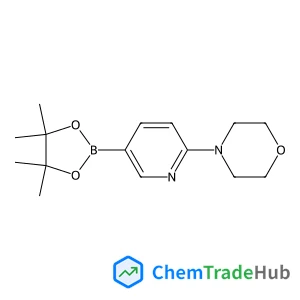
4-(5-(4,4,5,5-tetramethyl-1,3,2-dioxaborolan-2-yl)pyridin-2-yl)morpholine
CAS Number:
485799-04-0
Molecular Formula:
C15H23BN2O3
![Ethyl 3-((6-(4,5-dihydro-1H-benzo[d]azepin-3(2H)-yl)-2-(pyridin-2-yl)pyrimidin-4-yl)amino)propanoate structure](https://static.chemtradehub.com/structs/137/1373423-53-0-496a.webp "Ethyl 3-((6-(4,5-dihydro-1H-benzo[d]azepin-3(2H)-yl)-2-(pyridin-2-yl)pyrimidin-4-yl)amino)propanoate structure")
Ethyl 3-((6-(4,5-dihydro-1H-benzo[d]azepin-3(2H)-yl)-2-(pyridin-2-yl)pyrimidin-4-yl)amino)propanoate
CAS Number:
1373423-53-0
Molecular Formula:
C24H27N5O2
Recommended Suppliers






Disclaimer
This page provides academic journal information for reference and research purposes only. We are not affiliated with any journal publishers and do not handle publication submissions. For publication-related inquiries, please contact the respective journal publishers directly.
If you notice any inaccuracies in the information displayed, please contact us at support@chemtradehub.com. We will promptly review and address your concerns.