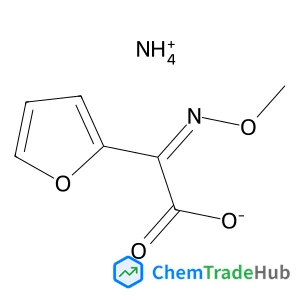
Ammonium (Z)-2-(furan-2-yl)-2-(methoxyimino)acetate
CAS Number:
97148-39-5
Molecular Formula:
C7H10N2O4
Yong-Fu Zhu, Ning Zhao, Bo Jin, Ming Zhao, Qing Jiang
Nanoscale core/shell structures are of interest in catalysis due to their superior catalytic properties. Here we investigated the thermal stability of the coherent core–shell structures in a thermodynamic way by considering the impact from the core with the bulk melting point Tm(∞) lower or higher than the shell. When a low-Tm(∞) core is adopted, core–shell melting induced by the melting depression of the core does not occur upon heating because of the superheating, although the melting depression of the core can be triggered ultimately by the preferential melting of the high-Tm(∞) shell for small cores. The superheating of the core is contributed by the negative solid–solid interface energy, while the depression is originated from the positive solid–liquid interface energy. Owing to the presence of the negative interface energy, moreover, the low-Tm(∞)-core structure possesses a low difference in thermal expansion between the core and the shell, high activation energy of outward atomic diffusion from the core to shell, and low heat capacity. This result is beneficial for the core–shell structure design for its application in catalysis.

Journal of the Indian Institute of Science

Bioorganic & Medicinal Chemistry

Electroanalysis

Medicinal Chemistry Research

Heteroatom Chemistry

Cellulose

Critical Reviews in Solid State and Materials Sciences

Herald of the Russian Academy of Sciences

Topics in Catalysis

Journal of Asian Natural Products Research
Rong Chen, Man Ho So, Jun Yang, Feng Deng, Chi-Ming Che, Hongzhe Sun
DOI: 10.1039/B601764A
Ruibiao Fu, Shengchang Xiang, Shengmin Hu, Longsheng Wang, Yaming Li, Xihe Huang, Xintao Wu
DOI: 10.1039/B509695B
Tian Zhang, Changzheng Cui, Shengli Chen, Xinping Ai, Hanxi Yang, Ping Shen, Zhenrong Peng
DOI: 10.1039/B600876C
Donglin Li, Haoshen Zhou, Itaru Honma, Masaki Ichihara
DOI: 10.1039/B509028H
Valérie G. H. Lafitte, Abil E. Aliev, Peter N. Horton, Michael B. Hursthouse, Helen C. Hailes
DOI: 10.1039/B600459H
R. Bruce King, Henry F. Schaefer III
DOI: 10.1039/B602116F
M. Linh Tran, Andrei V. Zvyagin, Taras Plakhotnik
DOI: 10.1039/B602079H
Marc Sallé, Jean-Yves Balandier, Franck Le Derf, Eric Levillain, Magali Allain, Pascal Viel, Serge Palacin
DOI: 10.1039/B518275A
1H-Indazole-6-carbonitrile finds applications in pharmaceuticals, where it serve...
Waste containing Dioctyl (2E)-2-butenedioate (CAS: 2997-85-5) should be collecte...
Sodium [(1,2-benzoxazol-3-ylmethyl)sulfonyl]azanide is primarily used in pharmac...
Dimethyl 4-(4,4,5,5-tetramethyl-1,3,2-dioxaborolan-2-yl)-2,6-pyridinedicarboxyla...
Waste containing 2-Fluoro-6-hydrazinopyridine (CAS: 80714-39-2) should be manage...
6-Formyl-2-pyridinecarboxylic acid is an organic compound with the molecular for...
Research trends for this compound indicate a focus on its potential applications...
9H-Tribenzo[b,d,f]azepine is typically synthesized via a multi-step process invo...
1-Cyclopropyl-7-ethoxy-6-fluoro-8-methoxy-4-oxo-1,4-dihydro-3-quinolinecarboxyli...
Waste containing Methyl 3-oxo-1,2,3,4-tetrahydro-6-quinoxalinecarboxylate (CAS: ...

Physical Chemistry Chemical Physics (PCCP) is an international journal co-owned by 19 physical chemistry and physics societies from around the world. This journal publishes original, cutting-edge research in physical chemistry, chemical physics and biophysical chemistry. To be suitable for publication in PCCP, articles must include significant innovation and/or insight into physical chemistry; this is the most important criterion that reviewers and Editors will judge against when evaluating submissions. The journal has a broad scope and welcomes contributions spanning experiment, theory, computation and data science. Topical coverage includes spectroscopy, dynamics, kinetics, statistical mechanics, thermodynamics, electrochemistry, catalysis, surface science, quantum mechanics, quantum computing and machine learning. Interdisciplinary research areas such as polymers and soft matter, materials, nanoscience, energy, surfaces/interfaces, and biophysical chemistry are welcomed if they demonstrate significant innovation and/or insight into physical chemistry. Joined experimental/theoretical studies are particularly appreciated when complementary and based on up-to-date approaches.
![(1S)-1,5-Anhydro-1-[3-(1-benzothiophen-2-ylmethyl)-4-fluorophenyl]-D-glucitol structure](https://static.chemtradehub.com/structs/761/761423-87-4-dbeb.webp "(1S)-1,5-Anhydro-1-[3-(1-benzothiophen-2-ylmethyl)-4-fluorophenyl]-D-glucitol structure")