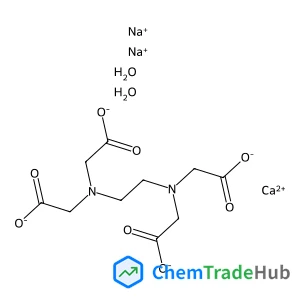
EthylenediaminetetraaceticacidcalciumDisodiumsalthydrate
CAS Number:
23411-34-9
Molecular Formula:
C10H16CaN2Na2O10
Divya Singh, Srabanti Chaudhury
The catalytic activity of metal nanoparticles is intrinsically heterogeneous due to the heterogeneous distribution of surface catalytic sites and surface restructuring dynamics. Recent advances in single-molecule fluorescence spectroscopy reveal that the rates of product formation and dissociation exhibit size-dependent activities. Here we present a theoretical method to study the size-dependent catalytic activity of a metal nanoparticle using the stochastic approach based on the superposition of renewal processes. We observe that for a single nanoparticle with fewer surface-active catalytic sites, temporal fluctuations in the reaction rate, a phenomenon commonly known as dynamic disorder, are present in both the product formation and product dissociation events. The increase in the number of surface catalytic sites suppresses the effect of dynamic restructuring of the surface, thereby leading to a decrease in dynamic disorder. The proposed formalism provides a theoretical foundation to understand the size-dependent catalytic activity of metal nanoparticles at the single molecule level.
Yi-Feng Lin, Yung-Jung Hsu, Shih-Yuan Lu, Sheng-Chin Kung
DOI: 10.1039/B604309G
Galia Maayan, Benjamin Ganchegui, Ronny Neumann
DOI: 10.1039/B603148J
Kohei Fuchibe, Daisuke Ono, Takahiko Akiyama
DOI: 10.1039/B602924H
Kazutake Takada, Taichi Miyazaki, Nobutaka Tanaka, Tetsu Tatsuma
DOI: 10.1039/B600442C
Jaesook Yun, Daesung Kim, Hoseop Yun
DOI: 10.1039/B509964A
Miao Du, Xiu-Juan Jiang, Xiao-Jun Zhao
DOI: 10.1039/B509875K
K. Muralidharan, Bamidele A. Omotowa, Brendan Twamley, Crystal Piekarski, Jean′ne M. Shreeve
DOI: 10.1039/B510924H
Yong-Fei Zeng, Fu-Chen Liu, Jiong-Peng Zhao, Shuang Cai, Xian-He Bu, Joan Ribas
DOI: 10.1039/B601311B
Vincent Gandon, Corinne Aubert, Max Malacria
DOI: 10.1039/B517696B
Sonia Taktak, Margaret Flook, Bruce M. Foxman, Lawrence Que, Jr., Elena V. Rybak-Akimova
DOI: 10.1039/B508004E
1H-Indazole-6-carbonitrile finds applications in pharmaceuticals, where it serve...
Waste containing Dioctyl (2E)-2-butenedioate (CAS: 2997-85-5) should be collecte...
Sodium [(1,2-benzoxazol-3-ylmethyl)sulfonyl]azanide is primarily used in pharmac...
Dimethyl 4-(4,4,5,5-tetramethyl-1,3,2-dioxaborolan-2-yl)-2,6-pyridinedicarboxyla...
Waste containing 2-Fluoro-6-hydrazinopyridine (CAS: 80714-39-2) should be manage...
6-Formyl-2-pyridinecarboxylic acid is an organic compound with the molecular for...
Research trends for this compound indicate a focus on its potential applications...
9H-Tribenzo[b,d,f]azepine is typically synthesized via a multi-step process invo...
1-Cyclopropyl-7-ethoxy-6-fluoro-8-methoxy-4-oxo-1,4-dihydro-3-quinolinecarboxyli...
Waste containing Methyl 3-oxo-1,2,3,4-tetrahydro-6-quinoxalinecarboxylate (CAS: ...

Physical Chemistry Chemical Physics (PCCP) is an international journal co-owned by 19 physical chemistry and physics societies from around the world. This journal publishes original, cutting-edge research in physical chemistry, chemical physics and biophysical chemistry. To be suitable for publication in PCCP, articles must include significant innovation and/or insight into physical chemistry; this is the most important criterion that reviewers and Editors will judge against when evaluating submissions. The journal has a broad scope and welcomes contributions spanning experiment, theory, computation and data science. Topical coverage includes spectroscopy, dynamics, kinetics, statistical mechanics, thermodynamics, electrochemistry, catalysis, surface science, quantum mechanics, quantum computing and machine learning. Interdisciplinary research areas such as polymers and soft matter, materials, nanoscience, energy, surfaces/interfaces, and biophysical chemistry are welcomed if they demonstrate significant innovation and/or insight into physical chemistry. Joined experimental/theoretical studies are particularly appreciated when complementary and based on up-to-date approaches.