













Effects of electrical conductivity on the formation and annihilation of positronium in porous materials
Literature Information
Publication Date
2017-02-20
DOI
10.1039/C6CP07483A
Impact Factor
3.676
Authors
Bin Zhao, Bo Zhou, Ning Qi, Zhiquan Chen, Wei Zhou
View Original
Abstract
In this paper we show the preliminary evidence that the formation of positronium depends on the electrical conductivity of porous materials. Porous nano γ-Al2O3 was chosen as the base material, and it was filled with carbon of different allotropes (commercial graphite, carbon black, carbon nanotubes and home-made ordered mesoporous carbon) by a mechanical mixing method. The positron lifetime and Doppler broadening of the annihilation radiation were measured for these composites. In the pure γ-Al2O3 sample, there are two long positron lifetime components τ3 (3.5 ns) and τ4 (101.3 ns) with intensities of 1.0% and 24.6%, which indicates the formation and annihilation of positronium in small and large pores, respectively. In the carbon filled γ-Al2O3 samples, the longest lifetime τ4 and its intensity I4 both show a continuous decrease with increasing carbon content. The Doppler broadening S parameter shows a similar tendency to τ4 and I4. This suggests that carbon has a quenching effect on positronium and also inhibits the formation of positronium. Among these four carbon allotropes, carbon nanotubes have the strongest quenching and inhibition effect, while graphite has the weakest effect. A detailed study further reveals that the decreasing rate of τ4 and I4 as well as the S parameter depend on the electrical conductivity of the carbon filled γ-Al2O3 and also the specific surface area of the filled carbon. Our results suggest that the formation and annihilation of positronium are strongly affected by the electrical conductivity of the materials.
Recommended Journals
Related Literature
Colloidal silver deposition onto functionalized polystyrene microspheres
Xuewu Ge, Mozhen Wang, Jianjun Yang, Qingyun Wu, Mingyuan Wu, Dandan Xu
2011-02-03
Paper
DOI: 10.1039/C0PY00320D
Optimised ‘click’ synthesis of glycopolymers with mono/di- and trisaccharides
Nicola Vinson, Yanzi Gou, C. Remzi Becer, David M. Haddleton, Matthew I. Gibson
2010-10-04
Paper
DOI: 10.1039/C0PY00260G
NMR of Na+, glycine and HDO in isotropic and anisotropic carrageenan gels
Christoph Naumann, Philip William Kuchel
2010-06-01
Paper
DOI: 10.1039/C0PY00038H
Synthesis and preliminary photovoltaic behavior study of a soluble polyimide containing ruthenium complexes
Shengang Xu, Tao Chen, Hongwu Guo, Qiongyan Liu, Baoxian Ye, Zhi Zhang, Zhiqun He, Shaokui Cao
2010-05-14
Paper
DOI: 10.1039/C0PY00096E
The role of responsive branched copolymer composition in controlling pH-triggered aggregation of “engineered” emulsion droplets: towards selective droplet assembly‡
Robert T. Woodward, Jonathan V. M. Weaver
2010-10-20
Paper
DOI: 10.1039/C0PY00277A
Pd-mediated carbenepolymerisation: activity of palladium(ii) versus low-valent palladium
Joost N. H. Reek, Bas de Bruin
2010-11-12
Paper
DOI: 10.1039/C0PY00249F
Self-healing and self-mendable polymers
Jay A. Syrett, C. Remzi Becer, David M. Haddleton
2010-05-13
Review Article
DOI: 10.1039/C0PY00104J
Organic support for ethylenepolymerization based on the self-assembly in heptane of end-functionalized polyisoprene
Jan Merna
2010-05-28
Paper
DOI: 10.1039/C0PY00072H
Thermo-responsive cellulose-based architectures: tailoring LCST using poly(ethylene glycol) methacrylates‡
Christian Porsch, Susanne Hansson, Niklas Nordgren, Eva Malmström
2011-02-16
Paper
DOI: 10.1039/C0PY00417K
You might also like
Compound Q&A
Is 6-(3-Fluorophenyl)picolinic acid (CAS: 887982-40-3) safe?
6-(3-Fluorophenyl)picolinic acid is generally considered safe for laboratory use...
887982-40-36-(3-Fluorophenyl)pi...
Compound Q&A
What industries use (3R)-3-Pyrrolidinol (CAS: 2799-21-5)?
(3R)-3-Pyrrolidinol is used in the pharmaceutical industry as a precursor for dr...
2799-21-5(3R)-3-Pyrrolidinol
Compound Q&A
What precautions should be taken when handling (4R,5R)-4,5-Diethoxycarbonyl-2,2-dimethyldioxolane (CAS: 59779-75-8)?
When handling (4R,5R)-4,5-Diethoxycarbonyl-2,2-dimethyldioxolane (CAS: 59779-75-...
59779-75-8(4R,5R)-4,5-Diethoxy...
Compound Q&A
How is 1-(6-Chloroimidazo[1,2-b]pyridazin-3-yl)ethanone (CAS: 90734-71-7) typically synthesized?
1-(6-Chloroimidazo[1,2-b]pyridazin-3-yl)ethanone is often synthesized via a mult...
90734-71-71-(6-Chloroimidazo[1...
Compound Q&A
What is the market or research trend for N-Ethyl-3,4-dimethylbenzylamine (CAS: 39180-83-1)?
The market for N-Ethyl-3,4-dimethylbenzylamine (CAS: 39180-83-1) remains steady,...
39180-83-1N-Ethyl-3,4-dimethyl...
Compound Q&A
What is Tert-butyl 3-(pyrrolidin-1-yl)azetidine-1-carboxylate (CAS: 1019008-21-9)?
Tert-butyl 3-(pyrrolidin-1-yl)azetidine-1-carboxylate is a chemical compound wit...
1019008-21-9Tert-butyl 3-(pyrrol...
Compound Q&A
What regulatory guidelines apply to 1-Bromo-3-chloro-2,4-dimethoxybenzene (CAS: 1228956-93-1)?
1-Bromo-3-chloro-2,4-dimethoxybenzene (CAS: 1228956-93-1) falls under the classi...
1228956-93-11-Bromo-3-chloro-2,4...
Compound Q&A
Is 8-Bromo-2-methyl-3,4-dihydroisoquinolin-1(2H)-one (CAS: 1368622-07-4) safe?
The safety of 8-Bromo-2-methyl-3,4-dihydroisoquinolin-1(2H)-one (CAS: 1368622-07...
1368622-07-48-Bromo-2-methyl-3,4...
Compound Q&A
Is Benzyl [(3S)-2,6-dioxo-3-piperidinyl]carbamate (CAS: 22785-43-9) safe?
Benzyl [(3S)-2,6-dioxo-3-piperidinyl]carbamate is generally safe when handled wi...
22785-43-9Benzyl [(3S)-2,6-dio...
Compound Q&A
How should 1-{[4-(4,4,5,5-Tetramethyl-1,3,2-dioxaborolan-2-yl)phenyl]sulfonyl}pyrrolidine (CAS: 928657-21-0) be stored?
1-{[4-(4,4,5,5-Tetramethyl-1,3,2-dioxaborolan-2-yl)phenyl]sulfonyl}pyrrolidine s...
928657-21-01-{[4-(4,4,5,5-Tetra...
Source Journal
Physical Chemistry Chemical Physics

CiteScore:
5.5
Self-citation Rate:
10.3%
Articles per Year:
3036
Physical Chemistry Chemical Physics (PCCP) is an international journal co-owned by 19 physical chemistry and physics societies from around the world. This journal publishes original, cutting-edge research in physical chemistry, chemical physics and biophysical chemistry. To be suitable for publication in PCCP, articles must include significant innovation and/or insight into physical chemistry; this is the most important criterion that reviewers and Editors will judge against when evaluating submissions. The journal has a broad scope and welcomes contributions spanning experiment, theory, computation and data science. Topical coverage includes spectroscopy, dynamics, kinetics, statistical mechanics, thermodynamics, electrochemistry, catalysis, surface science, quantum mechanics, quantum computing and machine learning. Interdisciplinary research areas such as polymers and soft matter, materials, nanoscience, energy, surfaces/interfaces, and biophysical chemistry are welcomed if they demonstrate significant innovation and/or insight into physical chemistry. Joined experimental/theoretical studies are particularly appreciated when complementary and based on up-to-date approaches.
Recommended Compounds
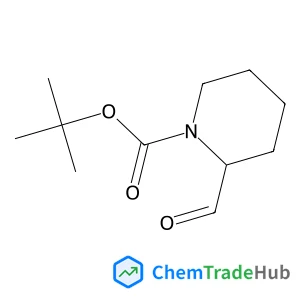
2-Methyl-2-propanyl (2R)-2-formyl-1-piperidinecarboxylate
CAS Number:
134526-69-5
Molecular Formula:
C11H19NO3

Aztreonam USP Related Compound A (Open-ring Aztreonam)
CAS Number:
87500-74-1
Molecular Formula:
C13H19N5O9S2

Recommended Suppliers




Disclaimer
This page provides academic journal information for reference and research purposes only. We are not affiliated with any journal publishers and do not handle publication submissions. For publication-related inquiries, please contact the respective journal publishers directly.
If you notice any inaccuracies in the information displayed, please contact us at support@chemtradehub.com. We will promptly review and address your concerns.