












Enhancing cycling durability of Li-ion batteries with hierarchical structured silicon–graphene hybrid anodes
Literature Information
Publication Date
2016-10-21
DOI
10.1039/C6CP06788C
Impact Factor
3.676
Authors
Melanie J. Loveridge, Michael J. Lain, Qianye Huang, Chaoying Wan, Alexander J. Roberts, George S. Pappas, Rohit Bhagat
View Original
Abstract
Hybrid anode materials consisting of micro-sized silicon (Si) particles interconnected with few-layer graphene (FLG) nanoplatelets and sodium-neutralized poly(acrylic acid) as a binder were evaluated for Li-ion batteries. The hybrid film has demonstrated a reversible discharge capacity of ∼1800 mA h g−1 with a capacity retention of 97% after 200 cycles. The superior electrochemical properties of the hybrid anodes are attributed to a durable, hierarchical conductive network formed between Si particles and the multi-scale carbon additives, with enhanced cohesion by the functional polymer binder. Furthermore, improved solid electrolyte interphase (SEI) stability is achieved from the electrolyte additives, due to the formation of a kinetically stable film on the surface of the Si.
Related Literature
One-step coating of fluoro-containing silicananoparticles for universal generation of surface superhydrophobicity
Hongxia Wang, Jian Fang, Tong Cheng, Jie Ding, Liangti Qu, Liming Dai, Xungai Wang, Tong Lin
2007-12-18
Communication
DOI: 10.1039/B714352D
STEM characterization on silicananowires with new mesopore structures by space-confined self-assembly within nano-scale channels
Michael Z. Hu, Donglu Shi, Douglas Blom
2008-01-23
Communication
DOI: 10.1039/B717461F
Enantioselective synthesis of α-terpineol and nephthenol by intramolecular acyloxazolidinone enolate alkylations
Yinghua Jin, Robert M. Coates
2006-06-02
Communication
DOI: 10.1039/B605346G
Capturing a [c2]daisy chain using the threading-followed-by-swelling approach
Shau-Hua Ueng, Sheng-Yao Hsueh, Chien-Chen Lai, Yi-Hung Liu, Shie-Ming Peng, Sheng-Hsien Chiu
2007-12-11
Communication
DOI: 10.1039/B716331B
Photoisomerization of the green fluorescence proteinchromophore and the meta- and para-amino analogues
Jye-Shane Yang, Guan-Jhih Huang, Yi-Hung Liu, Shie-Ming Peng
2008-01-18
Communication
DOI: 10.1039/B717714C
High capacity carbon-coated Si70Sn30 nanoalloys for lithium battery anode material
YooJeong Kwon, Jaephil Cho
2008-01-02
Communication
DOI: 10.1039/B716694J
Synergistic effect of binary component ligands in chiral catalyst library engineering for enantioselective reactions
2008-01-21
Feature Article
DOI: 10.1039/B710668H
Phosphorus–carbon bond formation catalysed by electrophilic N-heterocyclic phosphines
Sebastian Burck, Daniela Förster, Dietrich Gudat
2006-05-31
Communication
DOI: 10.1039/B605278A
Second harmonic generation from multilayered hybrid polymer nanoassemblies enhanced by coupled surface plasmon resonance
Miki Ishifuji, Masaya Mitsuishi, Tokuji Miyashita
2007-10-24
Communication
DOI: 10.1039/B714832A
You might also like
Compound Q&A
Are there alternatives to 1-(4-Chlorophenyl)-N-hydroxymethanimine (CAS: 3848-36-0) in synthesis?
When considering alternatives to 1-(4-Chlorophenyl)-N-hydroxymethanimine (CAS: 3...
3848-36-01-(4-Chlorophenyl)-N...
Compound Q&A
How should (1R,9S,10S,12S,14E,16S,19R,20R,21S,22R)-3,9,21-Trihydroxy-5,10,12,14,16,20,22-heptamethyl-23,24-dioxatetracyclo[17.3.1.1~6,9~.0~2,7~]tetracosa-2,5,7,14-tetraen-4-one (CAS: 183202-73-5) be stored?
This compound should be stored in a cool, dry place away from direct sunlight. I...
183202-73-5(1R,9S,10S,12S,14E,1...
Compound Q&A
How is 3-(4-Bromophenyl)-5-(2-fluorophenyl)-1,2,4-oxadiazole (CAS: 419553-16-5) typically synthesized?
3-(4-Bromophenyl)-5-(2-fluorophenyl)-1,2,4-oxadiazole is synthesized through a m...
419553-16-53-(4-Bromophenyl)-5-...
Compound Q&A
How is 5-Chloro-2-(4-chlorophenyl)-4-methyl-6-[3-(1-piperidinyl)propoxy]pyrimidine (CAS: 1639220-19-1) typically synthesized?
5-Chloro-2-(4-chlorophenyl)-4-methyl-6-[3-(1-piperidinyl)propoxy]pyrimidine (CAS...
1639220-19-15-Chloro-2-(4-chloro...
Compound Q&A
What industries use 2-Chloro-4-(difluoromethoxy)pyridine (CAS: 1206978-15-5)?
2-Chloro-4-(difluoromethoxy)pyridine is used in the pharmaceutical industry for ...
1206978-15-52-Chloro-4-(difluoro...
Compound Q&A
What regulatory guidelines apply to 3-Chloro-6-methylpyridazine (CAS: 1121-79-5)?
3-Chloro-6-methylpyridazine (CAS: 1121-79-5) is classified under the Globally Ha...
1121-79-53-Chloro-6-methylpyr...
Compound Q&A
Are there alternatives to Methyl 4,5-dimethyl-2-nitrobenzoate in synthesis?
Several alternatives can be used in the synthesis of Methyl 4,5-dimethyl-2-nitro...
90922-74-0Methyl 4,5-dimethyl-...
Compound Q&A
Are there alternatives to (2E,2'E)-3,3'-(1,4-Phenylene)bisacrylaldehyde in synthesis?
Alternatives to (2E,2'E)-3,3'-(1,4-Phenylene)bisacrylaldehyde include other acry...
63405-68-5(2E,2'E)-3,3'-(1,4-P...
Compound Q&A
What is 3-Amino-5-chloropyridin-2-ol hydrochloride (CAS: 1261906-29-9)?
3-Amino-5-chloropyridin-2-ol hydrochloride is an organic compound with the CAS n...
1261906-29-93-Amino-5-chloropyri...
Compound Q&A
What precautions should be taken when handling 6,7-Difluoro-2,3-dihydro-4H-chromen-4-one (CAS: 1092349-93-3)?
When handling 6,7-Difluoro-2,3-dihydro-4H-chromen-4-one, it is essential to wear...
1092349-93-36,7-Difluoro-2,3-dih...
Source Journal
Physical Chemistry Chemical Physics

CiteScore:
5.5
Self-citation Rate:
10.3%
Articles per Year:
3036
Physical Chemistry Chemical Physics (PCCP) is an international journal co-owned by 19 physical chemistry and physics societies from around the world. This journal publishes original, cutting-edge research in physical chemistry, chemical physics and biophysical chemistry. To be suitable for publication in PCCP, articles must include significant innovation and/or insight into physical chemistry; this is the most important criterion that reviewers and Editors will judge against when evaluating submissions. The journal has a broad scope and welcomes contributions spanning experiment, theory, computation and data science. Topical coverage includes spectroscopy, dynamics, kinetics, statistical mechanics, thermodynamics, electrochemistry, catalysis, surface science, quantum mechanics, quantum computing and machine learning. Interdisciplinary research areas such as polymers and soft matter, materials, nanoscience, energy, surfaces/interfaces, and biophysical chemistry are welcomed if they demonstrate significant innovation and/or insight into physical chemistry. Joined experimental/theoretical studies are particularly appreciated when complementary and based on up-to-date approaches.
Recommended Compounds
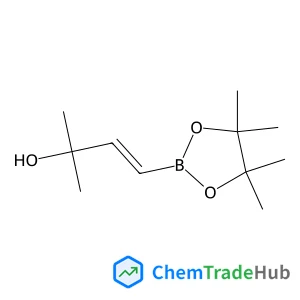
(E)-2-methyl-4-(4,4,5,5-tetramethyl-1,3,2-dioxaborolan-2-yl)but-3-en-2-ol
CAS Number:
581802-26-8
Molecular Formula:
C11H21BO3
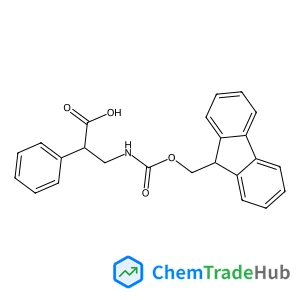
(S)-3-((((9H-Fluoren-9-yl)methoxy)carbonyl)amino)-2-phenylpropanoic acid
CAS Number:
1217663-60-9
Molecular Formula:
C24H21NO4
![(2S)-2-{[(9H-Fluoren-9-ylmethoxy)carbonyl]amino}-4-(methylselanyl)butanoic acid structure](https://static.chemtradehub.com/structs/121/1217852-49-7-f252.webp "(2S)-2-{[(9H-Fluoren-9-ylmethoxy)carbonyl]amino}-4-(methylselanyl)butanoic acid structure")
(2S)-2-{[(9H-Fluoren-9-ylmethoxy)carbonyl]amino}-4-(methylselanyl)butanoic acid
CAS Number:
1217852-49-7
Molecular Formula:
C20H21NO4Se
Recommended Suppliers




Disclaimer
This page provides academic journal information for reference and research purposes only. We are not affiliated with any journal publishers and do not handle publication submissions. For publication-related inquiries, please contact the respective journal publishers directly.
If you notice any inaccuracies in the information displayed, please contact us at support@chemtradehub.com. We will promptly review and address your concerns.