












Toward a modular multi-material nanoparticle synthesis and assembly strategy via bionanocombinatorics: bifunctional peptides for linking Au and Ag nanomaterials
Literature Information
Publication Date
2016-10-19
DOI
10.1039/C6CP06135D
Impact Factor
3.676
Authors
J. Pablo Palafox-Hernandez, Yue Li, Chang-Keun Lim, Taylor J. Woehl, Nicholas M. Bedford, Soenke Seifert, Mark T. Swihart, Paras N. Prasad, Tiffany R. Walsh, Marc R. Knecht
View Original
Abstract
Materials-binding peptides represent a unique avenue towards controlling the shape and size of nanoparticles (NPs) grown under aqueous conditions. Here, employing a bionanocombinatorics approach, two such materials-binding peptides were linked at either end of a photoswitchable spacer, forming a multi-domain materials-binding molecule to control the in situ synthesis and organization of Ag and Au NPs under ambient conditions. These multi-domain molecules retained the peptides’ ability to nucleate, grow, and stabilize Ag and Au NPs in aqueous media. Disordered co-assemblies of the two nanomaterials were observed by TEM imaging of dried samples after sequential growth of the two metals, and showed a clustering behavior that was not typically observed without both metals and the linker molecules. While TEM evidence suggested the formation of AuNP/AgNP assemblies upon drying, SAXS analysis indicated that no extended assemblies existed in solution, suggesting that sample drying plays an important role in facilitating NP clustering. Molecular simulations and experimental data revealed tunable materials-binding based upon the isomerization state of the photoswitchable unit and metal employed. This work is a first step in generating externally actuated biomolecules with specific material-binding properties that could be used as the building blocks to achieve multi-material switchable NP assemblies.
Related Literature
Diastereoselective diaza-Cope rearrangement reaction
Hyunwoo Kim, Doo Seoung Choi, Cindy Pai-Hui Yen, Alan J. Lough, Choong Eui Song, Jik Chin
2008-01-23
Communication
DOI: 10.1039/B716253G
Enzyme catalytic membrane based on a hybrid mesoporous membrane
Wensheng Fu, Hideaki Kaneda, Norio Teramae
2007-12-18
Communication
DOI: 10.1039/B717094G
Photoisomerization of the green fluorescence proteinchromophore and the meta- and para-amino analogues
Jye-Shane Yang, Guan-Jhih Huang, Yi-Hung Liu, Shie-Ming Peng
2008-01-18
Communication
DOI: 10.1039/B717714C
Enantioselective synthesis of α-terpineol and nephthenol by intramolecular acyloxazolidinone enolate alkylations
Yinghua Jin, Robert M. Coates
2006-06-02
Communication
DOI: 10.1039/B605346G
Organic field-effect transistors of poly(2,5-bis(3-dodecylthiophen-2-yl)thieno[2,3-b]thiophene) deposited on five different silane self-assembled monolayers
Ruth Rawcliffe, Martin Heeney, Steven Tierney, Iain McCulloch, Alasdair Campbell
2007-12-21
Communication
DOI: 10.1039/B715536K
Synthesis of para-sulfonatocalix[4]arene-modified silver nanoparticles as colorimetric histidine probes
Dejun Xiong, Mingliang Chen, Haibing Li
2007-12-18
Communication
DOI: 10.1039/B716270G
Lithium amide conjugate addition for the asymmetric synthesis of 3-aminopyrrolidines
Stephen G. Davies, A. Christopher Garner, Euan C. Goddard, Dennis Kruchinin, Paul M. Roberts, Humberto Rodriguez-Solla, Andrew D. Smith
2006-05-18
Communication
DOI: 10.1039/B604835H
How to achieve self-assembly in polar solvents based on specific interactions? Some general guidelines
Thomas Rehm, Carsten Schmuck
2007-11-29
Feature Article
DOI: 10.1039/B710951M
You might also like
Compound Q&A
Are there alternatives to 1-(4-Chlorophenyl)-N-hydroxymethanimine (CAS: 3848-36-0) in synthesis?
When considering alternatives to 1-(4-Chlorophenyl)-N-hydroxymethanimine (CAS: 3...
3848-36-01-(4-Chlorophenyl)-N...
Compound Q&A
How should (1R,9S,10S,12S,14E,16S,19R,20R,21S,22R)-3,9,21-Trihydroxy-5,10,12,14,16,20,22-heptamethyl-23,24-dioxatetracyclo[17.3.1.1~6,9~.0~2,7~]tetracosa-2,5,7,14-tetraen-4-one (CAS: 183202-73-5) be stored?
This compound should be stored in a cool, dry place away from direct sunlight. I...
183202-73-5(1R,9S,10S,12S,14E,1...
Compound Q&A
How is 3-(4-Bromophenyl)-5-(2-fluorophenyl)-1,2,4-oxadiazole (CAS: 419553-16-5) typically synthesized?
3-(4-Bromophenyl)-5-(2-fluorophenyl)-1,2,4-oxadiazole is synthesized through a m...
419553-16-53-(4-Bromophenyl)-5-...
Compound Q&A
How is 5-Chloro-2-(4-chlorophenyl)-4-methyl-6-[3-(1-piperidinyl)propoxy]pyrimidine (CAS: 1639220-19-1) typically synthesized?
5-Chloro-2-(4-chlorophenyl)-4-methyl-6-[3-(1-piperidinyl)propoxy]pyrimidine (CAS...
1639220-19-15-Chloro-2-(4-chloro...
Compound Q&A
What industries use 2-Chloro-4-(difluoromethoxy)pyridine (CAS: 1206978-15-5)?
2-Chloro-4-(difluoromethoxy)pyridine is used in the pharmaceutical industry for ...
1206978-15-52-Chloro-4-(difluoro...
Compound Q&A
What regulatory guidelines apply to 3-Chloro-6-methylpyridazine (CAS: 1121-79-5)?
3-Chloro-6-methylpyridazine (CAS: 1121-79-5) is classified under the Globally Ha...
1121-79-53-Chloro-6-methylpyr...
Compound Q&A
Are there alternatives to Methyl 4,5-dimethyl-2-nitrobenzoate in synthesis?
Several alternatives can be used in the synthesis of Methyl 4,5-dimethyl-2-nitro...
90922-74-0Methyl 4,5-dimethyl-...
Compound Q&A
Are there alternatives to (2E,2'E)-3,3'-(1,4-Phenylene)bisacrylaldehyde in synthesis?
Alternatives to (2E,2'E)-3,3'-(1,4-Phenylene)bisacrylaldehyde include other acry...
63405-68-5(2E,2'E)-3,3'-(1,4-P...
Compound Q&A
What is 3-Amino-5-chloropyridin-2-ol hydrochloride (CAS: 1261906-29-9)?
3-Amino-5-chloropyridin-2-ol hydrochloride is an organic compound with the CAS n...
1261906-29-93-Amino-5-chloropyri...
Compound Q&A
What precautions should be taken when handling 6,7-Difluoro-2,3-dihydro-4H-chromen-4-one (CAS: 1092349-93-3)?
When handling 6,7-Difluoro-2,3-dihydro-4H-chromen-4-one, it is essential to wear...
1092349-93-36,7-Difluoro-2,3-dih...
Source Journal
Physical Chemistry Chemical Physics

CiteScore:
5.5
Self-citation Rate:
10.3%
Articles per Year:
3036
Physical Chemistry Chemical Physics (PCCP) is an international journal co-owned by 19 physical chemistry and physics societies from around the world. This journal publishes original, cutting-edge research in physical chemistry, chemical physics and biophysical chemistry. To be suitable for publication in PCCP, articles must include significant innovation and/or insight into physical chemistry; this is the most important criterion that reviewers and Editors will judge against when evaluating submissions. The journal has a broad scope and welcomes contributions spanning experiment, theory, computation and data science. Topical coverage includes spectroscopy, dynamics, kinetics, statistical mechanics, thermodynamics, electrochemistry, catalysis, surface science, quantum mechanics, quantum computing and machine learning. Interdisciplinary research areas such as polymers and soft matter, materials, nanoscience, energy, surfaces/interfaces, and biophysical chemistry are welcomed if they demonstrate significant innovation and/or insight into physical chemistry. Joined experimental/theoretical studies are particularly appreciated when complementary and based on up-to-date approaches.
Recommended Compounds
![[4-(Isobutyrylamino)phenyl]boronic acid structure](https://static.chemtradehub.com/structs/874/874219-50-8-6ab5.webp "[4-(Isobutyrylamino)phenyl]boronic acid structure")
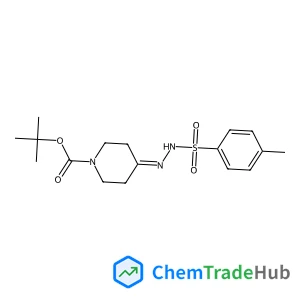
tert-Butyl 4-(2-(p-Tolylsulfonyl)hydrazono)piperidine-1-carboxylate
CAS Number:
1046478-89-0
Molecular Formula:
C17H25N3O4S
Recommended Suppliers






Disclaimer
This page provides academic journal information for reference and research purposes only. We are not affiliated with any journal publishers and do not handle publication submissions. For publication-related inquiries, please contact the respective journal publishers directly.
If you notice any inaccuracies in the information displayed, please contact us at support@chemtradehub.com. We will promptly review and address your concerns.