












Structure and dynamics of water molecules confined in triglyceride oils
Literature Information
Publication Date
2016-09-30
DOI
10.1039/C6CP05883C
Impact Factor
3.676
Authors
Carien C. M. Groot, Huib J. Bakker
View Original
Abstract
Though it is commonly known that a small amount of water can be present in triglyceride oil, a molecular picture of how water molecules organize in the oil phase is lacking. We investigate the hydrogen-bond configuration and dynamics of water in triacetin, tributyrin and trioctanoin using linear infrared and time-resolved two-dimensional infrared (2DIR) spectroscopy of the water hydroxyl stretch vibration. We identify water molecules with a single strong hydrogen bond to the triglyceride, water molecules with two weaker hydrogen bonds to the triglycerides, and water clusters. These species do not interconvert on the 20 ps timescale of the experiment, as evidenced by the absence of cross-peaks in the 2DIR spectrum. The vibrational response of water molecules with a single strong hydrogen bond to the triglyceride depends strongly on the excitation frequency, revealing the presence of different subspecies of singly-bound water molecules that correspond to different hydrogen-bond locations. In contrast, the water molecules with two weaker hydrogen bonds to the triglyceride correspond to a single, specific hydrogen-bond configuration; these molecules likely bridge the carbonyl groups of adjacent triglyceride molecules, which can have considerable influence on liquid triglyceride properties.
Related Literature
Precise control of the interlayer spacing between graphene sheets by hydrated cations
Liang Chen, Guosheng Shi, Haiping Fang
2019-03-09
Paper
DOI: 10.1039/C8CP07837H
Identification of the Criegee intermediate reaction network in ethylene ozonolysis: impact on energy conversion strategies and atmospheric chemistry
Aric C. Rousso, Nils Hansen, Ahren W. Jasper, Yiguang Ju
2019-03-08
Paper
DOI: 10.1039/C9CP00473D
Thermodynamic and dynamical properties of the hard sphere system revisited by molecular dynamics simulation
Sławomir Pieprzyk, Marcus N. Bannerman, Arkadiusz C. Brańka, Maciej Chudak, David M. Heyes
2019-03-19
Paper
DOI: 10.1039/C9CP00903E
The interaction of ethylammonium tetrafluoroborate [EtNH3+][BF4−] ionic liquid on the Li(001) surface: towards understanding early SEI formation on Li metal
Jonathan Clarke-Hannaford, Michael Breedon, Adam S. Best, Michelle J. S. Spencer
2019-04-24
Paper
DOI: 10.1039/C9CP01200A
A deconvolution protocol of the mechanical relaxation spectrum to identify and quantify individual polymer feature contributions to self-healing
Vincenzo Montano, Stephen J. Picken, Sybrand van der Zwaag, Santiago J. Garcia
2019-04-23
Paper
DOI: 10.1039/C9CP00417C
Delayed vibrational modulation of the solvated GFP chromophore into a conical intersection
Miles A. Taylor, Cheng Chen
2019-04-22
Paper
DOI: 10.1039/C9CP01077G
In situ study of the low overpotential “dimer pathway” for electrocatalytic carbon dioxide reduction by manganese carbonyl complexes
Gaia Neri, Paul M. Donaldson, Alexander J. Cowan
2019-03-22
Paper
DOI: 10.1039/C9CP00504H
Ab initio computation for solid-state 31P NMR of inorganic phosphates: revisiting X-ray structures
Kartik Pilar, Zeyu Deng, Joya A. Cooley
2019-05-03
Paper
DOI: 10.1039/C9CP01420A
Effects of sulfation and the environment on the structure of chondroitin sulfate studied via Raman optical activity
Václav Profant, Christian Johannessen, Ewan W. Blanch, Petr Bouř, Vladimír Baumruk
2019-03-14
Paper
DOI: 10.1039/C9CP00472F
tert-Butyl peroxy radical: ground and first excited state energetics and fundamental frequencies
Peter R. Franke, Gary E. Douberly
2019-04-23
Paper
DOI: 10.1039/C9CP01476D
You might also like
Compound Q&A
How is Ethyl 4-chlorothieno[2,3-b]pyridine-5-carboxylate (CAS: 59713-58-5) typically synthesized?
Ethyl 4-chlorothieno[2,3-b]pyridine-5-carboxylate (CAS: 59713-58-5) can be synth...
59713-58-5Ethyl 4-chlorothieno...
Compound Q&A
What regulatory guidelines apply to 5-Methyl-1H-indole-3-carbaldehyde (CAS: 52562-50-2)?
5-Methyl-1H-indole-3-carbaldehyde (CAS: 52562-50-2) is subject to various regula...
52562-50-25-Methyl-1H-indole-3...
Compound Q&A
What are the physical and chemical properties of (1,3-Dimethyl-2,4-dioxo-1,2,3,4-tetrahydro-5-pyrimidinyl)boronic acid (CAS: 223418-73-3)?
(1,3-Dimethyl-2,4-dioxo-1,2,3,4-tetrahydro-5-pyrimidinyl)boronic acid is a white...
223418-73-3(1,3-Dimethyl-2,4-di...
Compound Q&A
How should waste containing Sulfocostunolide A (CAS: 1016983-51-9) be handled?
Waste containing Sulfocostunolide A (CAS: 1016983-51-9) should be handled with c...
1016983-51-9Sulfocostunolide A
Compound Q&A
What precautions should be taken when handling Murraxocin (CAS: 88478-44-8)?
When handling Murraxocin (CAS: 88478-44-8), ensure proper personal protective eq...
88478-44-8Murraxocin
Compound Q&A
What are the physical and chemical properties of Formvar (CAS: 63148-64-1)?
Formvar (CAS: 63148-64-1) is an alkyd resin characterized by a high molecular we...
63148-64-1Formvar(R)
Compound Q&A
Is (S)-4-benzyl-2-((benzyloxy)methyl)morpholine (CAS: 205242-66-6) safe?
(S)-4-benzyl-2-((benzyloxy)methyl)morpholine is generally safe when handled with...
205242-66-6(S)-4-benzyl-2-((ben...
Compound Q&A
What industries use Methyl 1-(5-bromo-2-pyrimidinyl)cyclopropanecarboxylate (CAS: 1447607-69-3)?
Methyl 1-(5-bromo-2-pyrimidinyl)cyclopropanecarboxylate (CAS: 1447607-69-3) is p...
1447607-69-3Methyl 1-(5-bromo-2-...
Compound Q&A
Is 2-Methyl-1-phenyl-1-propanamine hydrochloride (CAS: 24290-47-9) safe?
2-Methyl-1-phenyl-1-propanamine hydrochloride (CAS: 24290-47-9) is generally con...
24290-47-92-Methyl-1-phenyl-1-...
Compound Q&A
How is 3-(4-Bromophenyl)-2-methylpropanoic acid (CAS: 66735-01-1) typically synthesized?
3-(4-Bromophenyl)-2-methylpropanoic acid is synthesized through a multi-step pro...
66735-01-13-(4-Bromophenyl)-2-...
Source Journal
Physical Chemistry Chemical Physics

CiteScore:
5.5
Self-citation Rate:
10.3%
Articles per Year:
3036
Physical Chemistry Chemical Physics (PCCP) is an international journal co-owned by 19 physical chemistry and physics societies from around the world. This journal publishes original, cutting-edge research in physical chemistry, chemical physics and biophysical chemistry. To be suitable for publication in PCCP, articles must include significant innovation and/or insight into physical chemistry; this is the most important criterion that reviewers and Editors will judge against when evaluating submissions. The journal has a broad scope and welcomes contributions spanning experiment, theory, computation and data science. Topical coverage includes spectroscopy, dynamics, kinetics, statistical mechanics, thermodynamics, electrochemistry, catalysis, surface science, quantum mechanics, quantum computing and machine learning. Interdisciplinary research areas such as polymers and soft matter, materials, nanoscience, energy, surfaces/interfaces, and biophysical chemistry are welcomed if they demonstrate significant innovation and/or insight into physical chemistry. Joined experimental/theoretical studies are particularly appreciated when complementary and based on up-to-date approaches.
Recommended Compounds
![2-(Methylsulfonyl)-2,4,5,6-tetrahydropyrrolo[3,4-c]pyrazole structure](https://static.chemtradehub.com/structs/122/1226781-80-1-09d5.webp "2-(Methylsulfonyl)-2,4,5,6-tetrahydropyrrolo[3,4-c]pyrazole structure")
2-(Methylsulfonyl)-2,4,5,6-tetrahydropyrrolo[3,4-c]pyrazole
CAS Number:
1226781-80-1
Molecular Formula:
C6H9N3O2S
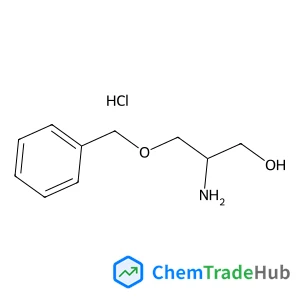
(R)-2-amino-3-(benzyloxy)propan-1-ol hydrochloride
CAS Number:
58577-95-0
Molecular Formula:
C10H16ClNO2
![4-{1-[4-(4,4,5,5-Tetramethyl-1,3,2-dioxaborolan-2-yl)phenyl]cyclopropyl}morpholine structure](https://static.chemtradehub.com/structs/120/1206594-08-2-7afb.webp "4-{1-[4-(4,4,5,5-Tetramethyl-1,3,2-dioxaborolan-2-yl)phenyl]cyclopropyl}morpholine structure")
4-{1-[4-(4,4,5,5-Tetramethyl-1,3,2-dioxaborolan-2-yl)phenyl]cyclopropyl}morpholine
CAS Number:
1206594-08-2
Molecular Formula:
C19H28BNO3
Recommended Suppliers





Disclaimer
This page provides academic journal information for reference and research purposes only. We are not affiliated with any journal publishers and do not handle publication submissions. For publication-related inquiries, please contact the respective journal publishers directly.
If you notice any inaccuracies in the information displayed, please contact us at support@chemtradehub.com. We will promptly review and address your concerns.