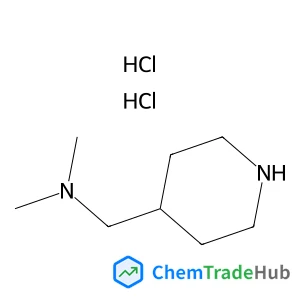
N,N-dimethyl(piperidin-4-yl)methanamine hydrochloride
CAS Number:
172281-72-0
Molecular Formula:
C8H20Cl2N2
Iuliana Mihalache, Eugeniu Vasile, Cristina Pachiu, Sandra A. V. Eremia, Antonio Radoi, Mihaela Kusko
An interconnected graphene network (IGN) structure with excellent photoluminescence (PL) properties was synthesized using a one-pot microwave-assisted hydrothermal carbonization route. The material exhibited intense and excitation-wavelength dependent PL emission located mainly in the UV-blue light range (300–450 nm). The result demonstrates that graphene networks could also be included in the emerging class of tunable PL carbon nanomaterials. Furthermore, we have taken a first step towards their incorporation into solar cell devices by fabricating IGN/p-SiNWs radial heterojunctions using the versatile potentiostatic electrodeposition technique. The IGN modified p-SiNW solar cell showed the best performance with an overall enhancement of power conversion efficiency of 7.5 times higher than the reference cell. We emphasize that the structural and electronic characteristics of the as-prepared IGN combined with tapering effects are directly responsible for the tripled short circuit current density and 9% improvement of open circuit voltage with respect to the reference cell. Finally, we have demonstrated that the IGN successfully passivated the Si nanowires’ surface using intensity modulated photocurrent/photovoltage spectroscopy (IMPS/IMVS). These promising findings indicate that further IGN exploitation may help to gain efficiency in future energy conversion applications.
DOI: 10.1039/JA9860100105
Pengfei Zhou, Xiaolan Liu, Junying Weng, Li Wang, Xiaozhong Wu, Zhichao Miao, Jinping Zhao, Jin Zhou, Shuping Zhuo
DOI: 10.1039/C8TA07842D
Xiulin Fan, Chunsheng Wang
DOI: 10.1039/D1CS00450F
Clare A. Manderson, Heather McLiesh, Rico F. Tabor, Gil Garnier
DOI: 10.1039/D0AN01993C
Haiwei Li, Wingkei Ho, Shun Cheng Lee
DOI: 10.1039/C9TA03504D
André A. Neves, Shaun Stairs, Heather Ireland-Zecchini, Kevin M. Brindle, Finian J. Leeper
DOI: 10.1039/C0SC00631A
Emily R. Groper, Jack A. Barnes, Rory McEwen, Younès Messaddeq, Richard D. Oleschuk
DOI: 10.1039/D1AN00264C
Yannan Li, Li Yang, Mengqi Du, Guanjun Chang
DOI: 10.1039/C8AN01155A
Xiangfei Yuan, Cui Sun, Jia-Ning Duan, Jingmin Fan, Ruming Yuan, Jiajia Chen, Jeng-Kuei Chang, Mingsen Zheng, Quanfeng Dong
DOI: 10.1039/C9TA04714J
Zeyu Du, Rui Hao, Ruiqiang Hang, Xiaohong Yao, Nan Huang, Bin Tang
DOI: 10.1039/C8TB01675E
Ethyl 4-chlorothieno[2,3-b]pyridine-5-carboxylate (CAS: 59713-58-5) can be synth...
5-Methyl-1H-indole-3-carbaldehyde (CAS: 52562-50-2) is subject to various regula...
(1,3-Dimethyl-2,4-dioxo-1,2,3,4-tetrahydro-5-pyrimidinyl)boronic acid is a white...
Waste containing Sulfocostunolide A (CAS: 1016983-51-9) should be handled with c...
When handling Murraxocin (CAS: 88478-44-8), ensure proper personal protective eq...
Formvar (CAS: 63148-64-1) is an alkyd resin characterized by a high molecular we...
(S)-4-benzyl-2-((benzyloxy)methyl)morpholine is generally safe when handled with...
Methyl 1-(5-bromo-2-pyrimidinyl)cyclopropanecarboxylate (CAS: 1447607-69-3) is p...
2-Methyl-1-phenyl-1-propanamine hydrochloride (CAS: 24290-47-9) is generally con...
3-(4-Bromophenyl)-2-methylpropanoic acid is synthesized through a multi-step pro...

Physical Chemistry Chemical Physics (PCCP) is an international journal co-owned by 19 physical chemistry and physics societies from around the world. This journal publishes original, cutting-edge research in physical chemistry, chemical physics and biophysical chemistry. To be suitable for publication in PCCP, articles must include significant innovation and/or insight into physical chemistry; this is the most important criterion that reviewers and Editors will judge against when evaluating submissions. The journal has a broad scope and welcomes contributions spanning experiment, theory, computation and data science. Topical coverage includes spectroscopy, dynamics, kinetics, statistical mechanics, thermodynamics, electrochemistry, catalysis, surface science, quantum mechanics, quantum computing and machine learning. Interdisciplinary research areas such as polymers and soft matter, materials, nanoscience, energy, surfaces/interfaces, and biophysical chemistry are welcomed if they demonstrate significant innovation and/or insight into physical chemistry. Joined experimental/theoretical studies are particularly appreciated when complementary and based on up-to-date approaches.
![4-{1-[4-(4,4,5,5-Tetramethyl-1,3,2-dioxaborolan-2-yl)phenyl]cyclopropyl}morpholine structure](https://static.chemtradehub.com/structs/120/1206594-08-2-7afb.webp "4-{1-[4-(4,4,5,5-Tetramethyl-1,3,2-dioxaborolan-2-yl)phenyl]cyclopropyl}morpholine structure")
![9,9'-Spirobi[fluoren]-2-amine structure](https://static.chemtradehub.com/structs/118/118951-68-1-0d14.webp "9,9'-Spirobi[fluoren]-2-amine structure")