













Flexible and stretchable thin-film transistors based on molybdenum disulphide
Literature Information
Publication Date
2014-02-27
DOI
10.1039/C3CP55270E
Impact Factor
3.676
Authors
Jiang Pu, Lain-Jong Li
View Original
Abstract
The outstanding physical and chemical properties of two-dimensional materials, which include graphene and transition metal dichalcogenides, have allowed significant applications in next generation electronics. In particular, atomically thin molybdenum disulphide (MoS2) is attracting widespread attention because of its large bandgap, effective carrier mobility, and mechanical strength. In addition, recent developments in large-area high-quality sample preparation methods via chemical vapour deposition have enabled the use of MoS2 in novel functional applications, such as flexible and stretchable electronic devices. In this perspective, we focus on the current progress in generating MoS2-based flexible and stretchable thin-film transistors. The reported virtues and novelties of MoS2 provide significant advantages for future flexible and stretchable electronics.
Related Literature
Control of triplet state generation in heavy atom-free BODIPY–anthracene dyads by media polarity and structural factors
Mikhail A. Filatov, Safakath Karuthedath, Pavel M. Polestshuk, Susan Callaghan, Keith J. Flanagan, Maxime Telitchko, Thomas Wiesner, Frédéric Laquai, Mathias O. Senge
2018-02-12
Paper
DOI: 10.1039/C7CP08472B
Bexarotene cannot reduce amyloid beta plaques through inhibition of production of amyloid beta peptides: in silico and in vitro study
Zuzana Bednarikova, Huynh Quang Linh, Zuzana Gazova, Mai Suan Li
2018-08-30
Paper
DOI: 10.1039/C8CP00049B
The coordinative state of aluminium alkyls in Ziegler–Natta catalysts
Ernst R. H. van Eck, Arno P. M. Kentgens
2018-02-28
Paper
DOI: 10.1039/C8CP00603B
A theoretical study on the mechanism of hydrogen evolution on non-precious partially oxidized nickel-based heterostructures for fuel cells
Xinju Pan, Gang Zhou
2018-02-21
Paper
DOI: 10.1039/C7CP08112J
Synergetic effect of H and He impurities in Ti3AlC2: first principles calculations
Jiajia Liu, Canglong Wang, Xiaolu Zhu, Jitao Liu, Xingming Zhang, Xueqiang Gou, Wenshan Duan, Lei Yang
2018-06-25
Paper
DOI: 10.1039/C8CP02082E
A meta-GGA level screened range-separated hybrid functional by employing short range Hartree–Fock with a long range semilocal functional
Subrata Jana, Prasanjit Samal
2018-03-06
Paper
DOI: 10.1039/C8CP00333E
Competitive DNA binding of Ru(bpy)2dppz2+ enantiomers studied with isothermal titration calorimetry (ITC) using a direct and general binding isotherm algorithm
Anna K. F. Mårtensson, Per Lincoln
2017-12-13
Paper
DOI: 10.1039/C7CP03184J
Time-dependent yield of the hydrated electron and the hydroxyl radical in D2O: a picosecond pulse radiolysis study
Furong Wang, Jean-Philippe Larbre, Zizhao Zong, Jean-Louis Marignier, Mehran Mostafavi
2018-05-10
Paper
DOI: 10.1039/C8CP02276C
Spin coupling interactions in CC or B–B-cored porphyrin-mimetic graphene patch nitroxide diradicals
Meiyu Song, Xinyu Song
2018-02-20
Paper
DOI: 10.1039/C8CP00105G
You might also like
Compound Q&A
Is 2-(2-chloroacetamido)-3-phenylpropanoic acid (CAS: 7765-11-9) safe?
2-(2-Chloroacetamido)-3-phenylpropanoic acid (CAS: 7765-11-9) is generally consi...
7765-11-92-(2-chloroacetamido...
Compound Q&A
Is 2-(Benzyloxy)-5-bromobenzoic acid (CAS: 62176-31-2) safe?
2-(Benzyloxy)-5-bromobenzoic acid can be handled safely if appropriate precautio...
62176-31-22-(Benzyloxy)-5-brom...
Compound Q&A
What is (4-Methyl-1,2,5-oxadiazol-3-yl)methanamine hydrochloride (CAS: 1159825-48-5)?
(4-Methyl-1,2,5-oxadiazol-3-yl)methanamine hydrochloride is a chemical compound ...
1159825-48-5(4-Methyl-1,2,5-oxad...
Compound Q&A
What is 2-(5-Hexylthiophen-2-yl)-4,4,5,5-tetramethyl-1,3,2-dioxaborolane (CAS: 917985-54-7)?
2-(5-Hexylthiophen-2-yl)-4,4,5,5-tetramethyl-1,3,2-dioxaborolane (CAS: 917985-54...
917985-54-72-(5-Hexylthiophen-2...
Compound Q&A
Are there alternatives to 4-(8-Methyl-9H-1,3-dioxolo[4,5-h][2,3]benzodiazepin-5-yl)benzenamine (CAS: 102771-26-6) in synthesis?
While 4-(8-Methyl-9H-1,3-dioxolo[4,5-h][2,3]benzodiazepin-5-yl)benzenamine (CAS:...
102771-26-64-(8-Methyl-9H-1,3-d...
Compound Q&A
What is the market or research trend for tert-butyl 3-hydroxy-4,5,7,8-tetrahydro-2H-pyrazolo[3,4-d]azepine-6-carboxylate (CAS: 851376-80-2)?
The market for tert-butyl 3-hydroxy-4,5,7,8-tetrahydro-2H-pyrazolo[3,4-d]azepine...
851376-80-2tert-butyl 3-hydroxy...
Compound Q&A
How should waste containing 3,5-Diamino-1H-pyrazole-4-carbonitrile (CAS: 6844-58-2) be handled?
Waste containing 3,5-Diamino-1H-pyrazole-4-carbonitrile (CAS: 6844-58-2) should ...
6844-58-23,5-Diamino-1H-pyraz...
Compound Q&A
How is (6-Fluoro-3-pyridinyl)boronic acid (CAS: 351019-18-6) typically synthesized?
(6-Fluoro-3-pyridinyl)boronic acid can be synthesized through the reaction of 6-...
351019-18-6(6-Fluoro-3-pyridiny...
Compound Q&A
What industries use Dibenzyl carbonimidoylbiscarbamate (CAS: 10065-79-9)?
Dibenzyl carbonimidoylbiscarbamate (CAS: 10065-79-9) finds applications in vario...
10065-79-9Dibenzyl carbonimido...
Compound Q&A
What is the market or research trend for (beta,beta,2,3,4,5,6-~2~H_7_)Phenylalanine (CAS: 74228-83-4)?
The market for (beta,beta,2,3,4,5,6-~2~H_7_)Phenylalanine (CAS: 74228-83-4) is g...
74228-83-4(beta,beta,2,3,4,5,6...
Source Journal
Physical Chemistry Chemical Physics

CiteScore:
5.5
Self-citation Rate:
10.3%
Articles per Year:
3036
Physical Chemistry Chemical Physics (PCCP) is an international journal co-owned by 19 physical chemistry and physics societies from around the world. This journal publishes original, cutting-edge research in physical chemistry, chemical physics and biophysical chemistry. To be suitable for publication in PCCP, articles must include significant innovation and/or insight into physical chemistry; this is the most important criterion that reviewers and Editors will judge against when evaluating submissions. The journal has a broad scope and welcomes contributions spanning experiment, theory, computation and data science. Topical coverage includes spectroscopy, dynamics, kinetics, statistical mechanics, thermodynamics, electrochemistry, catalysis, surface science, quantum mechanics, quantum computing and machine learning. Interdisciplinary research areas such as polymers and soft matter, materials, nanoscience, energy, surfaces/interfaces, and biophysical chemistry are welcomed if they demonstrate significant innovation and/or insight into physical chemistry. Joined experimental/theoretical studies are particularly appreciated when complementary and based on up-to-date approaches.
Recommended Compounds
![3,7-Di(1,1':3',1''-terphenyl-5'-yl)-10,11,12,13-tetrahydrodiindeno[7,1-de:1',7'-fg][1,3,2]dioxaphosphocin-5-ol 5-oxide structure](https://static.chemtradehub.com/structs/135/1352810-38-8-3f10.webp "3,7-Di(1,1':3',1''-terphenyl-5'-yl)-10,11,12,13-tetrahydrodiindeno[7,1-de:1',7'-fg][1,3,2]dioxaphosphocin-5-ol 5-oxide structure")
3,7-Di(1,1':3',1''-terphenyl-5'-yl)-10,11,12,13-tetrahydrodiindeno[7,1-de:1',7'-fg][1,3,2]dioxaphosphocin-5-ol 5-oxide
CAS Number:
1352810-38-8
Molecular Formula:
C53H39O4P
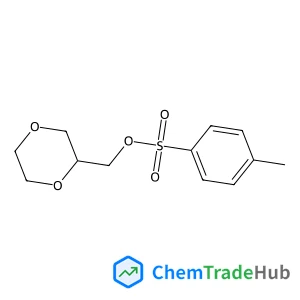
(S)-(1,4-Dioxan-2-yl)methyl 4-methylbenzenesulfonate
CAS Number:
917882-64-5
Molecular Formula:
C12H16O5S
Recommended Suppliers






Disclaimer
This page provides academic journal information for reference and research purposes only. We are not affiliated with any journal publishers and do not handle publication submissions. For publication-related inquiries, please contact the respective journal publishers directly.
If you notice any inaccuracies in the information displayed, please contact us at support@chemtradehub.com. We will promptly review and address your concerns.