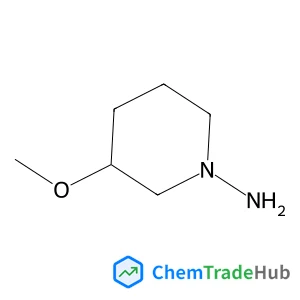
![19-[Chloro(dideuterio)methyl]-19-deuterio-20,20-dideuteriooxyoctatriacontane-18,21-dione structure](https://static.chemtradehub.com/structs/124/1246818-85-8-6244.webp "19-[Chloro(dideuterio)methyl]-19-deuterio-20,20-dideuteriooxyoctatriacontane-18,21-dione structure")
19-[Chloro(dideuterio)methyl]-19-deuterio-20,20-dideuteriooxyoctatriacontane-18,21-dione
CAS Number:
1246818-85-8
Molecular Formula:
C39H75ClO4
Takaaki Harada, Stephen F. Lincoln, Tak W. Kee
Curcumin is a yellow polyphenol with multiple medicinal effects. These effects, however, are limited due to its poor aqueous stability and solubility. A hydrogel of 3% octadecyl randomly substituted polyacrylate (PAAC18) has been shown to provide high aqueous stability for curcumin under physiological conditions, offering a route for photodynamic therapy. In this study, the excited-state photophysics of curcumin in the PAAC18 hydrogel is investigated using a combination of femtosecond transient absorption and fluorescence upconversion spectroscopy. The transient absorption results reveal a multiexponential decay in the excited-state kinetics with fast (1 ps & 15 ps) and slow (110 ps & ≈5 ns) components. The fast decay component exhibits a deuterium isotope effect with D2O in the hydrogel, indicating that the 15 ps decay component is attributable to excited-state intramolecular hydrogen atom transfer of curcumin in the PAAC18 hydrogel. In addition, solvent reorganisation of excited-state curcumin is investigated using multiwavelength femtosecond fluorescence upconversion spectroscopy. The results show that the dominant solvation response (τ = 0.08 ps) is a fast inertial motion owing to the presence of bulk-like water in the vicinity of the hydrophobic octadecyl substituents of the PAAC18 hydrogel. The results also show an additional response with longer time constants of 1 and 6 ps, which is attributable to translational diffusion of confined water molecules in the three-dimensional, cross-linking network of the octadecyl substituents of PAAC18. Overall, we show that excited-state intramolecular hydrogen atom transfer and solvent reorganisation are major photophysical events for curcumin in the PAAC18 hydrogel.

Russian Journal of Coordination Chemistry

Russian Journal of Organic Chemistry

Chemistry Education Research and Practice

Current Opinion in Colloid & Interface Science

Chemical Communications

Russian Journal of Applied Chemistry

Nature Medicine

Organic Process Research & Development

Current Opinion in Solid State & Materials Science

Russian Chemical Bulletin
DOI: 10.1039/C4CP01351D
Shunzo Takabatake
DOI: 10.1039/C4CP04933K
E. García-Pérez, P. Serra-Crespo, S. Hamad, F. Kapteijn, J. Gascon
DOI: 10.1039/C3CP55416C
Martin Dulle, Sarah Jaber, Sabine Rosenfeldt, Aurel Radulescu, Stephan Förster, Paul Mulvaney, Matthias Karg
DOI: 10.1039/C4CP04816D
DOI: 10.1039/C4CP01674B
Mariia O. Dekaliuk, Oleg Viagin, Yuriy V. Malyukin, Alexander P. Demchenko
DOI: 10.1039/C4CP00138A
Martin Volk, Lilia Milanesi, Christopher A. Hunter, Godfrey S. Beddard
DOI: 10.1039/C4CP03058C
Xiao Zhang, Mingshan Zhu, Penglei Chen, Yongjun Li, Huibiao Liu, Yuliang Li, Minghua Liu
DOI: 10.1039/C4CP04683H
2-(2-Chloroacetamido)-3-phenylpropanoic acid (CAS: 7765-11-9) is generally consi...
2-(Benzyloxy)-5-bromobenzoic acid can be handled safely if appropriate precautio...
(4-Methyl-1,2,5-oxadiazol-3-yl)methanamine hydrochloride is a chemical compound ...
2-(5-Hexylthiophen-2-yl)-4,4,5,5-tetramethyl-1,3,2-dioxaborolane (CAS: 917985-54...
While 4-(8-Methyl-9H-1,3-dioxolo[4,5-h][2,3]benzodiazepin-5-yl)benzenamine (CAS:...
The market for tert-butyl 3-hydroxy-4,5,7,8-tetrahydro-2H-pyrazolo[3,4-d]azepine...
Waste containing 3,5-Diamino-1H-pyrazole-4-carbonitrile (CAS: 6844-58-2) should ...
(6-Fluoro-3-pyridinyl)boronic acid can be synthesized through the reaction of 6-...
Dibenzyl carbonimidoylbiscarbamate (CAS: 10065-79-9) finds applications in vario...
The market for (beta,beta,2,3,4,5,6-~2~H_7_)Phenylalanine (CAS: 74228-83-4) is g...

Physical Chemistry Chemical Physics (PCCP) is an international journal co-owned by 19 physical chemistry and physics societies from around the world. This journal publishes original, cutting-edge research in physical chemistry, chemical physics and biophysical chemistry. To be suitable for publication in PCCP, articles must include significant innovation and/or insight into physical chemistry; this is the most important criterion that reviewers and Editors will judge against when evaluating submissions. The journal has a broad scope and welcomes contributions spanning experiment, theory, computation and data science. Topical coverage includes spectroscopy, dynamics, kinetics, statistical mechanics, thermodynamics, electrochemistry, catalysis, surface science, quantum mechanics, quantum computing and machine learning. Interdisciplinary research areas such as polymers and soft matter, materials, nanoscience, energy, surfaces/interfaces, and biophysical chemistry are welcomed if they demonstrate significant innovation and/or insight into physical chemistry. Joined experimental/theoretical studies are particularly appreciated when complementary and based on up-to-date approaches.
![{3-[Bis(4-hydroxyphenyl)methyl]-1-[2-(dimethylamino)ethyl]-1H-indol-2-yl}[4-(2-chlorophenyl)-1-piperazinyl]methanone structure](https://static.chemtradehub.com/structs/170/170365-25-0-e4d7.webp "{3-[Bis(4-hydroxyphenyl)methyl]-1-[2-(dimethylamino)ethyl]-1H-indol-2-yl}[4-(2-chlorophenyl)-1-piperazinyl]methanone structure")