












Pristine graphdiyne-hybridized photocatalysts using graphene oxide as a dual-functional coupling reagent
Literature Information
Publication Date
2014-11-14
DOI
10.1039/C4CP04683H
Impact Factor
3.676
Authors
Xiao Zhang, Mingshan Zhu, Penglei Chen, Yongjun Li, Huibiao Liu, Yuliang Li, Minghua Liu
View Original
Abstract
Advanced functional hybrids based on carbon materials (CMs) represent one of the main achievements of scientific communities. To achieve the hybridization, pristine CMs have to be chemically modified, or surfactants, which are nonfunctional for the performances of the hybrids, have to be employed as a cross-linkage. The construction of pristine CM-based hybrids using dual-functional coupling reagents, which work not only as a glue for hybridization but also as a functional component for enhanced performance, is strongly desired. Here, we report that pristine graphdiyne (GD), a recently synthesized new carbon allotrope, can be facilely hybridized with Ag/AgBr using graphene oxide (GO) as a cross-linkage. We demonstrate that compared to Ag/AgBr, Ag/AgBr/GO, and Ag/AgBr/GD, our Ag/AgBr/GO/GD exhibits an enhanced photocatalytic performance toward the degradation of methyl orange (MO) pollutant under visible light irradiation. In our Ag/AgBr/GO/GD, GO serves not only as a glue for a successful hybridization, but also as a functional component for enhanced catalytic performance. Beyond GD, our work likely paves a new avenue for the fabrication of advanced functional hybrids based on pristine carbon allotropes, wherein desired functions or properties might be achieved by choosing desired CMs and desired hybridized components.
Related Literature
Spin coupling interactions in CC or B–B-cored porphyrin-mimetic graphene patch nitroxide diradicals
Meiyu Song, Xinyu Song
2018-02-20
Paper
DOI: 10.1039/C8CP00105G
Temperature dependence of photophysical properties of a dinuclear C^N-cyclometalated Pt(ii) complex with an intimate Pt–Pt contact. Zero-field splitting and sub-state decay rates of the lowest triplet
Joseph C. Deaton, Arnab Chakraborty, Rafal Czerwieniec, Hartmut Yersin, Felix N. Castellano
2018-09-18
Paper
DOI: 10.1039/C8CP05213A
The direct observation of electron backflow in an organic heterojunction formed by two n-type materials
Bo Wu, Hai Shen Huang
2018-02-12
Paper
DOI: 10.1039/C7CP07817J
Influence of crystallographic environment on scandium K-edge X-ray absorption near-edge structure spectra
Mathieu Chassé, Amélie Juhin, Delphine Cabaret, Steven Delhommaye, Delphine Vantelon, Georges Calas
2018-09-07
Paper
DOI: 10.1039/C8CP04413A
Magnesium bis(trifluoromethanesulfonyl)amide complexes with triglyme and asymmetric homologues: phase behavior, coordination structures and melting point reduction
Kei Hashimoto, Soma Suzuki, Morgan L. Thomas, Toshihiko Mandai, Seiji Tsuzuki, Masayoshi Watanabe
2018-02-13
Paper
DOI: 10.1039/C7CP08367J
Mesostructure and physical properties of aqueous mixtures of the ionic liquid 1-ethyl-3-methyl imidazolium octyl sulfate doped with divalent sulfate salts in the liquid and the mesomorphic states
Oscar Cabeza, Luisa Segade, Montserrat Domínguez-Pérez, Esther Rilo, David Ausín, Anna Martinelli, Negin Yaghini, Bernhard Gollas, Manfred Kriechbaum, Olga Russina, Alessandro Triolo, Elena López-Lago, Luis M. Varela
2018-03-03
Paper
DOI: 10.1039/C7CP07999K
Structure–composition trends in multicomponent borosilicate-based glasses deduced from molecular dynamics simulations with improved B–O and P–O force fields
Baltzar Stevensson, Yang Yu, Mattias Edén
2018-02-07
Paper
DOI: 10.1039/C7CP08593A
You might also like
Compound Q&A
Is 2-(2-chloroacetamido)-3-phenylpropanoic acid (CAS: 7765-11-9) safe?
2-(2-Chloroacetamido)-3-phenylpropanoic acid (CAS: 7765-11-9) is generally consi...
7765-11-92-(2-chloroacetamido...
Compound Q&A
Is 2-(Benzyloxy)-5-bromobenzoic acid (CAS: 62176-31-2) safe?
2-(Benzyloxy)-5-bromobenzoic acid can be handled safely if appropriate precautio...
62176-31-22-(Benzyloxy)-5-brom...
Compound Q&A
What is (4-Methyl-1,2,5-oxadiazol-3-yl)methanamine hydrochloride (CAS: 1159825-48-5)?
(4-Methyl-1,2,5-oxadiazol-3-yl)methanamine hydrochloride is a chemical compound ...
1159825-48-5(4-Methyl-1,2,5-oxad...
Compound Q&A
What is 2-(5-Hexylthiophen-2-yl)-4,4,5,5-tetramethyl-1,3,2-dioxaborolane (CAS: 917985-54-7)?
2-(5-Hexylthiophen-2-yl)-4,4,5,5-tetramethyl-1,3,2-dioxaborolane (CAS: 917985-54...
917985-54-72-(5-Hexylthiophen-2...
Compound Q&A
Are there alternatives to 4-(8-Methyl-9H-1,3-dioxolo[4,5-h][2,3]benzodiazepin-5-yl)benzenamine (CAS: 102771-26-6) in synthesis?
While 4-(8-Methyl-9H-1,3-dioxolo[4,5-h][2,3]benzodiazepin-5-yl)benzenamine (CAS:...
102771-26-64-(8-Methyl-9H-1,3-d...
Compound Q&A
What is the market or research trend for tert-butyl 3-hydroxy-4,5,7,8-tetrahydro-2H-pyrazolo[3,4-d]azepine-6-carboxylate (CAS: 851376-80-2)?
The market for tert-butyl 3-hydroxy-4,5,7,8-tetrahydro-2H-pyrazolo[3,4-d]azepine...
851376-80-2tert-butyl 3-hydroxy...
Compound Q&A
How should waste containing 3,5-Diamino-1H-pyrazole-4-carbonitrile (CAS: 6844-58-2) be handled?
Waste containing 3,5-Diamino-1H-pyrazole-4-carbonitrile (CAS: 6844-58-2) should ...
6844-58-23,5-Diamino-1H-pyraz...
Compound Q&A
How is (6-Fluoro-3-pyridinyl)boronic acid (CAS: 351019-18-6) typically synthesized?
(6-Fluoro-3-pyridinyl)boronic acid can be synthesized through the reaction of 6-...
351019-18-6(6-Fluoro-3-pyridiny...
Compound Q&A
What industries use Dibenzyl carbonimidoylbiscarbamate (CAS: 10065-79-9)?
Dibenzyl carbonimidoylbiscarbamate (CAS: 10065-79-9) finds applications in vario...
10065-79-9Dibenzyl carbonimido...
Compound Q&A
What is the market or research trend for (beta,beta,2,3,4,5,6-~2~H_7_)Phenylalanine (CAS: 74228-83-4)?
The market for (beta,beta,2,3,4,5,6-~2~H_7_)Phenylalanine (CAS: 74228-83-4) is g...
74228-83-4(beta,beta,2,3,4,5,6...
Source Journal
Physical Chemistry Chemical Physics

CiteScore:
5.5
Self-citation Rate:
10.3%
Articles per Year:
3036
Physical Chemistry Chemical Physics (PCCP) is an international journal co-owned by 19 physical chemistry and physics societies from around the world. This journal publishes original, cutting-edge research in physical chemistry, chemical physics and biophysical chemistry. To be suitable for publication in PCCP, articles must include significant innovation and/or insight into physical chemistry; this is the most important criterion that reviewers and Editors will judge against when evaluating submissions. The journal has a broad scope and welcomes contributions spanning experiment, theory, computation and data science. Topical coverage includes spectroscopy, dynamics, kinetics, statistical mechanics, thermodynamics, electrochemistry, catalysis, surface science, quantum mechanics, quantum computing and machine learning. Interdisciplinary research areas such as polymers and soft matter, materials, nanoscience, energy, surfaces/interfaces, and biophysical chemistry are welcomed if they demonstrate significant innovation and/or insight into physical chemistry. Joined experimental/theoretical studies are particularly appreciated when complementary and based on up-to-date approaches.
Recommended Compounds
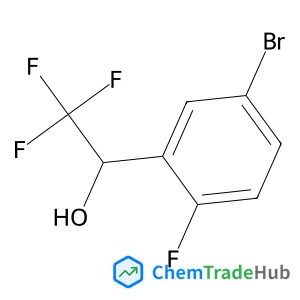
1-(5-Bromo-2-fluorophenyl)-2,2,2-trifluoroethanol
CAS Number:
1039827-16-1
Molecular Formula:
C8H5BrF4O

Recommended Suppliers




Disclaimer
This page provides academic journal information for reference and research purposes only. We are not affiliated with any journal publishers and do not handle publication submissions. For publication-related inquiries, please contact the respective journal publishers directly.
If you notice any inaccuracies in the information displayed, please contact us at support@chemtradehub.com. We will promptly review and address your concerns.