












Microwave-gated dynamic nuclear polarization
Literature Information
Publication Date
2016-09-30
DOI
10.1039/C6CP05587G
Impact Factor
3.676
Authors
Aurélien Bornet, Arthur Pinon, Lyndon Emsley
View Original
Abstract
Dissolution dynamic nuclear polarization (D-DNP) has become a method of choice to enhance signals in nuclear magnetic resonance (NMR). Recently, we have proposed to combine cross-polarization (CP) with D-DNP to provide high polarization P(13C) in short build-up times. In this paper, we show that switching microwave irradiation off for a few hundreds of milliseconds prior to CP can significantly boost the efficiency. By implementing microwave gating, 13C polarizations on sodium [1-13C]acetate as high as 64% could be achieved with a polarization build-up time constant as short as 160 s. A polarization of P(13C) = 78% could even be reached for [13C]urea.
Related Literature
A new insight into the SO2 adsorption behavior of oxidized carbon materials using model adsorbents and DFT calculations
Xinxin Pi, Fei Sun, Jihui Gao, Zhibin Qu, Ani Wang, Zhipeng Qie, Lijie Wang, Hui Liu
2019-03-14
Paper
DOI: 10.1039/C8CP07782G
Influence of the average molar mass of poly(N-vinylpyrrolidone) on the dimensions and conductivity of silver nanowires
Franziska Eichler, Nelli Weiß, Ludwig Bormann, Dhriti S. Ghosh, Jannick M. Sonntag
2019-03-13
Paper
DOI: 10.1039/C9CP00680J
Implementing the mechanical force into the conceptual DFT framework: understanding and predicting molecular mechanochemical properties
Tom Bettens, Mercedes Alonso, Paul Geerlings, Frank De Proft
2019-03-20
Paper
DOI: 10.1039/C8CP07349J
Size-controllable and uniform gold bumpy nanocubes for single-particle-level surface-enhanced Raman scattering sensitivity
Hyejin Chang, Yoon Young Lee, Hye Eun Lee, Hyo-Yong Ahn, Eunbyeol Ko, Ki Tae Nam
2019-03-15
Paper
DOI: 10.1039/C9CP00138G
Order parameters, orientational distribution functions and heliconical tilt angles of oligomeric liquid crystals
Richard J. Mandle, John W. Goodby
2019-03-07
Paper
DOI: 10.1039/C9CP00736A
Enhancement of the band edge emission of CdSe nano-tetrapods by suppression of surface trapping
Sucheta Banerjee, Fariyad Ali, Anindya Datta
2019-04-04
Paper
DOI: 10.1039/C9CP00198K
Time-resolved radiation chemistry: femtosecond photoelectron spectroscopy of electron attachment and photodissociation dynamics in iodide–nucleobase clusters
Alice Kunin
2019-02-25
Perspective
DOI: 10.1039/C8CP07831A
Rydberg state mediated multiphoton ionization of (η7-C7H7)(η5-C5H5)Cr: DFT-supported experimental insights into the molecular and electronic structures of excited sandwich complexes
Sergey Yu. Ketkov, Sheng Yuan Tzeng, Elena A. Rychagova, Lyubov’ V. Kalakutskaya, Marco Fuss, Holger Braunschweig, Wen-Bih Tzeng
2019-03-12
Paper
DOI: 10.1039/C9CP00888H
You might also like
Compound Q&A
How is Ethyl 4-chlorothieno[2,3-b]pyridine-5-carboxylate (CAS: 59713-58-5) typically synthesized?
Ethyl 4-chlorothieno[2,3-b]pyridine-5-carboxylate (CAS: 59713-58-5) can be synth...
59713-58-5Ethyl 4-chlorothieno...
Compound Q&A
What regulatory guidelines apply to 5-Methyl-1H-indole-3-carbaldehyde (CAS: 52562-50-2)?
5-Methyl-1H-indole-3-carbaldehyde (CAS: 52562-50-2) is subject to various regula...
52562-50-25-Methyl-1H-indole-3...
Compound Q&A
What are the physical and chemical properties of (1,3-Dimethyl-2,4-dioxo-1,2,3,4-tetrahydro-5-pyrimidinyl)boronic acid (CAS: 223418-73-3)?
(1,3-Dimethyl-2,4-dioxo-1,2,3,4-tetrahydro-5-pyrimidinyl)boronic acid is a white...
223418-73-3(1,3-Dimethyl-2,4-di...
Compound Q&A
How should waste containing Sulfocostunolide A (CAS: 1016983-51-9) be handled?
Waste containing Sulfocostunolide A (CAS: 1016983-51-9) should be handled with c...
1016983-51-9Sulfocostunolide A
Compound Q&A
What precautions should be taken when handling Murraxocin (CAS: 88478-44-8)?
When handling Murraxocin (CAS: 88478-44-8), ensure proper personal protective eq...
88478-44-8Murraxocin
Compound Q&A
What are the physical and chemical properties of Formvar (CAS: 63148-64-1)?
Formvar (CAS: 63148-64-1) is an alkyd resin characterized by a high molecular we...
63148-64-1Formvar(R)
Compound Q&A
Is (S)-4-benzyl-2-((benzyloxy)methyl)morpholine (CAS: 205242-66-6) safe?
(S)-4-benzyl-2-((benzyloxy)methyl)morpholine is generally safe when handled with...
205242-66-6(S)-4-benzyl-2-((ben...
Compound Q&A
What industries use Methyl 1-(5-bromo-2-pyrimidinyl)cyclopropanecarboxylate (CAS: 1447607-69-3)?
Methyl 1-(5-bromo-2-pyrimidinyl)cyclopropanecarboxylate (CAS: 1447607-69-3) is p...
1447607-69-3Methyl 1-(5-bromo-2-...
Compound Q&A
Is 2-Methyl-1-phenyl-1-propanamine hydrochloride (CAS: 24290-47-9) safe?
2-Methyl-1-phenyl-1-propanamine hydrochloride (CAS: 24290-47-9) is generally con...
24290-47-92-Methyl-1-phenyl-1-...
Compound Q&A
How is 3-(4-Bromophenyl)-2-methylpropanoic acid (CAS: 66735-01-1) typically synthesized?
3-(4-Bromophenyl)-2-methylpropanoic acid is synthesized through a multi-step pro...
66735-01-13-(4-Bromophenyl)-2-...
Source Journal
Physical Chemistry Chemical Physics

CiteScore:
5.5
Self-citation Rate:
10.3%
Articles per Year:
3036
Physical Chemistry Chemical Physics (PCCP) is an international journal co-owned by 19 physical chemistry and physics societies from around the world. This journal publishes original, cutting-edge research in physical chemistry, chemical physics and biophysical chemistry. To be suitable for publication in PCCP, articles must include significant innovation and/or insight into physical chemistry; this is the most important criterion that reviewers and Editors will judge against when evaluating submissions. The journal has a broad scope and welcomes contributions spanning experiment, theory, computation and data science. Topical coverage includes spectroscopy, dynamics, kinetics, statistical mechanics, thermodynamics, electrochemistry, catalysis, surface science, quantum mechanics, quantum computing and machine learning. Interdisciplinary research areas such as polymers and soft matter, materials, nanoscience, energy, surfaces/interfaces, and biophysical chemistry are welcomed if they demonstrate significant innovation and/or insight into physical chemistry. Joined experimental/theoretical studies are particularly appreciated when complementary and based on up-to-date approaches.
Recommended Compounds
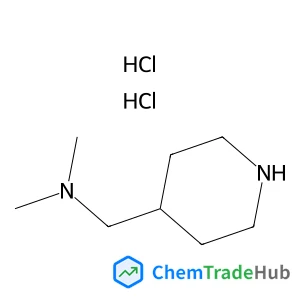
N,N-dimethyl(piperidin-4-yl)methanamine hydrochloride
CAS Number:
172281-72-0
Molecular Formula:
C8H20Cl2N2


Recommended Suppliers





Disclaimer
This page provides academic journal information for reference and research purposes only. We are not affiliated with any journal publishers and do not handle publication submissions. For publication-related inquiries, please contact the respective journal publishers directly.
If you notice any inaccuracies in the information displayed, please contact us at support@chemtradehub.com. We will promptly review and address your concerns.