












Dependence on the structure and surface polarity of ZnS photocatalytic activities of water splitting: first-principles calculations
Literature Information
Publication Date
2013-04-22
DOI
10.1039/C3CP50330E
Impact Factor
3.676
Authors
Hai Xiao, Xiaohong Wen, William A. Goddard III, Song Li, Gaowu Qin
View Original
Abstract
It has been reported that phase structure and surface polarity largely affect the photocatalytic efficiency of semiconductor nanostructures. To understand the chemical activity of ZnS at the electronic level, we investigate electron structures and carrier transportation ability for bulk intrinsic zinc blende (ZB) and wurtzite (WZ) ZnS, as well as the reaction pathway of hydrogen generation from water splitting on Zn- and S-terminated polar surfaces. The electron structure calculations prove that the WZ phase possesses a higher reducing ability than the ZB phase. The conductivity of the bulk ZB phase surpasses that of the WZ phase at or above room temperature. As the temperature increases, the asymptotic conductivity ratio of WZ/ZB is close to the Golden Ratio, 0.62. Reaction kinetics studies indicate that Zn-terminated polar surfaces are more chemically active than S-terminated polar surfaces in the reaction of hydrogen generation from water splitting. The calculation results suggest that the first H splitting from water on Zn-terminated polar surfaces can occur with ground state electronic structures, while photo-assistance is necessary for the first H splitting on the S-terminated surfaces. Electronic triplet states calculations further show that Zn-terminated surfaces are more photosensitive than S-terminated surfaces.
Related Literature
Order parameters, orientational distribution functions and heliconical tilt angles of oligomeric liquid crystals
Richard J. Mandle, John W. Goodby
2019-03-07
Paper
DOI: 10.1039/C9CP00736A
A critical comparison of neural network potentials for molecular reaction dynamics with exact permutation symmetry
Kaisheng Song, Jörg Behler
2019-01-11
Paper
DOI: 10.1039/C8CP06919K
Molecular design of ionic liquids as novel non-metal catalysts for the acetylene hydrochlorination reaction
Yao Nian, Xiaoyan Li, Yan Wang, Wei Li, Pewee Datoo Kolubah
2019-03-12
Paper
DOI: 10.1039/C9CP01151J
Nanoplatelet cryoaerogels with potential application in photoelectrochemical sensing
2019-03-06
Paper
DOI: 10.1039/C9CP00281B
Effect of extending conjugation via thiophene-based oligomers on the excited state electron transfer rates to ZnO nanocrystals
Amanda N. Oehrlein, Antonio Sanchez-Diaz, Philip C. Goff, Miquel Planells, Neil Robertson, David A. Blank, Wayne L. Gladfelter
2019-03-14
Paper
DOI: 10.1039/C9CP00420C
Absorption shifts of diastereotopically ligated chlorophyll dimers of photosystem I
Carl-Mikael Suomivuori, Heike Fliegl, Evgeni B. Starikov, T. Silviu Balaban, Ville R. I. Kaila
2019-03-11
Paper
DOI: 10.1039/C9CP00616H
Structural and magnetic studies of KOsO4, a 5d1 quantum magnet oxide
Sean Injac, Alexander K. L. Yuen, Fabio Orlandi, Brendan J. Kennedy
2019-03-12
Communication
DOI: 10.1039/C9CP00448C
Ab initio computation for solid-state 31P NMR of inorganic phosphates: revisiting X-ray structures
Kartik Pilar, Zeyu Deng, Joya A. Cooley
2019-05-03
Paper
DOI: 10.1039/C9CP01420A
Kasha's rule: a reappraisal
Juan Carlos del Valle, Javier Catalán
2019-04-23
Paper
DOI: 10.1039/C9CP00739C
You might also like
Compound Q&A
How is Ethyl 4-chlorothieno[2,3-b]pyridine-5-carboxylate (CAS: 59713-58-5) typically synthesized?
Ethyl 4-chlorothieno[2,3-b]pyridine-5-carboxylate (CAS: 59713-58-5) can be synth...
59713-58-5Ethyl 4-chlorothieno...
Compound Q&A
What regulatory guidelines apply to 5-Methyl-1H-indole-3-carbaldehyde (CAS: 52562-50-2)?
5-Methyl-1H-indole-3-carbaldehyde (CAS: 52562-50-2) is subject to various regula...
52562-50-25-Methyl-1H-indole-3...
Compound Q&A
What are the physical and chemical properties of (1,3-Dimethyl-2,4-dioxo-1,2,3,4-tetrahydro-5-pyrimidinyl)boronic acid (CAS: 223418-73-3)?
(1,3-Dimethyl-2,4-dioxo-1,2,3,4-tetrahydro-5-pyrimidinyl)boronic acid is a white...
223418-73-3(1,3-Dimethyl-2,4-di...
Compound Q&A
How should waste containing Sulfocostunolide A (CAS: 1016983-51-9) be handled?
Waste containing Sulfocostunolide A (CAS: 1016983-51-9) should be handled with c...
1016983-51-9Sulfocostunolide A
Compound Q&A
What precautions should be taken when handling Murraxocin (CAS: 88478-44-8)?
When handling Murraxocin (CAS: 88478-44-8), ensure proper personal protective eq...
88478-44-8Murraxocin
Compound Q&A
What are the physical and chemical properties of Formvar (CAS: 63148-64-1)?
Formvar (CAS: 63148-64-1) is an alkyd resin characterized by a high molecular we...
63148-64-1Formvar(R)
Compound Q&A
Is (S)-4-benzyl-2-((benzyloxy)methyl)morpholine (CAS: 205242-66-6) safe?
(S)-4-benzyl-2-((benzyloxy)methyl)morpholine is generally safe when handled with...
205242-66-6(S)-4-benzyl-2-((ben...
Compound Q&A
What industries use Methyl 1-(5-bromo-2-pyrimidinyl)cyclopropanecarboxylate (CAS: 1447607-69-3)?
Methyl 1-(5-bromo-2-pyrimidinyl)cyclopropanecarboxylate (CAS: 1447607-69-3) is p...
1447607-69-3Methyl 1-(5-bromo-2-...
Compound Q&A
Is 2-Methyl-1-phenyl-1-propanamine hydrochloride (CAS: 24290-47-9) safe?
2-Methyl-1-phenyl-1-propanamine hydrochloride (CAS: 24290-47-9) is generally con...
24290-47-92-Methyl-1-phenyl-1-...
Compound Q&A
How is 3-(4-Bromophenyl)-2-methylpropanoic acid (CAS: 66735-01-1) typically synthesized?
3-(4-Bromophenyl)-2-methylpropanoic acid is synthesized through a multi-step pro...
66735-01-13-(4-Bromophenyl)-2-...
Source Journal
Physical Chemistry Chemical Physics

CiteScore:
5.5
Self-citation Rate:
10.3%
Articles per Year:
3036
Physical Chemistry Chemical Physics (PCCP) is an international journal co-owned by 19 physical chemistry and physics societies from around the world. This journal publishes original, cutting-edge research in physical chemistry, chemical physics and biophysical chemistry. To be suitable for publication in PCCP, articles must include significant innovation and/or insight into physical chemistry; this is the most important criterion that reviewers and Editors will judge against when evaluating submissions. The journal has a broad scope and welcomes contributions spanning experiment, theory, computation and data science. Topical coverage includes spectroscopy, dynamics, kinetics, statistical mechanics, thermodynamics, electrochemistry, catalysis, surface science, quantum mechanics, quantum computing and machine learning. Interdisciplinary research areas such as polymers and soft matter, materials, nanoscience, energy, surfaces/interfaces, and biophysical chemistry are welcomed if they demonstrate significant innovation and/or insight into physical chemistry. Joined experimental/theoretical studies are particularly appreciated when complementary and based on up-to-date approaches.
Recommended Compounds
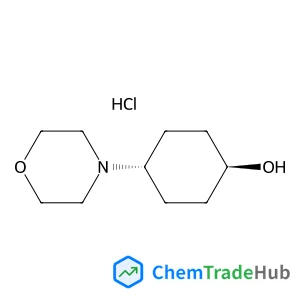
trans-4-(4-Morpholinyl)cyclohexanol hydrochloride (1:1)
CAS Number:
1588441-09-1
Molecular Formula:
C10H20ClNO2
Recommended Suppliers





Disclaimer
This page provides academic journal information for reference and research purposes only. We are not affiliated with any journal publishers and do not handle publication submissions. For publication-related inquiries, please contact the respective journal publishers directly.
If you notice any inaccuracies in the information displayed, please contact us at support@chemtradehub.com. We will promptly review and address your concerns.