












Catalyst driven optical properties of the self – assembled ZnS nanostructures
Literature Information
Publication Date
2013-04-15
DOI
10.1039/C3CP50534K
Impact Factor
3.676
Authors
M. Hafeez, S. Rehman, U. Manzoor, M. A. Khan, A. S. Bhatti
View Original
Abstract
In this paper, we present the effect of different catalysts (Mn, Au and Sn) on the room temperature photoluminescence and Raman spectra of VLS grown ZnS nanostructures. The catalysts found to self-dope the ZnS nanostructures during its growth were confirmed by XRD and XPS results. The extent of self-doping, which depended on the type and size of catalysts, was observed strongly to have affected the optical properties of ZnS nanostructures, particularly intrinsic defects like S and Zn vacancies. Intense broad bands in the visible due to intrinsic defects, namely Zn and S vacancies were observed, which were quite different for each catalyst as well as for the size of the catalyst. Au and Mn catalyzed ZnS nanostructures also showed creation of catalyst related defects, which were absent in the case of Sn. From the PL spectra, an estimation of the Zn and S vacancies was made for each type of catalyzed ZnS nanostructures. Surface optic (SO) phonon modes of the ZnS nanostructures were also observed to behave differently for the three catalysts. The dielectric continuum model was applied to determine the correlation length and variation in the surface potential modulations in these nanostructures. It was deduced from optical studies that the location of dopant in self-doped ZnS nanostructures strongly affected the luminescence properties. Finally it was concluded that self-doping using a suitable catalyst can be a simple and controllable way to dope ZnS nanostructures with tailored optical characteristics.
Related Literature
Precise control of the interlayer spacing between graphene sheets by hydrated cations
Liang Chen, Guosheng Shi, Haiping Fang
2019-03-09
Paper
DOI: 10.1039/C8CP07837H
Tailoring the interparticle distance in Langmuir nanoparticle films
Monika Benkovičová, Ana Hološ, Peter Nádaždy, Yuriy Halahovets, Mário Kotlár, Jozef Kollár, Matej Jergel, Jaroslav Mosnáček, Ján Ivančo
2019-04-15
Paper
DOI: 10.1039/C9CP02064K
Comparison of ultrafast intense-field photodynamics in aniline and nitrobenzene: stability under amino and nitro substitution
Timothy D. Scarborough, Collin J. McAcy, Joshua Beck, Cornelis J. G. J. Uiterwaal
2019-02-26
Paper
DOI: 10.1039/C8CP07866A
Order parameters, orientational distribution functions and heliconical tilt angles of oligomeric liquid crystals
Richard J. Mandle, John W. Goodby
2019-03-07
Paper
DOI: 10.1039/C9CP00736A
Radiolysis of supercritical water at 400 °C: density dependence of the rate constant for the reaction of hydronium ions with hydrated electrons
Jintana Meesungnoen, Jean-Paul Jay-Gerin
2019-04-23
Communication
DOI: 10.1039/C9CP01190K
The interplay between structural perfectness and CO oxidation catalysis on aluminum, phosphorous and silicon complexes of corroles
Afshan Mohajeri, Nasim Hassani
2019-03-26
Paper
DOI: 10.1039/C8CP07372D
Absorption shifts of diastereotopically ligated chlorophyll dimers of photosystem I
Carl-Mikael Suomivuori, Heike Fliegl, Evgeni B. Starikov, T. Silviu Balaban, Ville R. I. Kaila
2019-03-11
Paper
DOI: 10.1039/C9CP00616H
A low temperature investigation of the N(2D) + CH4, C2H6 and C3H8 reactions
Michel Dobrijevic
2019-03-06
Paper
DOI: 10.1039/C9CP00798A
You might also like
Compound Q&A
How is Ethyl 4-chlorothieno[2,3-b]pyridine-5-carboxylate (CAS: 59713-58-5) typically synthesized?
Ethyl 4-chlorothieno[2,3-b]pyridine-5-carboxylate (CAS: 59713-58-5) can be synth...
59713-58-5Ethyl 4-chlorothieno...
Compound Q&A
What regulatory guidelines apply to 5-Methyl-1H-indole-3-carbaldehyde (CAS: 52562-50-2)?
5-Methyl-1H-indole-3-carbaldehyde (CAS: 52562-50-2) is subject to various regula...
52562-50-25-Methyl-1H-indole-3...
Compound Q&A
What are the physical and chemical properties of (1,3-Dimethyl-2,4-dioxo-1,2,3,4-tetrahydro-5-pyrimidinyl)boronic acid (CAS: 223418-73-3)?
(1,3-Dimethyl-2,4-dioxo-1,2,3,4-tetrahydro-5-pyrimidinyl)boronic acid is a white...
223418-73-3(1,3-Dimethyl-2,4-di...
Compound Q&A
How should waste containing Sulfocostunolide A (CAS: 1016983-51-9) be handled?
Waste containing Sulfocostunolide A (CAS: 1016983-51-9) should be handled with c...
1016983-51-9Sulfocostunolide A
Compound Q&A
What precautions should be taken when handling Murraxocin (CAS: 88478-44-8)?
When handling Murraxocin (CAS: 88478-44-8), ensure proper personal protective eq...
88478-44-8Murraxocin
Compound Q&A
What are the physical and chemical properties of Formvar (CAS: 63148-64-1)?
Formvar (CAS: 63148-64-1) is an alkyd resin characterized by a high molecular we...
63148-64-1Formvar(R)
Compound Q&A
Is (S)-4-benzyl-2-((benzyloxy)methyl)morpholine (CAS: 205242-66-6) safe?
(S)-4-benzyl-2-((benzyloxy)methyl)morpholine is generally safe when handled with...
205242-66-6(S)-4-benzyl-2-((ben...
Compound Q&A
What industries use Methyl 1-(5-bromo-2-pyrimidinyl)cyclopropanecarboxylate (CAS: 1447607-69-3)?
Methyl 1-(5-bromo-2-pyrimidinyl)cyclopropanecarboxylate (CAS: 1447607-69-3) is p...
1447607-69-3Methyl 1-(5-bromo-2-...
Compound Q&A
Is 2-Methyl-1-phenyl-1-propanamine hydrochloride (CAS: 24290-47-9) safe?
2-Methyl-1-phenyl-1-propanamine hydrochloride (CAS: 24290-47-9) is generally con...
24290-47-92-Methyl-1-phenyl-1-...
Compound Q&A
How is 3-(4-Bromophenyl)-2-methylpropanoic acid (CAS: 66735-01-1) typically synthesized?
3-(4-Bromophenyl)-2-methylpropanoic acid is synthesized through a multi-step pro...
66735-01-13-(4-Bromophenyl)-2-...
Source Journal
Physical Chemistry Chemical Physics

CiteScore:
5.5
Self-citation Rate:
10.3%
Articles per Year:
3036
Physical Chemistry Chemical Physics (PCCP) is an international journal co-owned by 19 physical chemistry and physics societies from around the world. This journal publishes original, cutting-edge research in physical chemistry, chemical physics and biophysical chemistry. To be suitable for publication in PCCP, articles must include significant innovation and/or insight into physical chemistry; this is the most important criterion that reviewers and Editors will judge against when evaluating submissions. The journal has a broad scope and welcomes contributions spanning experiment, theory, computation and data science. Topical coverage includes spectroscopy, dynamics, kinetics, statistical mechanics, thermodynamics, electrochemistry, catalysis, surface science, quantum mechanics, quantum computing and machine learning. Interdisciplinary research areas such as polymers and soft matter, materials, nanoscience, energy, surfaces/interfaces, and biophysical chemistry are welcomed if they demonstrate significant innovation and/or insight into physical chemistry. Joined experimental/theoretical studies are particularly appreciated when complementary and based on up-to-date approaches.
Recommended Compounds
![2-Methyl-2-propanyl 1,6-diazaspiro[3.4]octane-6-carboxylate structure](https://static.chemtradehub.com/structs/115/1158749-79-1-81ee.webp "2-Methyl-2-propanyl 1,6-diazaspiro[3.4]octane-6-carboxylate structure")
2-Methyl-2-propanyl 1,6-diazaspiro[3.4]octane-6-carboxylate
CAS Number:
1158749-79-1
Molecular Formula:
C11H20N2O2
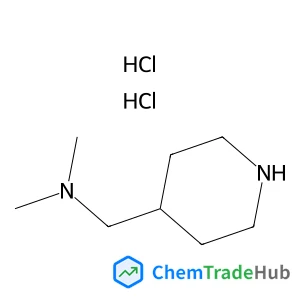
N,N-dimethyl(piperidin-4-yl)methanamine hydrochloride
CAS Number:
172281-72-0
Molecular Formula:
C8H20Cl2N2
Recommended Suppliers





Disclaimer
This page provides academic journal information for reference and research purposes only. We are not affiliated with any journal publishers and do not handle publication submissions. For publication-related inquiries, please contact the respective journal publishers directly.
If you notice any inaccuracies in the information displayed, please contact us at support@chemtradehub.com. We will promptly review and address your concerns.