













Implication of the solvent effect, metal ions and topology in the electronic structure and hydrogen bonding of human telomeric G-quadruplex DNA
Literature Information
Publication Date
2016-07-04
DOI
10.1039/C6CP04357G
Impact Factor
3.676
Authors
Lokendra Poudel, V. Adrian Parsegian, Wai-Yim Ching
View Original
Abstract
We present a first-principles density functional study elucidating the effects of solvent, metal ions and topology on the electronic structure and hydrogen bonding of 12 well-designed three dimensional G-quadruplex (G4-DNA) models in different environments. Our study shows that the parallel strand structures are more stable in dry environments and aqueous solutions containing K+ ions within the tetrad of guanine but conversely, that the anti-parallel structure is more stable in solutions containing the Na+ ions within the tetrad of guanine. The presence of metal ions within the tetrad of the guanine channel always enhances the stability of the G4-DNA models. The parallel strand structures have larger HOMO–LUMO gaps than antiparallel structures, which are in the range of 0.98 eV to 3.11 eV. Partial charge calculations show that sugar and alkali ions are positively charged whereas nucleobases, PO4 groups and water molecules are all negatively charged. Partial charges on each functional group with different signs and magnitudes contribute differently to the electrostatic interactions involving G4-DNA and favor the parallel structure. A comparative study between specific pairs of different G4-DNA models shows that the Hoogsteen O⋯H and N⋯H hydrogen bonds in the guanine tetrad are significantly influenced by the presence of metal ions and water molecules, collectively affecting the structure and the stability of G4-DNA.
Related Literature
Conversion of light-energy into molecular strain in the photocycle of the photoactive yellow protein
Ana P. Gamiz-Hernandez, Ville R. I. Kaila
2015-12-18
Paper
DOI: 10.1039/C5CP05244K
Effect of strong phonon–phonon coupling on the temperature dependent structural stability and frequency shift of 2D hexagonal boron nitride
P. Anees, M. C. Valsakumar, B. K. Panigrahi
2015-12-01
Paper
DOI: 10.1039/C5CP06111C
Molecular design of electron transport with orbital rule: toward conductance-decay free molecular junctions
Tomofumi Tada, Kazunari Yoshizawa
2015-10-30
Perspective
DOI: 10.1039/C5CP05423K
Electrical conductance and structure of copper atomic junctions in the presence of water molecules
Yu Li, Firuz Demir, Satoshi Kaneko, Shintaro Fujii, Tomoaki Nishino, George Kirczenow, Manabu Kiguchi
2015-11-10
Paper
DOI: 10.1039/C5CP05227K
Synergistic effect of novel redox additives of p-nitroaniline and dimethylglyoxime for highly improving the supercapacitor performances
Yong Fu Nie, Qian Wang, Xiang Ying Chen, Zhong Jie Zhang
2015-12-21
Paper
DOI: 10.1039/C5CP06147D
ZnO modified ZSM-5 and Y zeolites fabricated by atomic layer deposition for propane conversion
Ting Gong, Lijun Qin, Jian Lu, Hao Feng
2015-11-20
Paper
DOI: 10.1039/C5CP05043J
Orbital free DFT versus single density equation: a perspective through quantum domain behavior of a classically chaotic system
Debdutta Chakraborty, Susmita Kar, Pratim Kumar Chattaraj
2015-05-26
Paper
DOI: 10.1039/C5CP00995B
Micromechanical measurements of the effect of surfactants on cyclopentane hydrate shell properties
Erika P. Brown, Carolyn A. Koh
2015-11-20
Paper
DOI: 10.1039/C5CP06071K
In situ 2D-extraction of DNA wheels by 3D through-solution transport
Keitel Cervantes-Salguero, Waka Nakanishi, Ibuki Kawamata, Kosuke Minami, Hirokazu Komatsu, Satoshi Murata
2015-11-16
Communication
DOI: 10.1039/C5CP05765E
Ultrafast excited state hydrogen atom transfer in salicylideneaniline driven by changes in aromaticity
Luis Gutiérrez-Arzaluz, Fernando Cortés-Guzmán, Tomás Rocha-Rinza, Jorge Peón
2015-08-06
Communication
DOI: 10.1039/C5CP03699B
You might also like
Compound Q&A
How should waste containing (6-Bromo-2-naphthyl)oxy](dimethyl)(2-methyl-2-propanyl)silane be handled?
Waste containing (6-Bromo-2-naphthyl)oxy](dimethyl)(2-methyl-2-propanyl)silane (...
100751-65-3[(6-Bromo-2-naphthyl...
Compound Q&A
How is 7-Fluoro-4-isoquinolinecarboxylic acid (CAS: 1841081-40-0) typically synthesized?
7-Fluoro-4-isoquinolinecarboxylic acid can be synthesized via a multi-step proce...
1841081-40-07-Fluoro-4-isoquinol...
Compound Q&A
What are the physical and chemical properties of 2,3,5,6-Tetrabromothieno[3,2-b]thiophene (CAS: 124638-53-5)?
2,3,5,6-Tetrabromothieno[3,2-b]thiophene is a crystalline compound with a high m...
124638-53-52,3,5,6-Tetrabromoth...
Compound Q&A
Is 1-[4-(Benzylamino)-7,8-dihydro-5H-pyrano[4,3-d]pyrimidin-2-yl]-2-methyl-1H-indole-4-carboxamide (CAS: 1542705-92-9) safe?
1-[4-(Benzylamino)-7,8-dihydro-5H-pyrano[4,3-d]pyrimidin-2-yl]-2-methyl-1H-indol...
1542705-92-91-[4-(Benzylamino)-7...
Compound Q&A
What is the market or research trend for imidazo[5,1-d]-1,2,3,5-tetrazine-8-carboxylic acid, 3,4-dihydro-3-methyl-4-oxo- (CAS: 113942-30-6)?
The market for imidazo[5,1-d]-1,2,3,5-tetrazine-8-carboxylic acid, 3,4-dihydro-3...
113942-30-6Imidazo[5,1-d]-1,2,3...
Compound Q&A
What is 3-(Triisopropylsilyl)propiolaldehyde (CAS: 163271-80-5)?
3-(Triisopropylsilyl)propiolaldehyde is a synthetic organic compound with the CA...
163271-80-53-(Triisopropylsilyl...
Compound Q&A
What regulatory guidelines apply to 6-Nitro-2H-1,4-benzoxazin-3(4H)-one (CAS: 81721-87-1)?
6-Nitro-2H-1,4-benzoxazin-3(4H)-one (CAS: 81721-87-1) is subject to various regu...
81721-87-16-Nitro-2H-1,4-benzo...
Compound Q&A
How should waste containing (3-Fluorophenyl)(4-{[(2-methyl-2-propanyl)oxy]carbonyl}-1-piperazinyl)acetic acid (CAS: 885272-91-3) be handled?
Waste containing (3-Fluorophenyl)(4-{[(2-methyl-2-propanyl)oxy]carbonyl}-1-piper...
885272-91-3(3-Fluorophenyl)(4-{...
Compound Q&A
What are the physical and chemical properties of N,N'-4,4'-Biphenyldiyldiisonicotinamide (CAS: 55119-40-9)?
N,N'-4,4'-Biphenyldiyldiisonicotinamide is a white crystalline solid with a mole...
55119-40-9N,N'-4,4'-Biphenyldi...
Compound Q&A
What industries use 6-Bromo-8-fluoro-2-quinazolinol (CAS: 1036756-15-6)?
6-Bromo-8-fluoro-2-quinazolinol is primarily used in the pharmaceutical industry...
1036756-15-66-Bromo-8-fluoro-2-q...
Source Journal
Physical Chemistry Chemical Physics

CiteScore:
5.5
Self-citation Rate:
10.3%
Articles per Year:
3036
Physical Chemistry Chemical Physics (PCCP) is an international journal co-owned by 19 physical chemistry and physics societies from around the world. This journal publishes original, cutting-edge research in physical chemistry, chemical physics and biophysical chemistry. To be suitable for publication in PCCP, articles must include significant innovation and/or insight into physical chemistry; this is the most important criterion that reviewers and Editors will judge against when evaluating submissions. The journal has a broad scope and welcomes contributions spanning experiment, theory, computation and data science. Topical coverage includes spectroscopy, dynamics, kinetics, statistical mechanics, thermodynamics, electrochemistry, catalysis, surface science, quantum mechanics, quantum computing and machine learning. Interdisciplinary research areas such as polymers and soft matter, materials, nanoscience, energy, surfaces/interfaces, and biophysical chemistry are welcomed if they demonstrate significant innovation and/or insight into physical chemistry. Joined experimental/theoretical studies are particularly appreciated when complementary and based on up-to-date approaches.
Recommended Compounds
![(1S)-1,5-Anhydro-1-[3-(1-benzothiophen-2-ylmethyl)-4-fluorophenyl]-D-glucitol structure](https://static.chemtradehub.com/structs/761/761423-87-4-dbeb.webp "(1S)-1,5-Anhydro-1-[3-(1-benzothiophen-2-ylmethyl)-4-fluorophenyl]-D-glucitol structure")
(1S)-1,5-Anhydro-1-[3-(1-benzothiophen-2-ylmethyl)-4-fluorophenyl]-D-glucitol
CAS Number:
761423-87-4
Molecular Formula:
C21H21FO5S

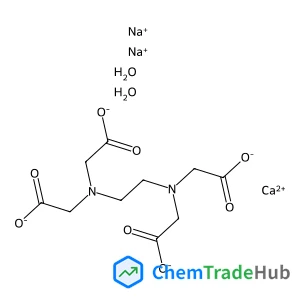
EthylenediaminetetraaceticacidcalciumDisodiumsalthydrate
CAS Number:
23411-34-9
Molecular Formula:
C10H16CaN2Na2O10
Recommended Suppliers





Disclaimer
This page provides academic journal information for reference and research purposes only. We are not affiliated with any journal publishers and do not handle publication submissions. For publication-related inquiries, please contact the respective journal publishers directly.
If you notice any inaccuracies in the information displayed, please contact us at support@chemtradehub.com. We will promptly review and address your concerns.