












![6-Bromo-3-ethyl-3H-imidazo[4,5-b]pyridine structure](https://static.chemtradehub.com/structs/103/1033202-59-3-2a8f.webp "6-Bromo-3-ethyl-3H-imidazo[4,5-b]pyridine structure")
The absence of a gap state and enhancement of the Mars–van Krevelen reaction on oxygen defective Cu/CeO2 surfaces
Literature Information
Publication Date
2016-07-05
DOI
10.1039/C6CP03880H
Impact Factor
3.676
Authors
Mauro Boero
View Original
Abstract
We report a detailed first-principles analysis of the electronic structures of oxygen defective CeO2 and Cu/CeO2 surfaces aimed at elucidating the disappearance of the gap state of defective CeO2 when a Cu atom is added at the surface. The top of the valence band of Cu/CeO2 originates from the O 2p states around this Cu atom. We show that this redistribution of electronic states at the defective Cu/CeO2 surface enhances the reactivity of the surface O atoms. Indeed, dynamical simulations show an acceleration of catalytic NO oxidation occurring via the Mars–van Krevelen mechanism mediated by these highly reactive oxygens.
Related Literature
TEMPO-mediated oxidized winter melon-based carbonaceous aerogel as an ultralight 3D support for enhanced photodegradation of organic pollutants
Miao Miao, Gangling Wang, Shaomei Cao, Xin Feng, Jianhui Fang, Liyi Shi
2015-08-27
Paper
DOI: 10.1039/C5CP04679C
Hole-transfer induced energy transfer in perylene diimide dyads with a donor–spacer–acceptor motif
Patrick Kölle, Igor Pugliesi, Heinz Langhals, Roland Wilcken, Andreas J. Esterbauer, Regina de Vivie-Riedle, Eberhard Riedle
2015-08-24
Paper
DOI: 10.1039/C5CP02981C
Theoretical study of the reactions of Criegee intermediates with ozone, alkylhydroperoxides, and carbon monoxide
L. Vereecken, W. J. Bloss
2015-08-20
Paper
DOI: 10.1039/C5CP03862F
Chain length, temperature and solvent effects on the structural properties of α-aminoisobutyric acid homooligopeptides
Sonja Grubišić
2016-06-29
Paper
DOI: 10.1039/C6CP01120A
Concave or convex π-dimers: the role of the pancake bond in substituted phenalenyl radical dimers
Zhong-hua Cui, Abhinav Gupta, Miklos Kertesz
2015-08-11
Paper
DOI: 10.1039/C5CP03759J
Structural, optical and photoelectrochemical characterizations of monoclinic Ta3N5 thin films
Sherdil Khan, Maximiliano J. M. Zapata, Marcelo B. Pereira, Renato V. Gonçalves, Lukas Strizik, Jairton Dupont, Marcos J. L. Santos, Sérgio R. Teixeira
2015-08-10
Paper
DOI: 10.1039/C5CP03645C
Switchable polarization in an unzipped graphene oxide monolayer
Mohammad Noor-A-Alam, Young-Han Shin
2016-06-27
Paper
DOI: 10.1039/C6CP04242B
Nonadiabatic dynamics of floppy hydrogen bonded complexes: the case of the ionized ammonia dimer
Jan Chalabala, Petr Slavíček
2016-06-29
Paper
DOI: 10.1039/C6CP02714H
Photoinduced electron transfer from quantum dots to TiO2: elucidating the involvement of excitonic and surface states
Saurabh Chauhan, David F. Watson
2016-07-05
Paper
DOI: 10.1039/C6CP03813A
Ion-specific adsorption and electroosmosis in charged amorphous porous silica
Bertrand Siboulet, Jean-François Dufrêche
2015-08-28
Paper
DOI: 10.1039/C5CP03818A
You might also like
Compound Q&A
What precautions should be taken when handling 4-Methyl-6-(trifluoromethyl)quinoline (CAS: 40716-16-3)?
When handling 4-Methyl-6-(trifluoromethyl)quinoline (CAS: 40716-16-3), safety go...
40716-16-34-Methyl-6-(trifluor...
Compound Q&A
What is 4-(3,5-Difluorophenyl)aniline (CAS: 405058-00-6)?
4-(3,5-Difluorophenyl)aniline is an aromatic organic compound with the CAS numbe...
405058-00-64-(3,5-Difluoropheny...
Compound Q&A
How is 5-{[4-(Trifluoromethyl)phenyl]sulfanyl}-1,2,3-thiadiazole-4-carboxylic acid (CAS: 338982-07-3) typically synthesized?
5-{[4-(Trifluoromethyl)phenyl]sulfanyl}-1,2,3-thiadiazole-4-carboxylic acid can ...
338982-07-35-{[4-(Trifluorometh...
Compound Q&A
What is the market or research trend for 4-Benzylaniline hydrochloride (CAS: 6317-57-3)?
The market for 4-Benzylaniline hydrochloride (CAS: 6317-57-3) is steadily growin...
6317-57-34-Benzylaniline hydr...
Compound Q&A
Is [3-(Diethylsulfamoyl)phenyl]boronic acid (CAS: 871329-58-7) safe?
[3-(Diethylsulfamoyl)phenyl]boronic acid is generally considered safe when handl...
871329-58-7[3-(Diethylsulfamoyl...
Compound Q&A
What are the main uses of 3-Bromo-2,5-dimethoxyaniline (CAS: 115929-62-9)?
3-Bromo-2,5-dimethoxyaniline is mainly used in the pharmaceutical and chemical i...
115929-62-93-Bromo-2,5-dimethox...
Compound Q&A
What regulatory guidelines apply to N-Methyl-1-(5-methyl-1H-indol-3-yl)methanamine (CAS: 915922-67-7)?
N-Methyl-1-(5-methyl-1H-indol-3-yl)methanamine (CAS: 915922-67-7) is subject to ...
915922-67-7N-Methyl-1-(5-methyl...
Compound Q&A
What industries use Carbamic acid, N-[(5S)-5,6-diamino-6-oxohexyl]-, 1,1-dimethylethyl ester (CAS: 24828-96-4)?
This compound is primarily used in the pharmaceutical industry for the synthesis...
24828-96-4Carbamic acid, N-[(5...
Compound Q&A
How should 2-Methyl-2-propanyl [(1S,3R)-3-aminocyclohexyl]carbamate (CAS: 1298101-47-9) be stored?
2-Methyl-2-propanyl [(1S,3R)-3-aminocyclohexyl]carbamate (CAS: 1298101-47-9) sho...
1298101-47-92-Methyl-2-propanyl ...
Compound Q&A
What industries use Ethyl 2-bromo-4,4,4-trifluorobutanoate (CAS: 367-33-9)?
Ethyl 2-bromo-4,4,4-trifluorobutanoate (CAS: 367-33-9) is utilized in the pharma...
367-33-9Ethyl 2-bromo-4,4,4-...
Source Journal
Physical Chemistry Chemical Physics

CiteScore:
5.5
Self-citation Rate:
10.3%
Articles per Year:
3036
Physical Chemistry Chemical Physics (PCCP) is an international journal co-owned by 19 physical chemistry and physics societies from around the world. This journal publishes original, cutting-edge research in physical chemistry, chemical physics and biophysical chemistry. To be suitable for publication in PCCP, articles must include significant innovation and/or insight into physical chemistry; this is the most important criterion that reviewers and Editors will judge against when evaluating submissions. The journal has a broad scope and welcomes contributions spanning experiment, theory, computation and data science. Topical coverage includes spectroscopy, dynamics, kinetics, statistical mechanics, thermodynamics, electrochemistry, catalysis, surface science, quantum mechanics, quantum computing and machine learning. Interdisciplinary research areas such as polymers and soft matter, materials, nanoscience, energy, surfaces/interfaces, and biophysical chemistry are welcomed if they demonstrate significant innovation and/or insight into physical chemistry. Joined experimental/theoretical studies are particularly appreciated when complementary and based on up-to-date approaches.
Recommended Compounds
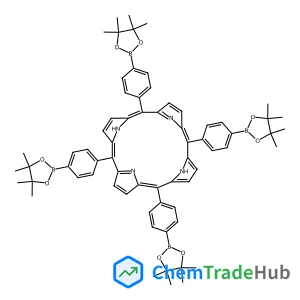
5,10,15,20-tetrakis(4-boronic acid pinacol ester phenyl) porphyrin
CAS Number:
1332748-00-1
Molecular Formula:
C68H74B4N4O8
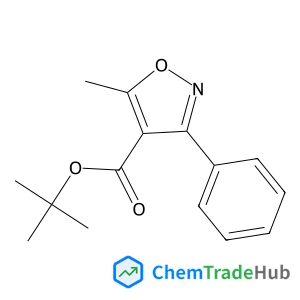
2-Methyl-2-propanyl 5-methyl-3-phenyl-1,2-oxazole-4-carboxylate
CAS Number:
211429-79-7
Molecular Formula:
C15H17NO3
Recommended Suppliers




Disclaimer
This page provides academic journal information for reference and research purposes only. We are not affiliated with any journal publishers and do not handle publication submissions. For publication-related inquiries, please contact the respective journal publishers directly.
If you notice any inaccuracies in the information displayed, please contact us at support@chemtradehub.com. We will promptly review and address your concerns.