












Size-dependent Auger spectra and two-hole Coulomb interaction of small supported Cu-clusters
Literature Information
Publication Date
2013-04-15
DOI
10.1039/C3CP00109A
Impact Factor
3.676
Authors
M. Al-Hada
View Original
Abstract
Auger (L3M4,5M4,5) and X-ray photoionization spectra (2p, 3d) of mass-selected CuN-clusters supported by a thin natural silica layer are presented in the size range N = 8–55 atoms per cluster. The Auger spectra of all clusters are shifted to a lower kinetic energy with respect to the spectrum of the bulk. Furthermore the Auger energy decreases systematically with decreasing cluster size. The binding energies of the 2p and 3d valence states are higher than the corresponding bulk values. Using the energy of the Auger main line, the corresponding core hole peak and the centroid of the self-convoluted 3d valence band the on-site Coulomb interaction energy Udd of the two-hole final state as a function of cluster size has been determined.
Related Literature
Macroscopic defects upon decomposition of CO2 clathrate hydrate crystals
Nima Rahmatian, Alexander Ostermann, Bernhard Massani, Thomas Loerting, Jörg Petrasch
2019-04-26
Paper
DOI: 10.1039/C8CP07871H
Kasha's rule: a reappraisal
Juan Carlos del Valle, Javier Catalán
2019-04-23
Paper
DOI: 10.1039/C9CP00739C
The interaction of ethylammonium tetrafluoroborate [EtNH3+][BF4−] ionic liquid on the Li(001) surface: towards understanding early SEI formation on Li metal
Jonathan Clarke-Hannaford, Michael Breedon, Adam S. Best, Michelle J. S. Spencer
2019-04-24
Paper
DOI: 10.1039/C9CP01200A
Ab initio computation for solid-state 31P NMR of inorganic phosphates: revisiting X-ray structures
Kartik Pilar, Zeyu Deng, Joya A. Cooley
2019-05-03
Paper
DOI: 10.1039/C9CP01420A
Combined static and dynamic intramicellar fluorescence quenching: effects on stationary and time-resolved Stern–Volmer experiments
Tim Kohlmann, Martin Goez
2019-04-29
Paper
DOI: 10.1039/C8CP07486K
Rydberg state mediated multiphoton ionization of (η7-C7H7)(η5-C5H5)Cr: DFT-supported experimental insights into the molecular and electronic structures of excited sandwich complexes
Sergey Yu. Ketkov, Sheng Yuan Tzeng, Elena A. Rychagova, Lyubov’ V. Kalakutskaya, Marco Fuss, Holger Braunschweig, Wen-Bih Tzeng
2019-03-12
Paper
DOI: 10.1039/C9CP00888H
Size-controllable and uniform gold bumpy nanocubes for single-particle-level surface-enhanced Raman scattering sensitivity
Hyejin Chang, Yoon Young Lee, Hye Eun Lee, Hyo-Yong Ahn, Eunbyeol Ko, Ki Tae Nam
2019-03-15
Paper
DOI: 10.1039/C9CP00138G
Radiolysis of supercritical water at 400 °C: density dependence of the rate constant for the reaction of hydronium ions with hydrated electrons
Jintana Meesungnoen, Jean-Paul Jay-Gerin
2019-04-23
Communication
DOI: 10.1039/C9CP01190K
Mechanical properties of molybdenum diselenide revealed by molecular dynamics simulation and support vector machine
Xinyu Wang, Yang Hong, Man Wang, Gongming Xin, Yanan Yue, Jingchao Zhang
2019-02-11
Paper
DOI: 10.1039/C8CP07881E
The primary photo-dissociation dynamics of carboxylate anions in aqueous solution: decarboxylation
Marlene Møller Madsen, Frank Jensen, Svend J. Knak Jensen, Jan Thøgersen
2019-03-18
Paper
DOI: 10.1039/C8CP07621A
You might also like
Compound Q&A
How is Ethyl 4-chlorothieno[2,3-b]pyridine-5-carboxylate (CAS: 59713-58-5) typically synthesized?
Ethyl 4-chlorothieno[2,3-b]pyridine-5-carboxylate (CAS: 59713-58-5) can be synth...
59713-58-5Ethyl 4-chlorothieno...
Compound Q&A
What regulatory guidelines apply to 5-Methyl-1H-indole-3-carbaldehyde (CAS: 52562-50-2)?
5-Methyl-1H-indole-3-carbaldehyde (CAS: 52562-50-2) is subject to various regula...
52562-50-25-Methyl-1H-indole-3...
Compound Q&A
What are the physical and chemical properties of (1,3-Dimethyl-2,4-dioxo-1,2,3,4-tetrahydro-5-pyrimidinyl)boronic acid (CAS: 223418-73-3)?
(1,3-Dimethyl-2,4-dioxo-1,2,3,4-tetrahydro-5-pyrimidinyl)boronic acid is a white...
223418-73-3(1,3-Dimethyl-2,4-di...
Compound Q&A
How should waste containing Sulfocostunolide A (CAS: 1016983-51-9) be handled?
Waste containing Sulfocostunolide A (CAS: 1016983-51-9) should be handled with c...
1016983-51-9Sulfocostunolide A
Compound Q&A
What precautions should be taken when handling Murraxocin (CAS: 88478-44-8)?
When handling Murraxocin (CAS: 88478-44-8), ensure proper personal protective eq...
88478-44-8Murraxocin
Compound Q&A
What are the physical and chemical properties of Formvar (CAS: 63148-64-1)?
Formvar (CAS: 63148-64-1) is an alkyd resin characterized by a high molecular we...
63148-64-1Formvar(R)
Compound Q&A
Is (S)-4-benzyl-2-((benzyloxy)methyl)morpholine (CAS: 205242-66-6) safe?
(S)-4-benzyl-2-((benzyloxy)methyl)morpholine is generally safe when handled with...
205242-66-6(S)-4-benzyl-2-((ben...
Compound Q&A
What industries use Methyl 1-(5-bromo-2-pyrimidinyl)cyclopropanecarboxylate (CAS: 1447607-69-3)?
Methyl 1-(5-bromo-2-pyrimidinyl)cyclopropanecarboxylate (CAS: 1447607-69-3) is p...
1447607-69-3Methyl 1-(5-bromo-2-...
Compound Q&A
Is 2-Methyl-1-phenyl-1-propanamine hydrochloride (CAS: 24290-47-9) safe?
2-Methyl-1-phenyl-1-propanamine hydrochloride (CAS: 24290-47-9) is generally con...
24290-47-92-Methyl-1-phenyl-1-...
Compound Q&A
How is 3-(4-Bromophenyl)-2-methylpropanoic acid (CAS: 66735-01-1) typically synthesized?
3-(4-Bromophenyl)-2-methylpropanoic acid is synthesized through a multi-step pro...
66735-01-13-(4-Bromophenyl)-2-...
Source Journal
Physical Chemistry Chemical Physics

CiteScore:
5.5
Self-citation Rate:
10.3%
Articles per Year:
3036
Physical Chemistry Chemical Physics (PCCP) is an international journal co-owned by 19 physical chemistry and physics societies from around the world. This journal publishes original, cutting-edge research in physical chemistry, chemical physics and biophysical chemistry. To be suitable for publication in PCCP, articles must include significant innovation and/or insight into physical chemistry; this is the most important criterion that reviewers and Editors will judge against when evaluating submissions. The journal has a broad scope and welcomes contributions spanning experiment, theory, computation and data science. Topical coverage includes spectroscopy, dynamics, kinetics, statistical mechanics, thermodynamics, electrochemistry, catalysis, surface science, quantum mechanics, quantum computing and machine learning. Interdisciplinary research areas such as polymers and soft matter, materials, nanoscience, energy, surfaces/interfaces, and biophysical chemistry are welcomed if they demonstrate significant innovation and/or insight into physical chemistry. Joined experimental/theoretical studies are particularly appreciated when complementary and based on up-to-date approaches.
Recommended Compounds
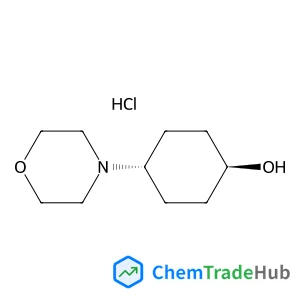
trans-4-(4-Morpholinyl)cyclohexanol hydrochloride (1:1)
CAS Number:
1588441-09-1
Molecular Formula:
C10H20ClNO2
Recommended Suppliers



Disclaimer
This page provides academic journal information for reference and research purposes only. We are not affiliated with any journal publishers and do not handle publication submissions. For publication-related inquiries, please contact the respective journal publishers directly.
If you notice any inaccuracies in the information displayed, please contact us at support@chemtradehub.com. We will promptly review and address your concerns.