












The fracture behaviors of monolayer phosphorene with grain boundaries under tension: a molecular dynamics study
Literature Information
Publication Date
2016-06-30
DOI
10.1039/C6CP03655D
Impact Factor
3.676
Authors
Chong Qiao, Aihua Wang, Jinping Zhang, Songyou Wang, Wan-Sheng Su, Yu Jia
View Original
Abstract
The fracture behaviors of monolayer phosphorene (MP) with and without a grain boundary (GB) have been explored by molecular dynamics (MD) simulations. Firstly, in the case of perfect MP, fracture mostly happens on the bond in the zigzag direction when suffering random loading. With the existence of a GB, the crack propagates perpendicular to the GB in different ways under parallel tension to the GB, whereas it propagates along the GB under perpendicular tension to the GB. Then, we found that both the fracture strength and strain decrease with increasing temperature making fracture more likely at relatively high temperatures. Finally, we also found that, similar to graphene, the effect of strain rate on both the fracture strength and strain is not significant, demonstrating that MP is a typical brittle 2D material. Overall, our findings present a useful insight into utilizing phosphorene for mechanical design in electronic devices.
Related Literature
Mastering a biphasic single-reactor process for direct conversion of glycerol into liquid hydrocarbon fuels
V. V. Ordomsky, A. Y. Khodakov
2014-01-14
Communication
DOI: 10.1039/C3GC42319K
A mechanochemical strategy for oxidative addition: remarkable yields and stereoselectivity in the halogenation of organometallic Re(i) complexes
José G. Hernández, Neil A. J. Macdonald, Cristina Mottillo, Ian S. Butler, Tomislav Friščić
2013-11-08
Communication
DOI: 10.1039/C3GC42104J
Towards resource efficient chemistry: tandem reactions with renewables
Arno Behr, Andreas J. Vorholt, Karoline A. Ostrowski, Thomas Seidensticker
2013-11-29
Critical Review
DOI: 10.1039/C3GC41960F
Trifluoromethylation of heterocycles in water at room temperature
James C. Fennewald, Bruce H. Lipshutz
2013-12-05
Communication
DOI: 10.1039/C3GC42119H
A highly efficient and recyclable ligand-free protocol for the Suzuki coupling reaction of potassium aryltrifluoroborates in water
Leifang Liu, Yan Dong, Nana Tang
2014-01-06
Paper
DOI: 10.1039/C3GC42182A
Acceleration of Suzuki coupling reactions by abundant and non-toxic salt particles
Binbin Zhang, Jinliang Song, Huizhen Liu, Jinghua Shi, Jun Ma, Honglei Fan, Weitao Wang, Peng Zhang, Buxing Han
2013-10-23
Paper
DOI: 10.1039/C3GC42088D
Glycerol based solvents: synthesis, properties and applications
José I. García, Héctor García-Marín, Elísabet Pires
2013-12-05
Critical Review
DOI: 10.1039/C3GC41857J
Cobalt-modified molybdenum carbide as an efficient catalyst for chemoselective reduction of aromatic nitro compounds
Zhongkui Zhao, Hongling Yang, Yu Li, Xinwen Guo
2013-11-08
Paper
DOI: 10.1039/C3GC42049C
Efficient synthesis of nebularine and vidarabine via dehydrazination of (hetero)aromatics catalyzed by CuSO4 in water
Ming-Sheng Xie, Hong-Ying Niu
2013-10-17
Communication
DOI: 10.1039/C3GC41658E
A carbon-based photocatalyst efficiently converts CO2 to CH4 and C2H2 under visible light
Tongshun Wu, Luyi Zou, Dongxue Han, Fenghua Li, Qixian Zhang, Li Niu
2014-01-08
Communication
DOI: 10.1039/C3GC42454E
You might also like
Compound Q&A
What precautions should be taken when handling 4-Methyl-6-(trifluoromethyl)quinoline (CAS: 40716-16-3)?
When handling 4-Methyl-6-(trifluoromethyl)quinoline (CAS: 40716-16-3), safety go...
40716-16-34-Methyl-6-(trifluor...
Compound Q&A
What is 4-(3,5-Difluorophenyl)aniline (CAS: 405058-00-6)?
4-(3,5-Difluorophenyl)aniline is an aromatic organic compound with the CAS numbe...
405058-00-64-(3,5-Difluoropheny...
Compound Q&A
How is 5-{[4-(Trifluoromethyl)phenyl]sulfanyl}-1,2,3-thiadiazole-4-carboxylic acid (CAS: 338982-07-3) typically synthesized?
5-{[4-(Trifluoromethyl)phenyl]sulfanyl}-1,2,3-thiadiazole-4-carboxylic acid can ...
338982-07-35-{[4-(Trifluorometh...
Compound Q&A
What is the market or research trend for 4-Benzylaniline hydrochloride (CAS: 6317-57-3)?
The market for 4-Benzylaniline hydrochloride (CAS: 6317-57-3) is steadily growin...
6317-57-34-Benzylaniline hydr...
Compound Q&A
Is [3-(Diethylsulfamoyl)phenyl]boronic acid (CAS: 871329-58-7) safe?
[3-(Diethylsulfamoyl)phenyl]boronic acid is generally considered safe when handl...
871329-58-7[3-(Diethylsulfamoyl...
Compound Q&A
What are the main uses of 3-Bromo-2,5-dimethoxyaniline (CAS: 115929-62-9)?
3-Bromo-2,5-dimethoxyaniline is mainly used in the pharmaceutical and chemical i...
115929-62-93-Bromo-2,5-dimethox...
Compound Q&A
What regulatory guidelines apply to N-Methyl-1-(5-methyl-1H-indol-3-yl)methanamine (CAS: 915922-67-7)?
N-Methyl-1-(5-methyl-1H-indol-3-yl)methanamine (CAS: 915922-67-7) is subject to ...
915922-67-7N-Methyl-1-(5-methyl...
Compound Q&A
What industries use Carbamic acid, N-[(5S)-5,6-diamino-6-oxohexyl]-, 1,1-dimethylethyl ester (CAS: 24828-96-4)?
This compound is primarily used in the pharmaceutical industry for the synthesis...
24828-96-4Carbamic acid, N-[(5...
Compound Q&A
How should 2-Methyl-2-propanyl [(1S,3R)-3-aminocyclohexyl]carbamate (CAS: 1298101-47-9) be stored?
2-Methyl-2-propanyl [(1S,3R)-3-aminocyclohexyl]carbamate (CAS: 1298101-47-9) sho...
1298101-47-92-Methyl-2-propanyl ...
Compound Q&A
What industries use Ethyl 2-bromo-4,4,4-trifluorobutanoate (CAS: 367-33-9)?
Ethyl 2-bromo-4,4,4-trifluorobutanoate (CAS: 367-33-9) is utilized in the pharma...
367-33-9Ethyl 2-bromo-4,4,4-...
Source Journal
Physical Chemistry Chemical Physics

CiteScore:
5.5
Self-citation Rate:
10.3%
Articles per Year:
3036
Physical Chemistry Chemical Physics (PCCP) is an international journal co-owned by 19 physical chemistry and physics societies from around the world. This journal publishes original, cutting-edge research in physical chemistry, chemical physics and biophysical chemistry. To be suitable for publication in PCCP, articles must include significant innovation and/or insight into physical chemistry; this is the most important criterion that reviewers and Editors will judge against when evaluating submissions. The journal has a broad scope and welcomes contributions spanning experiment, theory, computation and data science. Topical coverage includes spectroscopy, dynamics, kinetics, statistical mechanics, thermodynamics, electrochemistry, catalysis, surface science, quantum mechanics, quantum computing and machine learning. Interdisciplinary research areas such as polymers and soft matter, materials, nanoscience, energy, surfaces/interfaces, and biophysical chemistry are welcomed if they demonstrate significant innovation and/or insight into physical chemistry. Joined experimental/theoretical studies are particularly appreciated when complementary and based on up-to-date approaches.
Recommended Compounds
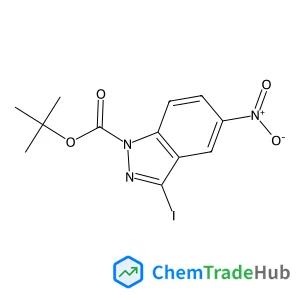
Tert-butyl 3-iodo-5-nitro-1H-indazole-1-carboxylate
CAS Number:
459133-69-8
Molecular Formula:
C12H12IN3O4
Recommended Suppliers






Disclaimer
This page provides academic journal information for reference and research purposes only. We are not affiliated with any journal publishers and do not handle publication submissions. For publication-related inquiries, please contact the respective journal publishers directly.
If you notice any inaccuracies in the information displayed, please contact us at support@chemtradehub.com. We will promptly review and address your concerns.