












Efficient synthesis of nebularine and vidarabine via dehydrazination of (hetero)aromatics catalyzed by CuSO4 in water
Literature Information
Publication Date
2013-10-17
DOI
10.1039/C3GC41658E
Impact Factor
10.182
Authors
Ming-Sheng Xie, Hong-Ying Niu
View Original
Abstract
A simple dehydrazination reaction has been achieved in the presence of a catalytic amount of CuSO4 for the first time. With CuSO4 (2 mol%) as a catalyst and water as a solvent, the dehydrazination products were obtained in good yields (66–95%). Moreover, the drugs nebularine and vidarabine were afforded successfully, and vidarabine could be produced on a 0.923 kg scale, which shows good potential for industrial applications.
Related Literature
A molecular theory for optimal blue energy extraction by electrical double layer expansion
Alejandro Gallegos, Diannan Lu, Zheng Liu, Jianzhong Wu
2015-08-19
Paper
DOI: 10.1039/C5CP03514G
Formation of a thermally stable bilayer of coadsorbed intact and deprotonated thymine exploiting the surface corrugation of rutile TiO2(110)
J. H. K. Pfisterer, P. S. Deimel, R. G. Acres, M. Fritton, P. Feulner, J. V. Barth, F. Allegretti
2016-07-05
Paper
DOI: 10.1039/C6CP02541B
Role of donor–acceptor macrocycles in sequence specific peptide recognition and their optoelectronic properties: a detailed computational insight
Arkamita Bandyopadhyay
2016-07-06
Paper
DOI: 10.1039/C6CP03181A
Flexible Ag–C60 nano-biosensors based on surface plasmon coupled emission for clinical and forensic applications
Pradyumna Mulpur, Sairam Yadavilli, Praharsha Mulpur, Neeharika Kondiparthi, Venkataramaniah Kamisetti
2015-09-08
Paper
DOI: 10.1039/C5CP04268B
Nonadiabatic dynamics of floppy hydrogen bonded complexes: the case of the ionized ammonia dimer
Jan Chalabala, Petr Slavíček
2016-06-29
Paper
DOI: 10.1039/C6CP02714H
Internal conversion and intersystem crossing pathways in UV excited, isolated uracils and their implications in prebiotic chemistry
Hui Yu, Jose A. Sanchez-Rodriguez, Marvin Pollum, Carlos E. Crespo-Hernández, Sebastian Mai, Philipp Marquetand, Leticia González, Susanne Ullrich
2016-05-10
Paper
DOI: 10.1039/C6CP01790H
HP-β-cyclodextrin as an inhibitor of amyloid-β aggregation and toxicity
Rundong Hu, Mingzhen Zhang, Hong Chen, Yan Sun, Lingyun Jia, Jie Zheng
2016-06-28
Paper
DOI: 10.1039/C6CP03582E
Study of switching in spin transition compounds within the mechanoelastic model with realistic parameters
Cristian Enachescu, Andreas Hauser
2016-06-29
Paper
DOI: 10.1039/C6CP02806C
Thermoelectric performance enhancement of Mg2Sn based solid solutions by band convergence and phonon scattering via Pb and Si/Ge substitution for Sn
Binghui Ge, Qing Jie, Udara Saparamadu, Weishu Liu, Zhifeng Ren
2016-07-04
Paper
DOI: 10.1039/C6CP03944H
New organophilic kaolin clays based on single-point grafted 3-aminopropyl dimethylethoxysilane
A. Zaharia, F.-X. Perrin, M. Teodorescu, A.-L. Radu, T.-V. Iordache, A.-M. Florea, D. Donescu, A. Sarbu
2015-08-27
Paper
DOI: 10.1039/C5CP04395F
You might also like
Compound Q&A
What precautions should be taken when handling 4-Methyl-6-(trifluoromethyl)quinoline (CAS: 40716-16-3)?
When handling 4-Methyl-6-(trifluoromethyl)quinoline (CAS: 40716-16-3), safety go...
40716-16-34-Methyl-6-(trifluor...
Compound Q&A
What is 4-(3,5-Difluorophenyl)aniline (CAS: 405058-00-6)?
4-(3,5-Difluorophenyl)aniline is an aromatic organic compound with the CAS numbe...
405058-00-64-(3,5-Difluoropheny...
Compound Q&A
How is 5-{[4-(Trifluoromethyl)phenyl]sulfanyl}-1,2,3-thiadiazole-4-carboxylic acid (CAS: 338982-07-3) typically synthesized?
5-{[4-(Trifluoromethyl)phenyl]sulfanyl}-1,2,3-thiadiazole-4-carboxylic acid can ...
338982-07-35-{[4-(Trifluorometh...
Compound Q&A
What is the market or research trend for 4-Benzylaniline hydrochloride (CAS: 6317-57-3)?
The market for 4-Benzylaniline hydrochloride (CAS: 6317-57-3) is steadily growin...
6317-57-34-Benzylaniline hydr...
Compound Q&A
Is [3-(Diethylsulfamoyl)phenyl]boronic acid (CAS: 871329-58-7) safe?
[3-(Diethylsulfamoyl)phenyl]boronic acid is generally considered safe when handl...
871329-58-7[3-(Diethylsulfamoyl...
Compound Q&A
What are the main uses of 3-Bromo-2,5-dimethoxyaniline (CAS: 115929-62-9)?
3-Bromo-2,5-dimethoxyaniline is mainly used in the pharmaceutical and chemical i...
115929-62-93-Bromo-2,5-dimethox...
Compound Q&A
What regulatory guidelines apply to N-Methyl-1-(5-methyl-1H-indol-3-yl)methanamine (CAS: 915922-67-7)?
N-Methyl-1-(5-methyl-1H-indol-3-yl)methanamine (CAS: 915922-67-7) is subject to ...
915922-67-7N-Methyl-1-(5-methyl...
Compound Q&A
What industries use Carbamic acid, N-[(5S)-5,6-diamino-6-oxohexyl]-, 1,1-dimethylethyl ester (CAS: 24828-96-4)?
This compound is primarily used in the pharmaceutical industry for the synthesis...
24828-96-4Carbamic acid, N-[(5...
Compound Q&A
How should 2-Methyl-2-propanyl [(1S,3R)-3-aminocyclohexyl]carbamate (CAS: 1298101-47-9) be stored?
2-Methyl-2-propanyl [(1S,3R)-3-aminocyclohexyl]carbamate (CAS: 1298101-47-9) sho...
1298101-47-92-Methyl-2-propanyl ...
Compound Q&A
What industries use Ethyl 2-bromo-4,4,4-trifluorobutanoate (CAS: 367-33-9)?
Ethyl 2-bromo-4,4,4-trifluorobutanoate (CAS: 367-33-9) is utilized in the pharma...
367-33-9Ethyl 2-bromo-4,4,4-...
Source Journal
Green Chemistry

CiteScore:
16.1
Self-citation Rate:
7.5%
Articles per Year:
944
Green Chemistry provides a unique forum for the publication of innovative research on the development of alternative green and sustainable technologies. The scope of Green Chemistry is based on, but not limited to, the definition proposed by Anastas and Warner (Green Chemistry: Theory and Practice, P T Anastas and J C Warner, Oxford University Press, Oxford, 1998). Green chemistry is the utilisation of a set of principles that reduces or eliminates the use or generation of hazardous substances in the design, manufacture and application of chemical products. Green Chemistry is at the frontiers of this continuously-evolving interdisciplinary science and publishes research that attempts to reduce the environmental impact of the chemical enterprise by developing a technology base that is inherently non-toxic to living things and the environment. Submissions on all aspects of research relating to the endeavour are welcome. The journal publishes original and significant cutting-edge research that is likely to be of wide general appeal. To be published, work must present a significant advance in green chemistry. Papers must contain a comparison with existing methods and demonstrate advantages over those methods before publication can be considered. For more information please see this Editorial. Coverage includes the following, but is not limited to: Design (e.g. biomimicry, design for degradation/recycling/reduced toxicity…) Reagents & Feedstocks (e.g. renewables, CO2, solvents, auxiliary agents, waste utilization…) Synthesis (e.g. organic, inorganic, synthetic biology…) Catalysis (e.g. homogeneous, heterogeneous, enzyme, whole cell…) Process (e.g. process design, intensification, separations, recycling, efficiency…) Energy (e.g. renewable energy, fuels, photovoltaics, fuel cells, energy storage, energy carriers…) Applications (e.g. electronics, dyes, consumer products, coatings, pharmaceuticals, preservatives, building materials, chemicals for industry/agriculture/mining…) Impact (e.g. safety, metrics, LCA, sustainability, (eco)toxicology…) Green chemistry is, by definition, a continuously-evolving frontier. Therefore, the inclusion of a particular material or technology does not, of itself, guarantee that a paper is suitable for the journal. To be suitable, the novel advance should have the potential for reduced environmental impact relative to the state of the art. Green Chemistry does not normally deal with research associated with 'end-of-pipe' or remediation issues.
Recommended Compounds
![6-Bromo-3-ethyl-3H-imidazo[4,5-b]pyridine structure](https://static.chemtradehub.com/structs/103/1033202-59-3-2a8f.webp "6-Bromo-3-ethyl-3H-imidazo[4,5-b]pyridine structure")
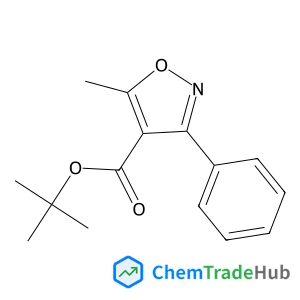
2-Methyl-2-propanyl 5-methyl-3-phenyl-1,2-oxazole-4-carboxylate
CAS Number:
211429-79-7
Molecular Formula:
C15H17NO3
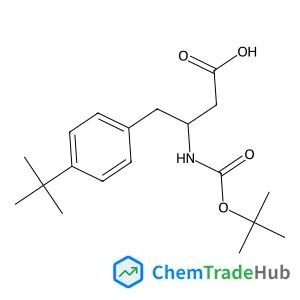
(S)-3-((tert-Butoxycarbonyl)amino)-4-(4-(tert-butyl)phenyl)butanoic acid
CAS Number:
403661-85-8
Molecular Formula:
C19H29NO4
Recommended Suppliers




Disclaimer
This page provides academic journal information for reference and research purposes only. We are not affiliated with any journal publishers and do not handle publication submissions. For publication-related inquiries, please contact the respective journal publishers directly.
If you notice any inaccuracies in the information displayed, please contact us at support@chemtradehub.com. We will promptly review and address your concerns.