












Humidity versus photo-stability of metal halide perovskite films in a polymer matrix
Literature Information
Publication Date
2016-07-11
DOI
10.1039/C6CP03600G
Impact Factor
3.676
Authors
Nurul Ain Manshor, Qamar Wali, Ka Kan Wong, Saifful Kamaluddin Muzakir, Lukas Schmidt-Mende, Rajan Jose
View Original
Abstract
Despite the high efficiency of over 21% reported for emerging thin film perovskite solar cells, one of the key issues prior to their commercial deployment is to attain their long term stability under ambient and outdoor conditions. The instability in perovskite is widely conceived to be humidity induced due to the water solubility of its initial precursors, which leads to decomposition of the perovskite crystal structure; however, we note that humidity alone is not the major degradation factor and it is rather the photon dose in combination with humidity exposure that triggers the instability. In our experiment, which is designed to decouple the effect of humidity and light on perovskite degradation, we investigate the shelf-lifetime of CH3NH3PbI3 films in the dark and under illumination under high humidity conditions (Rel. H. > 70%). We note minor degradation in perovskite films stored in a humid dark environment whereas upon exposure to light, the films undergo drastic degradation, primarily owing to the reactive TiO2/perovskite interface and also the surface defects of TiO2. To enhance its air-stability, we incorporate CH3NH3PbI3 perovskite in a polymer (poly-vinylpyrrolidone, PVP) matrix which retained its optical and structural characteristics in the dark for ∼2000 h and ∼800 h in room light soaking, significantly higher than a pristine perovskite film, which degraded completely in 600 h in the dark and in less than 100 h when exposed to light. We attribute the superior stability of PVP incorporated perovskite films to the improved structural stability of CH3NH3PbI3 and also to the improved TiO2/perovskite interface upon incorporating a polymer matrix. Charge injection from the polymer embedded perovskite films has also been confirmed by fabricating solar cells using them, thereby providing a promising future research pathway for stable and efficient perovskite solar cells.
Related Literature
High resolution absolute absorption cross sections of the 1A′–1A′ transition of the CH2OO biradical
Elizabeth S. Foreman, Kara M. Kapnas, YiTien Jou, Jarosław Kalinowski, David Feng, Craig Murray
2015-11-23
Paper
DOI: 10.1039/C5CP04977F
Excited-state dynamics of guanosine in aqueous solution revealed by time-resolved photoelectron spectroscopy: experiment and theory
Franziska Buchner, Berit Heggen, Hans-Hermann Ritze, Walter Thiel, Andrea Lübcke
2015-11-09
Paper
DOI: 10.1039/C5CP04394H
Multipole-preserving quadratures for the discretization of functions in real-space electronic structure calculations
2015-09-03
Paper
DOI: 10.1039/C5CP01236H
Enhanced thermal energy harvesting performance of a cobalt redox couple in ionic liquid–solvent mixtures
Manoj A. Lazar, Danah Al-Masri, Douglas R. MacFarlane, Jennifer M. Pringle
2015-09-08
Paper
DOI: 10.1039/C5CP04305K
Solvent transport through hard–soft segmented polymer nanocomposites
Sangram K. Rath, Saji S. Edatholath, T. Umasankar Patro, Kathi Sudarshan, P. U. Sastry, Pradeep K. Pujari, G. Harikrishnan
2015-12-16
Paper
DOI: 10.1039/C5CP04432D
X-ray diffraction and high-resolution TEM observations of biopolymer nanoskin-covered metallic copper fine particles: preparative conditions and surface oxidation states
Tetsu Yonezawa, Yoshiki Uchida, Hiroki Tsukamoto
2015-11-11
Paper
DOI: 10.1039/C5CP06107E
Ullmann coupling mediated assembly of an electrically driven altitudinal molecular rotor
Colin J. Murphy, Zachary C. Smith, Alex Pronschinski, Emily A. Lewis, Melissa L. Liriano, Chloe Wong, Christopher J. Ivimey, Mitchell Duffy, Wojciech Musial, Andrew J. Therrien, Samuel W. Thomas III, E. Charles H. Sykes
2015-11-03
Paper
DOI: 10.1039/C5CP05294G
Influence of additives on the structure of surfactant-free microemulsions
J. Marcus, D. Touraud, S. Prévost, O. Diat, T. Zemb, W. Kunz
2015-11-18
Paper
DOI: 10.1039/C5CP06364G
A slowing down of proton motion from HPTS to water adsorbed on the MCM-41 surface
Noemí Alarcos, Boiko Cohen, Abderrazzak Douhal
2015-12-16
Paper
DOI: 10.1039/C5CP04548G
You might also like
Compound Q&A
How should waste containing (6-Bromo-2-naphthyl)oxy](dimethyl)(2-methyl-2-propanyl)silane be handled?
Waste containing (6-Bromo-2-naphthyl)oxy](dimethyl)(2-methyl-2-propanyl)silane (...
100751-65-3[(6-Bromo-2-naphthyl...
Compound Q&A
How is 7-Fluoro-4-isoquinolinecarboxylic acid (CAS: 1841081-40-0) typically synthesized?
7-Fluoro-4-isoquinolinecarboxylic acid can be synthesized via a multi-step proce...
1841081-40-07-Fluoro-4-isoquinol...
Compound Q&A
What are the physical and chemical properties of 2,3,5,6-Tetrabromothieno[3,2-b]thiophene (CAS: 124638-53-5)?
2,3,5,6-Tetrabromothieno[3,2-b]thiophene is a crystalline compound with a high m...
124638-53-52,3,5,6-Tetrabromoth...
Compound Q&A
Is 1-[4-(Benzylamino)-7,8-dihydro-5H-pyrano[4,3-d]pyrimidin-2-yl]-2-methyl-1H-indole-4-carboxamide (CAS: 1542705-92-9) safe?
1-[4-(Benzylamino)-7,8-dihydro-5H-pyrano[4,3-d]pyrimidin-2-yl]-2-methyl-1H-indol...
1542705-92-91-[4-(Benzylamino)-7...
Compound Q&A
What is the market or research trend for imidazo[5,1-d]-1,2,3,5-tetrazine-8-carboxylic acid, 3,4-dihydro-3-methyl-4-oxo- (CAS: 113942-30-6)?
The market for imidazo[5,1-d]-1,2,3,5-tetrazine-8-carboxylic acid, 3,4-dihydro-3...
113942-30-6Imidazo[5,1-d]-1,2,3...
Compound Q&A
What is 3-(Triisopropylsilyl)propiolaldehyde (CAS: 163271-80-5)?
3-(Triisopropylsilyl)propiolaldehyde is a synthetic organic compound with the CA...
163271-80-53-(Triisopropylsilyl...
Compound Q&A
What regulatory guidelines apply to 6-Nitro-2H-1,4-benzoxazin-3(4H)-one (CAS: 81721-87-1)?
6-Nitro-2H-1,4-benzoxazin-3(4H)-one (CAS: 81721-87-1) is subject to various regu...
81721-87-16-Nitro-2H-1,4-benzo...
Compound Q&A
How should waste containing (3-Fluorophenyl)(4-{[(2-methyl-2-propanyl)oxy]carbonyl}-1-piperazinyl)acetic acid (CAS: 885272-91-3) be handled?
Waste containing (3-Fluorophenyl)(4-{[(2-methyl-2-propanyl)oxy]carbonyl}-1-piper...
885272-91-3(3-Fluorophenyl)(4-{...
Compound Q&A
What are the physical and chemical properties of N,N'-4,4'-Biphenyldiyldiisonicotinamide (CAS: 55119-40-9)?
N,N'-4,4'-Biphenyldiyldiisonicotinamide is a white crystalline solid with a mole...
55119-40-9N,N'-4,4'-Biphenyldi...
Compound Q&A
What industries use 6-Bromo-8-fluoro-2-quinazolinol (CAS: 1036756-15-6)?
6-Bromo-8-fluoro-2-quinazolinol is primarily used in the pharmaceutical industry...
1036756-15-66-Bromo-8-fluoro-2-q...
Source Journal
Physical Chemistry Chemical Physics

CiteScore:
5.5
Self-citation Rate:
10.3%
Articles per Year:
3036
Physical Chemistry Chemical Physics (PCCP) is an international journal co-owned by 19 physical chemistry and physics societies from around the world. This journal publishes original, cutting-edge research in physical chemistry, chemical physics and biophysical chemistry. To be suitable for publication in PCCP, articles must include significant innovation and/or insight into physical chemistry; this is the most important criterion that reviewers and Editors will judge against when evaluating submissions. The journal has a broad scope and welcomes contributions spanning experiment, theory, computation and data science. Topical coverage includes spectroscopy, dynamics, kinetics, statistical mechanics, thermodynamics, electrochemistry, catalysis, surface science, quantum mechanics, quantum computing and machine learning. Interdisciplinary research areas such as polymers and soft matter, materials, nanoscience, energy, surfaces/interfaces, and biophysical chemistry are welcomed if they demonstrate significant innovation and/or insight into physical chemistry. Joined experimental/theoretical studies are particularly appreciated when complementary and based on up-to-date approaches.
Recommended Compounds

![Sodium 3-[(E)-(4-anilinophenyl)diazenyl]benzenesulfonate structure](https://static.chemtradehub.com/structs/587/587-98-4-035f.webp "Sodium 3-[(E)-(4-anilinophenyl)diazenyl]benzenesulfonate structure")
Sodium 3-[(E)-(4-anilinophenyl)diazenyl]benzenesulfonate
CAS Number:
587-98-4
Molecular Formula:
C18H14N3NaO3S
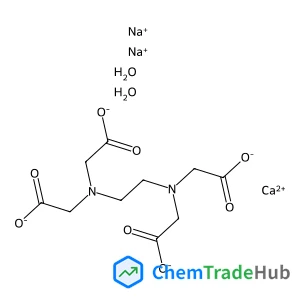
EthylenediaminetetraaceticacidcalciumDisodiumsalthydrate
CAS Number:
23411-34-9
Molecular Formula:
C10H16CaN2Na2O10

Trichloro(3,3,4,4,5,5,6,6,7,7,8,8,8-tridecafluorooctyl)silane
CAS Number:
78560-45-9
Molecular Formula:
C8H4Cl3F13Si
Recommended Suppliers





Disclaimer
This page provides academic journal information for reference and research purposes only. We are not affiliated with any journal publishers and do not handle publication submissions. For publication-related inquiries, please contact the respective journal publishers directly.
If you notice any inaccuracies in the information displayed, please contact us at support@chemtradehub.com. We will promptly review and address your concerns.