












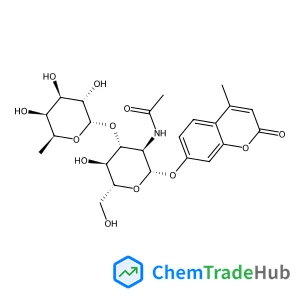
4-Methyl-2-oxo-2H-chromen-7-yl 2-acetamido-2-deoxy-3-O-(6-deoxy-alpha-L-galactopyranosyl)-beta-D-glucopyranoside
CAS Number:
383160-12-1
Molecular Formula:
C24H31NO12
Ling-Ting Huang, Ling Chao
Controlling flow patterns to align materials can have various applications in optics, electronics, and biosciences. In this study, we developed a natural-convection-based method to create desirable spatial flow patterns by controlling the locations of heat sources. Fluid motion in natural convection is induced by the spatial fluid density gradient that is caused by the established spatial temperature gradient. To analyze the patterning resolution capability of this method, we used a mathematical model combined with nondimensionalization to correlate the flow patterning resolution with experimental operating conditions. The nondimensionalized model suggests that the flow pattern and resolution is only influenced by two dimensionless parameters, and , where Gr is the Grashof number, representing the ratio of buoyancy to the viscous force acting on a fluid, and Pr is the Prandtl number, representing the ratio of momentum diffusivity to thermal diffusivity. We used the model to examine all of the flow behaviors in a wide range of the two dimensionless parameter group and proposed a flow pattern state diagram which suggests a suitable range of operating conditions for flow patterning. In addition, we developed a heating wire with an angular configuration, which enabled us to efficiently examine the pattern resolution capability numerically and experimentally. Consistent resolutions were obtained between the experimental results and model predictions, suggesting that the state diagram and the identified operating range can be used for further application.
Martin B. Duriska, Suzanne M. Neville, Stuart R. Batten
DOI: 10.1039/B910994C
Qianli Wang, Jie Xue, Zhongwu Guo
DOI: 10.1039/B907351E
Gaojian Chen, Jatin Kumar, Andrew Gregory, Martina H. Stenzel
DOI: 10.1039/B910340F
Virginia M. Cangelosi, Timothy G. Carter, Lev N. Zakharov, Darren W. Johnson
DOI: 10.1039/B914750K
DOI: 10.1039/B910534D
Suseung Lee, Inhee Choi, Surin Hong, Young In Yang, Jeongjin Lee, Taewook Kang, Jongheop Yi
DOI: 10.1039/B910666A
Stuart Kennedy, Scott J. Dalgarno
DOI: 10.1039/B909456C
Cho-Long Park, Ah Young Jee, Minyung Lee, Sang-gi Lee
DOI: 10.1039/B910836J
A. M. Coto-García, M. T. Fernández-Argüelles, J. M. Costa-Fernández, A. Sanz-Medel
DOI: 10.1039/B909469E
When handling lithium chloride hydrate (1:1:1) (CAS: 16712-20-2), it is importan...
4-(4H-1,2,4-Triazol-4-yl)piperidine is generally considered safe for use in phar...
Waste containing 1,3-Thiazole-2-carboxamide (CAS: 16733-85-0) should be collecte...
5-(Difluoromethyl)-2-fluorobenzonitrile (CAS: 934175-58-3) is subject to regulat...
Methyl 3-acetamido-2-thiophenecarboxylate can be synthesized by the reaction of ...
4-Isoquinolinecarbonitrile is a chemical compound with the CAS number 34846-65-6...
Store Methyl 1H-1,2,3-triazole-4-carboxylate (CAS: 877309-59-6) in a cool, dry p...
6-Bromo[1,3]thiazolo[5,4-b]pyridin-2-amine (CAS: 1160791-13-8) is subject to the...
(2S,3S)-2-Ammonio-3-(3,4-dihydroxyphenyl)-3-hydroxypropanoate (CAS: 23651-95-8) ...
7-Bromo-3-methyl-3,4-dihydroquinazolin-4-one is a solid with a crystalline form....

Physical Chemistry Chemical Physics (PCCP) is an international journal co-owned by 19 physical chemistry and physics societies from around the world. This journal publishes original, cutting-edge research in physical chemistry, chemical physics and biophysical chemistry. To be suitable for publication in PCCP, articles must include significant innovation and/or insight into physical chemistry; this is the most important criterion that reviewers and Editors will judge against when evaluating submissions. The journal has a broad scope and welcomes contributions spanning experiment, theory, computation and data science. Topical coverage includes spectroscopy, dynamics, kinetics, statistical mechanics, thermodynamics, electrochemistry, catalysis, surface science, quantum mechanics, quantum computing and machine learning. Interdisciplinary research areas such as polymers and soft matter, materials, nanoscience, energy, surfaces/interfaces, and biophysical chemistry are welcomed if they demonstrate significant innovation and/or insight into physical chemistry. Joined experimental/theoretical studies are particularly appreciated when complementary and based on up-to-date approaches.
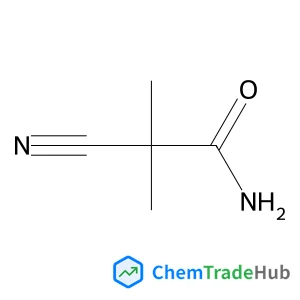
![(R)-N-[(S)-1-[2-(Diphenylphosphino)phenyl]ethyl]-2-methylpropane-2-sulfinamide structure](https://static.chemtradehub.com/structs/159/1595319-98-4-33e7.webp "(R)-N-[(S)-1-[2-(Diphenylphosphino)phenyl]ethyl]-2-methylpropane-2-sulfinamide structure")
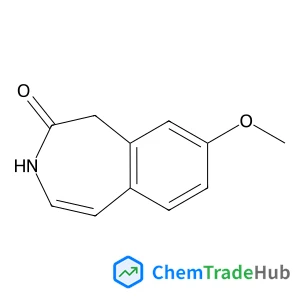
![[(2R)-6,6-Dimethyl-2-morpholinyl]methanol hydrochloride (1:1) structure](https://static.chemtradehub.com/structs/141/1416444-88-6-e06a.webp "[(2R)-6,6-Dimethyl-2-morpholinyl]methanol hydrochloride (1:1) structure")







