












Long-lived states to sustain SABRE hyperpolarised magnetisation
Literature Information
Publication Date
2016-08-15
DOI
10.1039/C6CP02844F
Impact Factor
3.676
Authors
Soumya S. Roy, Peter J. Rayner, Philip Norcott, Gary G. R. Green, Simon B. Duckett
View Original
Abstract
The applicability of the magnetic resonance (MR) technique in the liquid phase is limited by poor sensitivity and short nuclear spin coherence times which are insufficient for many potential applications. Here we illustrate how it is possible to address both of these issues simultaneously by harnessing long-lived hyperpolarised spin states that are formed by adapting the Signal Amplification by Reversible Exchange (SABRE) technique. We achieve more than 4% net 1H-polarisation in a long-lived form that remains detectable for over ninety seconds by reference to proton pairs in the biologically important molecule nicotinamide and a pyrazine derivative whose in vivo imaging will offer a new route to probe disease in the future.
Recommended Journals
Related Literature
Polyoxometalate-based {MnIII2}–Schiff base composite materials exhibiting single-molecule magnet behaviour
Qiong Wu, Yang-Guang Li, Yong-Hui Wang, Ying Lu, En-Bo Wang
2009-09-03
Communication
DOI: 10.1039/B909246C
Inclusion of C60 into the hexagonal columnar space formed by intra- and intermolecular CH⋯π interactions
Junji Kobayashi, Yuya Domoto, Takayuki Kawashima
2009-09-17
Communication
DOI: 10.1039/B909881J
Saturation transfer difference NMR reveals functionally essential kinetic differences for a sugar-binding repressor protein
Ignacio Pérez-Victoria, Sebastian Kemper, Mitul K. Patel, John M. Edwards, James C. Errey, Lucia F. Primavesi, Matthew J. Paul, Timothy D. W. Claridge, Benjamin G. Davis
2009-08-19
Communication
DOI: 10.1039/B913489A
pH-Responsive mechanised nanoparticles gated by semirotaxanes
Niveen M. Khashab, Matthew E. Belowich, Ali Trabolsi, Douglas C. Friedman, Cory Valente, Yuen Lau, Hussam A. Khatib, Jeffrey I. Zink, J. Fraser Stoddart
2009-08-18
Communication
DOI: 10.1039/B910431C
Gelation, functionalization, and solution behaviors of nanodiamonds with ionic liquids
Cho-Long Park, Ah Young Jee, Minyung Lee, Sang-gi Lee
2009-08-21
Communication
DOI: 10.1039/B910836J
A unique Bi–Bi bond forming reaction using organobismuth oxides and phosphorus compounds bearing a P(O)H group
Shigeru Shimada, Yoong-Kee Choe, Takashi Yamashita
2009-09-22
Communication
DOI: 10.1039/B914316E
Synthesis of a monophosphoryl lipid A derivative and its conjugation to a modified form of a tumor-associated carbohydrateantigen GM3
Qianli Wang, Jie Xue, Zhongwu Guo
2009-08-27
Communication
DOI: 10.1039/B907351E
Centimetre scale assembly of vertically aligned and close packed semiconductor nanorods from solution
S. Ahmed
2009-09-08
Communication
DOI: 10.1039/B914478A
Cylindrical sheet formation of oligo-meta-aniline foldamers
Victor Maurizot, Stéphane Massip, Jean-Michel Léger, Gérard Déléris
2009-09-04
Communication
DOI: 10.1039/B909446F
You might also like
Compound Q&A
What precautions should be taken when handling lithium chloride hydrate (1:1:1) (CAS: 16712-20-2)?
When handling lithium chloride hydrate (1:1:1) (CAS: 16712-20-2), it is importan...
16712-20-2Lithium chloride hyd...
Compound Q&A
Is 4-(4H-1,2,4-Triazol-4-yl)piperidine (CAS: 690261-92-8) safe?
4-(4H-1,2,4-Triazol-4-yl)piperidine is generally considered safe for use in phar...
690261-92-84-(4H-1,2,4-Triazol-...
Compound Q&A
How should waste containing 1,3-Thiazole-2-carboxamide (CAS: 16733-85-0) be handled?
Waste containing 1,3-Thiazole-2-carboxamide (CAS: 16733-85-0) should be collecte...
16733-85-01,3-Thiazole-2-carbo...
Compound Q&A
What regulatory guidelines apply to 5-(Difluoromethyl)-2-fluorobenzonitrile (CAS: 934175-58-3)?
5-(Difluoromethyl)-2-fluorobenzonitrile (CAS: 934175-58-3) is subject to regulat...
934175-58-35-(Difluoromethyl)-2...
Compound Q&A
How is Methyl 3-acetamido-2-thiophenecarboxylate (CAS: 22288-79-5) typically synthesized?
Methyl 3-acetamido-2-thiophenecarboxylate can be synthesized by the reaction of ...
22288-79-5Methyl 3-acetamido-2...
Compound Q&A
What is 4-Isoquinolinecarbonitrile (CAS: 34846-65-6)?
4-Isoquinolinecarbonitrile is a chemical compound with the CAS number 34846-65-6...
34846-65-64-Isoquinolinecarbon...
Compound Q&A
How should Methyl 1H-1,2,3-triazole-4-carboxylate (CAS: 877309-59-6) be stored?
Store Methyl 1H-1,2,3-triazole-4-carboxylate (CAS: 877309-59-6) in a cool, dry p...
877309-59-6Methyl 1H-1,2,3-tria...
Compound Q&A
What regulatory guidelines apply to 6-Bromo[1,3]thiazolo[5,4-b]pyridin-2-amine (CAS: 1160791-13-8)?
6-Bromo[1,3]thiazolo[5,4-b]pyridin-2-amine (CAS: 1160791-13-8) is subject to the...
1160791-13-86-Bromo[1,3]thiazolo...
Compound Q&A
Is (2S,3S)-2-Ammonio-3-(3,4-dihydroxyphenyl)-3-hydroxypropanoate (CAS: 23651-95-8) safe?
(2S,3S)-2-Ammonio-3-(3,4-dihydroxyphenyl)-3-hydroxypropanoate (CAS: 23651-95-8) ...
23651-95-8(2S,3S)-2-Ammonio-3-...
Compound Q&A
What are the physical and chemical properties of 7-bromo-3-methyl-3,4-dihydroquinazolin-4-one (CAS: 1293987-84-4)?
7-Bromo-3-methyl-3,4-dihydroquinazolin-4-one is a solid with a crystalline form....
1293987-84-47-bromo-3-methyl-3,4...
Source Journal
Physical Chemistry Chemical Physics

CiteScore:
5.5
Self-citation Rate:
10.3%
Articles per Year:
3036
Physical Chemistry Chemical Physics (PCCP) is an international journal co-owned by 19 physical chemistry and physics societies from around the world. This journal publishes original, cutting-edge research in physical chemistry, chemical physics and biophysical chemistry. To be suitable for publication in PCCP, articles must include significant innovation and/or insight into physical chemistry; this is the most important criterion that reviewers and Editors will judge against when evaluating submissions. The journal has a broad scope and welcomes contributions spanning experiment, theory, computation and data science. Topical coverage includes spectroscopy, dynamics, kinetics, statistical mechanics, thermodynamics, electrochemistry, catalysis, surface science, quantum mechanics, quantum computing and machine learning. Interdisciplinary research areas such as polymers and soft matter, materials, nanoscience, energy, surfaces/interfaces, and biophysical chemistry are welcomed if they demonstrate significant innovation and/or insight into physical chemistry. Joined experimental/theoretical studies are particularly appreciated when complementary and based on up-to-date approaches.
Recommended Compounds
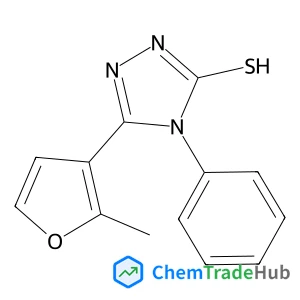
5-(2-Methyl-3-furyl)-4-phenyl-2,4-dihydro-3H-1,2,4-triazole-3-thione
CAS Number:
346464-59-3
Molecular Formula:
C13H11N3OS
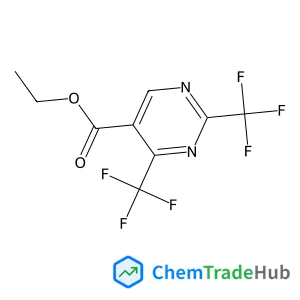
Ethyl 2,4-bis(trifluoromethyl)-5-pyrimidinecarboxylate
CAS Number:
188781-15-9
Molecular Formula:
C9H6F6N2O2
![8-Bromo-6-fluoro[1,2,4]triazolo[1,5-a]pyridin-2-amine structure](https://static.chemtradehub.com/structs/125/1257705-51-3-9f4a.webp "8-Bromo-6-fluoro[1,2,4]triazolo[1,5-a]pyridin-2-amine structure")
8-Bromo-6-fluoro[1,2,4]triazolo[1,5-a]pyridin-2-amine
CAS Number:
1257705-51-3
Molecular Formula:
C6H4BrFN4
Recommended Suppliers




Disclaimer
This page provides academic journal information for reference and research purposes only. We are not affiliated with any journal publishers and do not handle publication submissions. For publication-related inquiries, please contact the respective journal publishers directly.
If you notice any inaccuracies in the information displayed, please contact us at support@chemtradehub.com. We will promptly review and address your concerns.