












Conceptual density functional theory for electron transfer and transport in mesoscopic systems
Literature Information
Publication Date
2017-02-02
DOI
10.1039/C6CP02504H
Impact Factor
3.676
Authors
Paulo R. Bueno, David A. Miranda
View Original
Abstract
Molecular and supramolecular systems are essentially mesoscopic in character. The electron self-exchange, in the case of energy fluctuations, or electron transfer/transport, in the case of the presence of an externally driven electrochemical potential, between mesoscopic sites is energetically driven in such a manner where the electrochemical capacitance (C) is fundamental. Thus, the electron transfer/transport through channels connecting two distinct energetic (ΔE) and spatially separated mesoscopic sites is capacitively modulated. Remarkably, the relationship between the quantum conductance (G) and the standard electrochemical rate constant (kr), which is indispensable to understanding the physical and chemical characteristics governing electron exchange in molecular scale systems, was revealed to be related to C, that is, C = G/kr. Accordingly, C is the proportional missing term that controls the electron transfer/transport in mesoscopic systems in a wide-range, and equally it can be understood from first principles density functional quantum mechanical approaches. Indeed the differences in energy between states is calculated (or experimentally accessed) throughout the electrochemical capacitance as ΔE = β/C, and thus constitutes the driving force for G and/or kr, where β is only a proportional constant that includes the square of the unit electron charge times the square of the number of electron particles interchanged.
Related Literature
Self-catalyzing photoredox polymerization for recyclable polymer catalysts
Jacob J. Lessard, Georg M. Scheutz, Angie B. Korpusik, Rebecca A. Olson, C. Adrian Figg, Brent S. Sumerlin
2021-04-07
Communication
DOI: 10.1039/D1PY00208B
Construction of biodegradable core cross-linked nanoparticles from near infrared dyes encoded in polyprodrug amphiphiles and investigation of their synergistic anticancer activity
Xiaoxu Mao, Shoukui Hu, Ke Shang, Guangwei Yang, Jinhao Yan, Chao Ma, Jun Yin
2021-03-05
Paper
DOI: 10.1039/D1PY00128K
Enhancing and toughening plant oil-based polymeric materials through synergetic supramolecular and covalent interactions by introducing nucleobase-functionalized celluloses
Jianjun Li, Jiaqi Chen, Jiang Wu, Handan Lei, Yuting Tian
2021-05-24
Paper
DOI: 10.1039/D1PY00493J
Novel imino- and aryl-sulfonate based photoacid generators for the cationic ring-opening polymerization of ε-caprolactone
Xabier Lopez de Pariza, Nicolas Zivic, Fernando Ruipérez, Timothy E. Long, Haritz Sardon
2021-06-30
Paper
DOI: 10.1039/D1PY00734C
Synthesis of thermo-sensitive polymers with super narrow molecular weight distributions: PET-RAFT polymerization of N-isopropyl acrylamide mediated by cross-linked zinc porphyrins with high active site loadings
Fanfan Li, Yi Yu, Hanyu Lv, Guiting Cai, Yanwu Zhang
2021-03-22
Paper
DOI: 10.1039/D0PY01643H
The synergistic effect of rigid and flexible substituents on insertion polymerization with α-diimine nickel and palladium catalysts
Zijuan Hai, Zhou Lu, Shuaikang Li, Zhong-Yan Cao, Shengyu Dai
2021-07-30
Paper
DOI: 10.1039/D1PY00812A
Oxazoline-methacrylate graft-copolymers with upper critical solution temperature behaviour in Yubase oil
Matilde Concilio, Nga Nguyen, C. Remzi Becer
2021-05-28
Paper
DOI: 10.1039/D1PY00534K
You might also like
Compound Q&A
What precautions should be taken when handling 4-(2-Furylmethyl)thiomorpholine 1,1-dioxide (CAS: 79206-94-3)?
When handling 4-(2-Furylmethyl)thiomorpholine 1,1-dioxide (CAS: 79206-94-3), it ...
79206-94-34-(2-Furylmethyl)thi...
Compound Q&A
What precautions should be taken when handling 4-Chloro-N-[2-(4-morpholinyl)ethyl]benzamide (CAS: 71320-77-9)?
When handling 4-Chloro-N-[2-(4-morpholinyl)ethyl]benzamide (CAS: 71320-77-9), it...
71320-77-94-Chloro-N-[2-(4-mor...
Compound Q&A
How should waste containing 2-[2-(2-Methoxyethoxy)ethoxy]ethyl 4-methylbenzenesulfonate (CAS: 62921-74-8) be handled?
Waste containing this compound (CAS: 62921-74-8) should be handled according to ...
62921-74-82-[2-(2-Methoxyethox...
Compound Q&A
How should waste containing (S)-Methyl 2-amino-3-cyclohexylpropanoate be handled?
Waste containing (S)-Methyl 2-amino-3-cyclohexylpropanoate should be collected i...
40056-18-6(S)-Methyl 2-amino-3...
Compound Q&A
How is 5-({4-[(2S,4R)-4-Hydroxy-2-methyltetrahydro-2H-pyran-4-yl]-2-thienyl}sulfanyl)-1-methyl-1,3-dihydro-2H-indol-2-one (CAS: 166882-70-8) typically synthesized?
This compound can be synthesized using a multi-step process involving the conjug...
166882-70-85-({4-[(2S,4R)-4-Hyd...
Compound Q&A
Are there alternatives to (2E)-3-(3,4-Dichlorophenyl)acrylic acid (CAS: 7312-27-8) in synthesis?
There are several alternatives to (2E)-3-(3,4-Dichlorophenyl)acrylic acid in syn...
7312-27-8(2E)-3-(3,4-Dichloro...
Compound Q&A
How should Ethyl 6-(2-nitrophenyl)imidazo[2,1-b][1,3]thiazole-3-carboxylate (CAS: 925437-84-9) be stored?
Ethyl 6-(2-nitrophenyl)imidazo[2,1-b][1,3]thiazole-3-carboxylate (CAS: 925437-84...
925437-84-9Ethyl 6-(2-nitrophen...
Compound Q&A
How should waste containing 2-(1,3-Thiazol-2-yl)ethanamine (CAS: 18453-07-1) be handled?
Waste containing 2-(1,3-Thiazol-2-yl)ethanamine (CAS: 18453-07-1) should be coll...
18453-07-12-(1,3-Thiazol-2-yl)...
Compound Q&A
How is Methyl 5-iodo-2-methylbenzoate (CAS: 103440-54-6) typically synthesized?
Methyl 5-iodo-2-methylbenzoate can be synthesized through the iodination of meth...
103440-54-6Methyl 5-iodo-2-meth...
Compound Q&A
How is 5-Chloro[1,2,4]triazolo[1,5-a]pyridine (CAS: 1427399-34-5) typically synthesized?
5-Chloro[1,2,4]triazolo[1,5-a]pyridine is commonly synthesized via the condensat...
1427399-34-55-Chloro[1,2,4]triaz...
Source Journal
Physical Chemistry Chemical Physics

CiteScore:
5.5
Self-citation Rate:
10.3%
Articles per Year:
3036
Physical Chemistry Chemical Physics (PCCP) is an international journal co-owned by 19 physical chemistry and physics societies from around the world. This journal publishes original, cutting-edge research in physical chemistry, chemical physics and biophysical chemistry. To be suitable for publication in PCCP, articles must include significant innovation and/or insight into physical chemistry; this is the most important criterion that reviewers and Editors will judge against when evaluating submissions. The journal has a broad scope and welcomes contributions spanning experiment, theory, computation and data science. Topical coverage includes spectroscopy, dynamics, kinetics, statistical mechanics, thermodynamics, electrochemistry, catalysis, surface science, quantum mechanics, quantum computing and machine learning. Interdisciplinary research areas such as polymers and soft matter, materials, nanoscience, energy, surfaces/interfaces, and biophysical chemistry are welcomed if they demonstrate significant innovation and/or insight into physical chemistry. Joined experimental/theoretical studies are particularly appreciated when complementary and based on up-to-date approaches.
Recommended Compounds

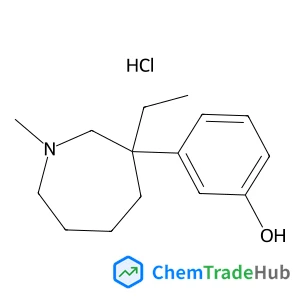
3-(3-Ethyl-1-methyl-3-azepanyl)phenol hydrochloride (1:1)
CAS Number:
59263-76-2
Molecular Formula:
C15H24ClNO
Recommended Suppliers







Disclaimer
This page provides academic journal information for reference and research purposes only. We are not affiliated with any journal publishers and do not handle publication submissions. For publication-related inquiries, please contact the respective journal publishers directly.
If you notice any inaccuracies in the information displayed, please contact us at support@chemtradehub.com. We will promptly review and address your concerns.