












The S1 ← S0 fluorescence excitation spectrum and structure of propanal in the S1 excited electronic state
Literature Information
Publication Date
2016-05-03
DOI
10.1039/C6CP02138G
Impact Factor
3.676
Authors
I. A. Godunov, N. N. Yakovlev, R. V. Terentiev, D. V. Maslov, A. V. Abramenkov
View Original
Abstract
We have obtained and analyzed the S1 ← S0 fluorescence excitation spectra of jet-cooled propanal-h1 (CH3CH2CHO) and -d1 (CH3CH2CDO). Using the results of theoretical studies of the structure of propanal molecule in the S1 lowest excited singlet electronic state, we have assigned the bands of both spectra to the vibronic transitions of the cis conformer (in the S0 ground electronic state) to the 1 and 3 conformers (in the S1 state) differed by the angle of the C2H5 ethyl group rotation around the central C–C bond. The origins of the 1 ← cis and 3 ← cis electronic transitions have been observed at 29 997 and 30 075 cm−1 for propanal-h1 and at 30 040 and 30 115 cm−1 for propanal-d1, respectively. The high activity of torsional (C2H5 ethyl groups) and inversional (CCHO/CCDO carbonyl fragments) vibrations and the intensity distribution of the bands in torsional sequences (passing through maximum) are in agreement with the theoretical prediction that the S1 ← S0 electronic excitation of the cis conformer causes (after geometrical relaxation) the pyramidalization of carbonyl fragments and the rotation of ethyl groups around the central C–C bond. A number of energy levels have been found for torsional and inversional vibrations, and also fundamentals of ν10 (CCO bend) and ν13 (CCC bend) for the both 1 and 3 conformers of propanal-h1 and -d1 have been found. Then the “experimental” potential functions of inversion for the pair of the 1 and 3 conformers have been determined. The heights of potential barriers to inversion and the angle values corresponding to the minima of potential functions of inversion are 900 cm−1 and 35° for propanal-h1 and 820 cm−1 and 34° for propanal-d1, respectively.
Related Literature
Recent advances in organocatalytic asymmetric oxa-Michael addition triggered cascade reactions
Yu Wang, Da-Ming Du
2020-08-14
Review Article
DOI: 10.1039/D0QO00631A
Gram-scale synthesis of luciferins derived from coelenterazine and original insights into their bioluminescence properties‡
Eloi P. Coutant, Sophie Goyard, Vincent Hervin, Racha Baatallah, Yves Jacob, Thierry Rose, Yves L. Janin
2019-03-07
Communication
DOI: 10.1039/C9OB00459A
Tailoring radicals by asymmetric electrochemical catalysis
2020-08-20
Highlight
DOI: 10.1039/D0QO00803F
Novel 3,4-seco-3,19-dinorspongian and 5,17-epoxy-19-norspongian diterpenes from the marine sponge Spongia sp.
Xiao-Jian Liao, Bing-Xin Zhao, Shi-Hai Xu
2020-09-17
Research Article
DOI: 10.1039/D0QO00977F
Synthesis and application of α-carbonyl nitrile oxides
Li Zhou, Huating Yan, Xin-Qi Hao
2020-07-20
Research Article
DOI: 10.1039/D0QO00780C
Cold-induced aldimine bond cleavage by Tris in Bacillus subtilis alanine racemase
Noelia Bernardo-García, Pedro A. Sánchez-Murcia, Akbar Espaillat, Siseth Martínez-Caballero, Felipe Cava, Juan A. Hermoso, Federico Gago
2019-04-08
Paper
DOI: 10.1039/C9OB00223E
I2-Catalyzed oxidative synthesis of N,4-disubstituted quinazolines and quinazoline oxides‡
Nagesh Jatangi, Radha Krishna Palakodety
2019-03-07
Communication
DOI: 10.1039/C9OB00349E
Ruthenium(ii)-catalyzed acyloxylation of the ortho-C–H bond in 2-aroyl-imidazoles with carboxylic acids‡
Chen-an Wang, Naoto Chatani
2020-08-31
Research Article
DOI: 10.1039/D0QO00920B
External-photocatalyst-free visible-light-mediated aerobic oxidation and 1,4-bisfunctionalization of N-alkyl isoquinolinium salts
Youkang Zhou, Zhiming Xing, Jiali Guan, Zhibin Song, Yiyuan Peng
2020-07-21
Research Article
DOI: 10.1039/D0QO00663G
You might also like
Compound Q&A
Is 2-(2-chloroacetamido)-3-phenylpropanoic acid (CAS: 7765-11-9) safe?
2-(2-Chloroacetamido)-3-phenylpropanoic acid (CAS: 7765-11-9) is generally consi...
7765-11-92-(2-chloroacetamido...
Compound Q&A
Is 2-(Benzyloxy)-5-bromobenzoic acid (CAS: 62176-31-2) safe?
2-(Benzyloxy)-5-bromobenzoic acid can be handled safely if appropriate precautio...
62176-31-22-(Benzyloxy)-5-brom...
Compound Q&A
What is (4-Methyl-1,2,5-oxadiazol-3-yl)methanamine hydrochloride (CAS: 1159825-48-5)?
(4-Methyl-1,2,5-oxadiazol-3-yl)methanamine hydrochloride is a chemical compound ...
1159825-48-5(4-Methyl-1,2,5-oxad...
Compound Q&A
What is 2-(5-Hexylthiophen-2-yl)-4,4,5,5-tetramethyl-1,3,2-dioxaborolane (CAS: 917985-54-7)?
2-(5-Hexylthiophen-2-yl)-4,4,5,5-tetramethyl-1,3,2-dioxaborolane (CAS: 917985-54...
917985-54-72-(5-Hexylthiophen-2...
Compound Q&A
Are there alternatives to 4-(8-Methyl-9H-1,3-dioxolo[4,5-h][2,3]benzodiazepin-5-yl)benzenamine (CAS: 102771-26-6) in synthesis?
While 4-(8-Methyl-9H-1,3-dioxolo[4,5-h][2,3]benzodiazepin-5-yl)benzenamine (CAS:...
102771-26-64-(8-Methyl-9H-1,3-d...
Compound Q&A
What is the market or research trend for tert-butyl 3-hydroxy-4,5,7,8-tetrahydro-2H-pyrazolo[3,4-d]azepine-6-carboxylate (CAS: 851376-80-2)?
The market for tert-butyl 3-hydroxy-4,5,7,8-tetrahydro-2H-pyrazolo[3,4-d]azepine...
851376-80-2tert-butyl 3-hydroxy...
Compound Q&A
How should waste containing 3,5-Diamino-1H-pyrazole-4-carbonitrile (CAS: 6844-58-2) be handled?
Waste containing 3,5-Diamino-1H-pyrazole-4-carbonitrile (CAS: 6844-58-2) should ...
6844-58-23,5-Diamino-1H-pyraz...
Compound Q&A
How is (6-Fluoro-3-pyridinyl)boronic acid (CAS: 351019-18-6) typically synthesized?
(6-Fluoro-3-pyridinyl)boronic acid can be synthesized through the reaction of 6-...
351019-18-6(6-Fluoro-3-pyridiny...
Compound Q&A
What industries use Dibenzyl carbonimidoylbiscarbamate (CAS: 10065-79-9)?
Dibenzyl carbonimidoylbiscarbamate (CAS: 10065-79-9) finds applications in vario...
10065-79-9Dibenzyl carbonimido...
Compound Q&A
What is the market or research trend for (beta,beta,2,3,4,5,6-~2~H_7_)Phenylalanine (CAS: 74228-83-4)?
The market for (beta,beta,2,3,4,5,6-~2~H_7_)Phenylalanine (CAS: 74228-83-4) is g...
74228-83-4(beta,beta,2,3,4,5,6...
Source Journal
Physical Chemistry Chemical Physics

CiteScore:
5.5
Self-citation Rate:
10.3%
Articles per Year:
3036
Physical Chemistry Chemical Physics (PCCP) is an international journal co-owned by 19 physical chemistry and physics societies from around the world. This journal publishes original, cutting-edge research in physical chemistry, chemical physics and biophysical chemistry. To be suitable for publication in PCCP, articles must include significant innovation and/or insight into physical chemistry; this is the most important criterion that reviewers and Editors will judge against when evaluating submissions. The journal has a broad scope and welcomes contributions spanning experiment, theory, computation and data science. Topical coverage includes spectroscopy, dynamics, kinetics, statistical mechanics, thermodynamics, electrochemistry, catalysis, surface science, quantum mechanics, quantum computing and machine learning. Interdisciplinary research areas such as polymers and soft matter, materials, nanoscience, energy, surfaces/interfaces, and biophysical chemistry are welcomed if they demonstrate significant innovation and/or insight into physical chemistry. Joined experimental/theoretical studies are particularly appreciated when complementary and based on up-to-date approaches.
Recommended Compounds
![19-[Chloro(dideuterio)methyl]-19-deuterio-20,20-dideuteriooxyoctatriacontane-18,21-dione structure](https://static.chemtradehub.com/structs/124/1246818-85-8-6244.webp "19-[Chloro(dideuterio)methyl]-19-deuterio-20,20-dideuteriooxyoctatriacontane-18,21-dione structure")
19-[Chloro(dideuterio)methyl]-19-deuterio-20,20-dideuteriooxyoctatriacontane-18,21-dione
CAS Number:
1246818-85-8
Molecular Formula:
C39H75ClO4
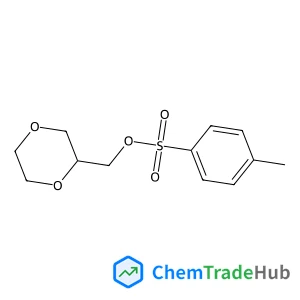
(S)-(1,4-Dioxan-2-yl)methyl 4-methylbenzenesulfonate
CAS Number:
917882-64-5
Molecular Formula:
C12H16O5S
Recommended Suppliers





Disclaimer
This page provides academic journal information for reference and research purposes only. We are not affiliated with any journal publishers and do not handle publication submissions. For publication-related inquiries, please contact the respective journal publishers directly.
If you notice any inaccuracies in the information displayed, please contact us at support@chemtradehub.com. We will promptly review and address your concerns.