












External-photocatalyst-free visible-light-mediated aerobic oxidation and 1,4-bisfunctionalization of N-alkyl isoquinolinium salts
Literature Information
Publication Date
2020-07-21
DOI
10.1039/D0QO00663G
Impact Factor
5.281
Authors
Youkang Zhou, Zhiming Xing, Jiali Guan, Zhibin Song, Yiyuan Peng
View Original
Abstract
Visible-light-mediated aerobic alternate transformations of N-alkyl isoquinolinium/quinolinium salts in the absence of any extra added photocatalyst are reported. Here, a highly concise, sustainable and low-cost protocol to produce unsaturated lactams from oxidation of their corresponding isoquinolinium or quinolinium salts using air as an oxidant was developed. As important building blocks for further modification of biologically active isoquinolones, 4-iodoisoquinolinones were also produced through 1,4-bisfunctionalization of isoquinolinium salts without the use of any transition metal. Gram-scale synthesis was achieved under sunlight with exposure to the open air. Mechanism studies suggested that singlet oxygen generation triggered by isoquinolinium/quinolinium salts under visible light irradiation and trace water may lead to multiple pathways for the aerobic transformations of N-alkyl iminium salts.
Related Literature
Ferromagnetism in nitrogen-doped BaO: a self-interaction corrected DFT study
Elisa Albanese, Gianfranco Pacchioni
2016-12-22
Paper
DOI: 10.1039/C6CP07535E
Luminophores of tunable colors from ternary Ag–In–S and quaternary Ag–In–Zn–S nanocrystals covering the visible to near-infrared spectral range
Grzegorz Gabka, Piotr Bujak, Kamil Kotwica, Andrzej Ostrowski, Wojciech Lisowski, Janusz W. Sobczak, Adam Pron
2016-12-02
Paper
DOI: 10.1039/C6CP07008F
Controlling photophysics of styrylnaphthalimides through TICT, fluorescence and E,Z-photoisomerization interplay
Antonina N. Arkhipova, Yuri V. Fedorov, Marina A. Zakharko, Dmitry E. Arkhipov, Gediminas Jonusauskas
2016-11-30
Paper
DOI: 10.1039/C6CP07255K
Enhanced electrooxidation of glucose at nano-chitosan–NiOOH modified GC electrode: fuel blends and hydrocarbon impurities
Christina Roth
2016-12-22
Paper
DOI: 10.1039/C6CP08360A
Do primary carriers of both positive charge and unpaired electron spin exist in irradiated propylene carbonate?
2016-12-08
Communication
DOI: 10.1039/C6CP07477D
Second-order nonlinear optical properties of bulk GeC polytypes, g-GeC and corresponding nanotubes: first-principles calculations
Dongshan Wei
2016-12-14
Paper
DOI: 10.1039/C6CP07573H
On the ionophoric selectivity of nonactin and related macrotetrolide derivatives
Bruno Martínez-Haya, Juan Ramón Avilés-Moreno, Said Hamad, José Elguero
2016-12-06
Paper
DOI: 10.1039/C6CP05324F
Substituent effects on the relaxation dynamics of furan, furfural and β-furfural: a combined theoretical and experimental approach
Sven Oesterling, Oliver Schalk, Ting Geng, Richard D. Thomas, Tony Hansson, Regina de Vivie-Riedle
2016-12-16
Paper
DOI: 10.1039/C6CP06240G
ψ-Phosphorene: a new allotrope of phosphorene
Haidi Wang, Zhao Liu
2016-12-19
Paper
DOI: 10.1039/C6CP07944J
You might also like
Compound Q&A
Is 2-(2-chloroacetamido)-3-phenylpropanoic acid (CAS: 7765-11-9) safe?
2-(2-Chloroacetamido)-3-phenylpropanoic acid (CAS: 7765-11-9) is generally consi...
7765-11-92-(2-chloroacetamido...
Compound Q&A
Is 2-(Benzyloxy)-5-bromobenzoic acid (CAS: 62176-31-2) safe?
2-(Benzyloxy)-5-bromobenzoic acid can be handled safely if appropriate precautio...
62176-31-22-(Benzyloxy)-5-brom...
Compound Q&A
What is (4-Methyl-1,2,5-oxadiazol-3-yl)methanamine hydrochloride (CAS: 1159825-48-5)?
(4-Methyl-1,2,5-oxadiazol-3-yl)methanamine hydrochloride is a chemical compound ...
1159825-48-5(4-Methyl-1,2,5-oxad...
Compound Q&A
What is 2-(5-Hexylthiophen-2-yl)-4,4,5,5-tetramethyl-1,3,2-dioxaborolane (CAS: 917985-54-7)?
2-(5-Hexylthiophen-2-yl)-4,4,5,5-tetramethyl-1,3,2-dioxaborolane (CAS: 917985-54...
917985-54-72-(5-Hexylthiophen-2...
Compound Q&A
Are there alternatives to 4-(8-Methyl-9H-1,3-dioxolo[4,5-h][2,3]benzodiazepin-5-yl)benzenamine (CAS: 102771-26-6) in synthesis?
While 4-(8-Methyl-9H-1,3-dioxolo[4,5-h][2,3]benzodiazepin-5-yl)benzenamine (CAS:...
102771-26-64-(8-Methyl-9H-1,3-d...
Compound Q&A
What is the market or research trend for tert-butyl 3-hydroxy-4,5,7,8-tetrahydro-2H-pyrazolo[3,4-d]azepine-6-carboxylate (CAS: 851376-80-2)?
The market for tert-butyl 3-hydroxy-4,5,7,8-tetrahydro-2H-pyrazolo[3,4-d]azepine...
851376-80-2tert-butyl 3-hydroxy...
Compound Q&A
How should waste containing 3,5-Diamino-1H-pyrazole-4-carbonitrile (CAS: 6844-58-2) be handled?
Waste containing 3,5-Diamino-1H-pyrazole-4-carbonitrile (CAS: 6844-58-2) should ...
6844-58-23,5-Diamino-1H-pyraz...
Compound Q&A
How is (6-Fluoro-3-pyridinyl)boronic acid (CAS: 351019-18-6) typically synthesized?
(6-Fluoro-3-pyridinyl)boronic acid can be synthesized through the reaction of 6-...
351019-18-6(6-Fluoro-3-pyridiny...
Compound Q&A
What industries use Dibenzyl carbonimidoylbiscarbamate (CAS: 10065-79-9)?
Dibenzyl carbonimidoylbiscarbamate (CAS: 10065-79-9) finds applications in vario...
10065-79-9Dibenzyl carbonimido...
Compound Q&A
What is the market or research trend for (beta,beta,2,3,4,5,6-~2~H_7_)Phenylalanine (CAS: 74228-83-4)?
The market for (beta,beta,2,3,4,5,6-~2~H_7_)Phenylalanine (CAS: 74228-83-4) is g...
74228-83-4(beta,beta,2,3,4,5,6...
Source Journal
Organic Chemistry Frontiers

CiteScore:
7.8
Self-citation Rate:
8.7%
Articles per Year:
724
Organic Chemistry Frontiers publishes high-quality research from across organic chemistry. Emphases are placed on studies that make significant contributions to the field of organic chemistry by reporting either new or significantly improved protocols or methodologies. Topics include, but are not limited to the following: Organic synthesis Development of synthetic methodologies Catalysis Natural products Functional organic materials Supramolecular and macromolecular chemistry Physical and computational organic chemistry
Recommended Compounds
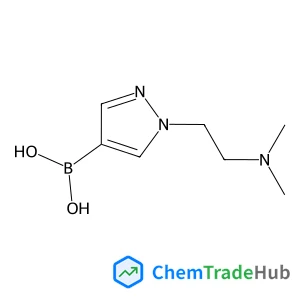
(1-(2-(Dimethylamino)ethyl)-1H-pyrazol-4-yl)boronic acid
CAS Number:
1086063-73-1
Molecular Formula:
C7H14BN3O2
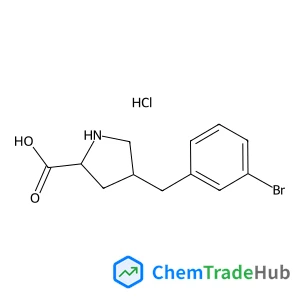
(2S,4R)-4-(3-Bromobenzyl)pyrrolidine-2-carboxylic acid hydrochloride
CAS Number:
1049734-10-2
Molecular Formula:
C12H15BrClNO2
Recommended Suppliers





Disclaimer
This page provides academic journal information for reference and research purposes only. We are not affiliated with any journal publishers and do not handle publication submissions. For publication-related inquiries, please contact the respective journal publishers directly.
If you notice any inaccuracies in the information displayed, please contact us at support@chemtradehub.com. We will promptly review and address your concerns.