












A comparative first-principles study of the lithiation, sodiation, and magnesiation of black phosphorus for Li-, Na-, and Mg-ion batteries
Literature Information
Publication Date
2016-07-11
DOI
10.1039/C6CP02049F
Impact Factor
3.676
Authors
K. P. S. S. Hembram, Hyun Jung, Byung Chul Yeo, Sung Jin Pai, Heon Ju Lee, Kwang-Ryeol Lee, Sang Soo Han
View Original
Abstract
Using first-principles calculations, we describe and compare atomistic lithiation, sodiation, and magnesiation processes in black phosphorous with a layered structure similar to graphite for Li-, Na-, and Mg-ion batteries because graphite is not considered to be an electrode material for Na- and Mg-ion batteries. The three processes are similar in that an intercalation mechanism occurs at low Li/Na/Mg concentrations, and then further insertion of Li/Na/Mg leads to a change from the intercalation mechanism to an alloying process. Li and Mg show a columnar intercalation mechanism and prefer to locate in different phosphorene layers, while Na shows a planar intercalation mechanism and preferentially localizes in the same layer. In addition, we compare the mechanical properties of black phosphorous during lithiation, sodiation, and magnesiation. Interestingly, lithiation and sodiation at high concentrations (Li2P and Na2P) lead to the softening of black phosphorous, whereas magnesiation shows a hardening phenomenon. In addition, the diffusion of Li/Na/Mg in black phosphorus during the intercalation process is an easy process along one-dimensional channels in black phosphorus with marginal energy barriers. The diffusion of Li has a lower energy barrier in black phosphorus than in graphite.
Related Literature
CO2 adsorption–desorption performance of mesoporous zirconium hydroxide with robust water durability
Y. Kamimura, A. Endo
2015-12-16
Paper
DOI: 10.1039/C5CP05211D
The fabrication of In2O3/In2S3/Ag nanocubes for efficient photoelectrochemical water splitting
Rui Xu, Haohua Li, Wenwen Zhang, Zepeng Yang, Guiwu Liu, Ziwei Xu, Haicheng Shao
2015-12-17
Paper
DOI: 10.1039/C5CP05833C
Theoretical analysis of NMR shieldings in XSe and XTe (X = Si, Ge, Sn and Pb): the spin-rotation constant saga
2015-12-21
Paper
DOI: 10.1039/C5CP07025B
Heteroatom substituted and decorated graphene: preparation and applications
Nan Chen, Xianke Huang, Liangti Qu
2015-10-01
Perspective
DOI: 10.1039/C5CP04391C
Phase transition behaviors of the supported DPPC bilayer investigated by sum frequency generation (SFG) vibrational spectroscopy and atomic force microscopy (AFM)
Heng-Liang Wu, Yujin Tong, Qiling Peng, Na Li, Shen Ye
2015-10-02
Paper
DOI: 10.1039/C5CP04960A
A real-space stochastic density matrix approach for density functional electronic structure
2015-05-08
Paper
DOI: 10.1039/C5CP01222H
The influence of active site conformations on the hydride transfer step of the thymidylate synthase reaction mechanism
Amnon Kohen, Vicent Moliner
2015-04-02
Paper
DOI: 10.1039/C5CP01239B
Molecular design of electron transport with orbital rule: toward conductance-decay free molecular junctions
Tomofumi Tada, Kazunari Yoshizawa
2015-10-30
Perspective
DOI: 10.1039/C5CP05423K
A zero dimensional model of lithium–sulfur batteries during charge and discharge
Monica Marinescu, Teng Zhang, Gregory J. Offer
2015-11-12
Paper
DOI: 10.1039/C5CP05755H
Relaxation dynamics of deeply supercooled confined water in l,l-diphenylalanine micro/nanotubes
P. M. G. L. Ferreira, M. S. Ishikawa, S. Kogikoski, Jr., W. A. Alves, H. Martinho
2015-06-01
Paper
DOI: 10.1039/C5CP01055A
You might also like
Compound Q&A
How should waste containing (6-Bromo-2-naphthyl)oxy](dimethyl)(2-methyl-2-propanyl)silane be handled?
Waste containing (6-Bromo-2-naphthyl)oxy](dimethyl)(2-methyl-2-propanyl)silane (...
100751-65-3[(6-Bromo-2-naphthyl...
Compound Q&A
How is 7-Fluoro-4-isoquinolinecarboxylic acid (CAS: 1841081-40-0) typically synthesized?
7-Fluoro-4-isoquinolinecarboxylic acid can be synthesized via a multi-step proce...
1841081-40-07-Fluoro-4-isoquinol...
Compound Q&A
What are the physical and chemical properties of 2,3,5,6-Tetrabromothieno[3,2-b]thiophene (CAS: 124638-53-5)?
2,3,5,6-Tetrabromothieno[3,2-b]thiophene is a crystalline compound with a high m...
124638-53-52,3,5,6-Tetrabromoth...
Compound Q&A
Is 1-[4-(Benzylamino)-7,8-dihydro-5H-pyrano[4,3-d]pyrimidin-2-yl]-2-methyl-1H-indole-4-carboxamide (CAS: 1542705-92-9) safe?
1-[4-(Benzylamino)-7,8-dihydro-5H-pyrano[4,3-d]pyrimidin-2-yl]-2-methyl-1H-indol...
1542705-92-91-[4-(Benzylamino)-7...
Compound Q&A
What is the market or research trend for imidazo[5,1-d]-1,2,3,5-tetrazine-8-carboxylic acid, 3,4-dihydro-3-methyl-4-oxo- (CAS: 113942-30-6)?
The market for imidazo[5,1-d]-1,2,3,5-tetrazine-8-carboxylic acid, 3,4-dihydro-3...
113942-30-6Imidazo[5,1-d]-1,2,3...
Compound Q&A
What is 3-(Triisopropylsilyl)propiolaldehyde (CAS: 163271-80-5)?
3-(Triisopropylsilyl)propiolaldehyde is a synthetic organic compound with the CA...
163271-80-53-(Triisopropylsilyl...
Compound Q&A
What regulatory guidelines apply to 6-Nitro-2H-1,4-benzoxazin-3(4H)-one (CAS: 81721-87-1)?
6-Nitro-2H-1,4-benzoxazin-3(4H)-one (CAS: 81721-87-1) is subject to various regu...
81721-87-16-Nitro-2H-1,4-benzo...
Compound Q&A
How should waste containing (3-Fluorophenyl)(4-{[(2-methyl-2-propanyl)oxy]carbonyl}-1-piperazinyl)acetic acid (CAS: 885272-91-3) be handled?
Waste containing (3-Fluorophenyl)(4-{[(2-methyl-2-propanyl)oxy]carbonyl}-1-piper...
885272-91-3(3-Fluorophenyl)(4-{...
Compound Q&A
What are the physical and chemical properties of N,N'-4,4'-Biphenyldiyldiisonicotinamide (CAS: 55119-40-9)?
N,N'-4,4'-Biphenyldiyldiisonicotinamide is a white crystalline solid with a mole...
55119-40-9N,N'-4,4'-Biphenyldi...
Compound Q&A
What industries use 6-Bromo-8-fluoro-2-quinazolinol (CAS: 1036756-15-6)?
6-Bromo-8-fluoro-2-quinazolinol is primarily used in the pharmaceutical industry...
1036756-15-66-Bromo-8-fluoro-2-q...
Source Journal
Physical Chemistry Chemical Physics

CiteScore:
5.5
Self-citation Rate:
10.3%
Articles per Year:
3036
Physical Chemistry Chemical Physics (PCCP) is an international journal co-owned by 19 physical chemistry and physics societies from around the world. This journal publishes original, cutting-edge research in physical chemistry, chemical physics and biophysical chemistry. To be suitable for publication in PCCP, articles must include significant innovation and/or insight into physical chemistry; this is the most important criterion that reviewers and Editors will judge against when evaluating submissions. The journal has a broad scope and welcomes contributions spanning experiment, theory, computation and data science. Topical coverage includes spectroscopy, dynamics, kinetics, statistical mechanics, thermodynamics, electrochemistry, catalysis, surface science, quantum mechanics, quantum computing and machine learning. Interdisciplinary research areas such as polymers and soft matter, materials, nanoscience, energy, surfaces/interfaces, and biophysical chemistry are welcomed if they demonstrate significant innovation and/or insight into physical chemistry. Joined experimental/theoretical studies are particularly appreciated when complementary and based on up-to-date approaches.
Recommended Compounds
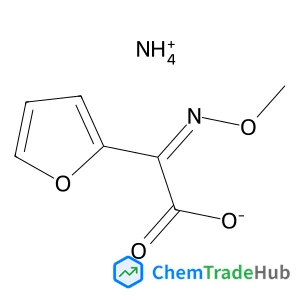
Ammonium (Z)-2-(furan-2-yl)-2-(methoxyimino)acetate
CAS Number:
97148-39-5
Molecular Formula:
C7H10N2O4



Recommended Suppliers






Disclaimer
This page provides academic journal information for reference and research purposes only. We are not affiliated with any journal publishers and do not handle publication submissions. For publication-related inquiries, please contact the respective journal publishers directly.
If you notice any inaccuracies in the information displayed, please contact us at support@chemtradehub.com. We will promptly review and address your concerns.