












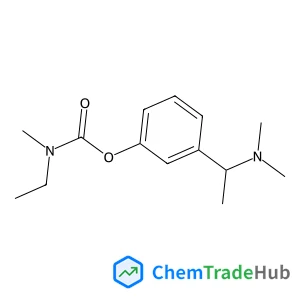
Highly-oriented molecular arrangements and enhanced magnetic interactions in thin films of CoTTDPz using PTCDA templates
Literature Information
Publication Date
2016-05-09
DOI
10.1039/C6CP01932C
Impact Factor
3.676
Authors
Keitaro Eguchi, Chihiro Nanjo
View Original
Abstract
In the present work, the templating effect of thin layers of perylene-3,4,9,10-tetracarboxylic dianhydride (PTCDA) on the growth of cobalt tetrakis(thiadiazole)porphyrazine (CoTTDPz) thin films was examined. X-ray diffraction and optical absorption spectra indicate that while CoTTDPz forms amorphous thin films on the bare substrates, it forms crystalline thin films on the PTCDA templates, in which the molecular planes of CoTTDPz are considered to be parallel to the substrates. Magnetic measurements reveal a significantly enhanced antiferromagnetic interaction of CoTTDPz in the templated thin films, with values reaching over 13 K. The ability to generate crystalline films and to control their orientation using molecular templates is an important strategy in the fields of organic electronics and spintronics in order to tailor the physical properties of organic thin films to suit their intended application.
Related Literature
Highly thermal conductive resins formed from wide-temperature-range eutectic mixtures of liquid crystalline epoxies bearing diglycidyl moieties at the side positions
Hyeonuk Yeo, Nam-Ho You, Se Gyu Jang, Seokhoon Ahn, Kwang-Un Jeong, Seung Hee Lee, Munju Goh
2017-04-05
Paper
DOI: 10.1039/C7PY00243B
Reverse micelles based on β-cyclodextrin-incorporated amphiphilic polyurethane copolymers for protein delivery
Xiaoxu Du, Nan Song, Ying-Wei Yang, Guolin Wu, Jianbiao Ma, Hui Gao
2014-05-07
Paper
DOI: 10.1039/C4PY00278D
Tailoring the properties of polypropylene in the polymerization reactor using polymeric nucleating agents as prepolymers on the Ziegler–Natta catalyst granule
Claudio De Rosa, Finizia Auriemma, Oreste Tarallo, Rocco Di Girolamo, Enrico M. Troisi, Simona Esposito, Dario Liguori, Fabrizio Piemontesi, Gianni Vitale, Giampiero Morini
2016-12-23
Communication
DOI: 10.1039/C6PY01950A
Synthesis of cardo-polymers using Tröger's base formation
Mariolino Carta, Matthew Croad, Johannes C. Jansen, Paola Bernardo, Gabriele Clarizia, Neil B. McKeown
2014-06-20
Paper
DOI: 10.1039/C4PY00607K
Macroporous uniform azide- and alkyne-functional polymer microspheres with tuneable surface area: synthesis, in-depth characterization and click-modification
Marco Albuszis, Peter J. Roth, Werner Pauer, Hans-Ulrich Moritz
2014-06-17
Paper
DOI: 10.1039/C4PY00709C
The living anionic polymerization of activated aziridines: a systematic study of reaction conditions and kinetics
Elisabeth Rieger, Tassilo Gleede, Katja Weber, Angelika Manhart, Manfred Wagner, Frederik R. Wurm
2017-04-06
Paper
DOI: 10.1039/C7PY00436B
Self-healable polymer gels with multi-responsiveness of gel–sol–gel transition and degradability
Ruixue Chang, Heng An, Xu Li, Ruyi Zhou, Jianglei Qin, Yuelan Tian, Kuilin Deng
2017-01-10
Paper
DOI: 10.1039/C6PY02122K
RAFT/MADIX emulsion copolymerization of vinyl acetate and N-vinylcaprolactam: towards waterborne physically crosslinked thermoresponsive particles
Laura Etchenausia, Abdel Khoukh, Elise Deniau Lejeune, Maud Save
2017-03-16
Paper
DOI: 10.1039/C7PY00221A
Conformation pre-organization in fluorene-based conjugated polymer for simultaneous enhancement of luminescence and charge mobility
Juxin He, Luyang Du, Cong Wang, Mingjian Jiang, Linlin Liu, Yueqi Mo, Zengqi Xie, Bing Yang, Yuguang Ma
2017-01-11
Paper
DOI: 10.1039/C6PY01995A
You might also like
Compound Q&A
What regulatory guidelines apply to 4-Amino-3-bromophenol (CAS: 74440-80-5)?
4-Amino-3-bromophenol (CAS: 74440-80-5) falls under the classification of a haza...
74440-80-54-Amino-3-bromopheno...
Compound Q&A
How should (17beta)-3-Oxoestr-4-en-17-yl acetate (CAS: 1425-10-1) be stored?
(17beta)-3-Oxoestr-4-en-17-yl acetate should be stored in a cool, dry place away...
1425-10-1(17beta)-3-Oxoestr-4...
Compound Q&A
What are the physical and chemical properties of 2-[(2,2-Diethoxyethyl)disulfanyl]-1,1-diethoxyethane (CAS: 76505-71-0)?
2-[(2,2-Diethoxyethyl)disulfanyl]-1,1-diethoxyethane (CAS: 76505-71-0) is a colo...
76505-71-02-[(2,2-Diethoxyethy...
Compound Q&A
What is the market or research trend for 1-(β-D-ribofuranosyl)-1H-imidazo[4,5-c]pyridin-4-amine?
The market and research for 1-(β-D-ribofuranosyl)-1H-imidazo[4,5-c]pyridin-4-ami...
6736-58-91-(beta-D-Ribofurano...
Compound Q&A
How should waste containing Conjugated Estrogen (CAS: 12126-59-9) be handled?
Waste containing Conjugated Estrogen (CAS: 12126-59-9) should be collected and d...
12126-59-9Conjugated Estrogen
Compound Q&A
What is the market or research trend for Bis(2,2,2-trifluoroethyl) (methoxycarbonylmethyl)phosphonate?
The market for Bis(2,2,2-trifluoroethyl) (methoxycarbonylmethyl)phosphonate (CAS...
88738-78-7Bis(2,2,2-trifluoroe...
Compound Q&A
Are there alternatives to 3,4'-Di-O-methylellagic acid (CAS: 57499-59-9) in synthesis?
There are several alternatives to 3,4'-Di-O-methylellagic acid (CAS: 57499-59-9)...
57499-59-93,4'-Di-O-methylella...
Compound Q&A
What regulatory guidelines apply to 2-Chloro-N,N-dimethylpyridin-4-amine (CAS: 59047-70-0)?
2-Chloro-N,N-dimethylpyridin-4-amine (CAS: 59047-70-0) is regulated under the Gl...
59047-70-02-Chloro-N,N-dimethy...
Compound Q&A
What is cerium(3+);oxygen(2-);vanadium(5+) (CAS: 13597-19-8)?
Cerium(3+);oxygen(2-);vanadium(5+) (CAS: 13597-19-8) is a complex inorganic comp...
13597-19-8cerium(3+);oxygen(2-...
Compound Q&A
Is 7-Chloro-1-iodoisoquinoline (CAS: 1203579-27-4) safe?
7-Chloro-1-iodoisoquinoline (CAS: 1203579-27-4) is generally considered safe whe...
1203579-27-47-Chloro-1-iodoisoqu...
Source Journal
Physical Chemistry Chemical Physics

CiteScore:
5.5
Self-citation Rate:
10.3%
Articles per Year:
3036
Physical Chemistry Chemical Physics (PCCP) is an international journal co-owned by 19 physical chemistry and physics societies from around the world. This journal publishes original, cutting-edge research in physical chemistry, chemical physics and biophysical chemistry. To be suitable for publication in PCCP, articles must include significant innovation and/or insight into physical chemistry; this is the most important criterion that reviewers and Editors will judge against when evaluating submissions. The journal has a broad scope and welcomes contributions spanning experiment, theory, computation and data science. Topical coverage includes spectroscopy, dynamics, kinetics, statistical mechanics, thermodynamics, electrochemistry, catalysis, surface science, quantum mechanics, quantum computing and machine learning. Interdisciplinary research areas such as polymers and soft matter, materials, nanoscience, energy, surfaces/interfaces, and biophysical chemistry are welcomed if they demonstrate significant innovation and/or insight into physical chemistry. Joined experimental/theoretical studies are particularly appreciated when complementary and based on up-to-date approaches.
Recommended Compounds
Recommended Suppliers




Disclaimer
This page provides academic journal information for reference and research purposes only. We are not affiliated with any journal publishers and do not handle publication submissions. For publication-related inquiries, please contact the respective journal publishers directly.
If you notice any inaccuracies in the information displayed, please contact us at support@chemtradehub.com. We will promptly review and address your concerns.