



Conformation pre-organization in fluorene-based conjugated polymer for simultaneous enhancement of luminescence and charge mobility
Literature Information
Publication Date
2017-01-11
DOI
10.1039/C6PY01995A
Impact Factor
5.582
Authors
Juxin He, Luyang Du, Cong Wang, Mingjian Jiang, Linlin Liu, Yueqi Mo, Zengqi Xie, Bing Yang, Yuguang Ma
View Original
Abstract
Generally in organic electronics, high-mobility organic materials require strong intermolecular interaction for delocalized electrons, while high luminescent efficiency needs localization of excitons. Thus, simultaneous enhancement of luminescent efficiency and charge mobility are theoretically difficult. In this work the simultaneous enhancement was realized by aggregation induced complanation in conformation pre-organization of a fluorene-based copolymer. Polymer chain conformation has been tesitifed as tending to be more planar in a poor solvent induced aggregate than in a good solvent, which is the same as that in an excited and charged state. This complanation effectively decreases conformation relaxation during excitation and charge transfer, which simultaneously enhances emission efficiency and charge mobility, and eventually improves electroluminescent efficiency in the PLED. This result will inspire new ideas for conjugated polymers, especially in processing film fabrication for high efficiency devices.
Recommended Journals

Russian Journal of General Chemistry

Russian Journal of Applied Chemistry

Russian Journal of Organic Chemistry

Crystallography Reports

Journal of Peptide Science

New Journal of Chemistry

Chemistry Education Research and Practice

Saudi Pharmaceutical Journal

Current Opinion in Colloid & Interface Science

Journal of Natural Medicines
Related Literature
HERFD-XANES probes of electronic structures of ironII/III carbene complexes
Om Prakash, Hao Fan, Lisa H. M. de Groot, Valtýr Freyr Hlynsson, Simon Kaufhold, Olga Gordivska, Nicolás Velásquez, Pavel Chabera, Pieter Glatzel, Kenneth Wärnmark, Petter Persson, Jens Uhlig
2020-04-16
Paper
DOI: 10.1039/C9CP06309A
Dissociative chemisorption of O2 on Agn and Agn−1Ir (n = 3–26) clusters: a first-principle study
Chuangchuang Wang, Yongpeng Yang, Xiaojing Liu, Yuanjie Li, Dandan Song, Yun Tian, Zhaojun Zhang
2020-04-06
Paper
DOI: 10.1039/D0CP01005G
Anti-parallel dimer and tetramer formation of cyclic and open structure tertiary amides, N-methyl-2-pyrrolidone and N,N-dimethylacetamide, in solution of a non-polar solvent, benzene
Ayana Tagawa, Toshiyuki Shikata
2019-09-16
Paper
DOI: 10.1039/C9CP02500F
Multi-conformational monomer and dimer steady-states in domains of a few molecules: the consequences on the phosphorescence emission bands
Gustavo H. R. Soares, Guilherme A. M. Jardim, Eufrânio N. da Silva Júnior, Luiz A. Cury
2019-09-16
Paper
DOI: 10.1039/C9CP04706A
Detailed mechanism and kinetics of the reaction of Criegee intermediate CH2OO with HCOOH investigated via infrared identification of conformers of hydroperoxymethyl formate and formic acid anhydride
Chen-An Chung, Jou Wei Su
2019-09-09
Paper
DOI: 10.1039/C9CP04168K
Efficient thermal- and photocatalysts made of Au nanoparticles on MgAl-layered double hydroxides for energy and environmental applications
2019-09-16
Paper
DOI: 10.1039/C9CP04445K
Molecular mechanisms for thermal degradation of CO2-loaded aqueous monoethanolamine solution: a first-principles study
Bohak Yoon, Haley M. Stowe
2019-09-25
Paper
DOI: 10.1039/C9CP04518J
Allosteric modulation of the sarcoplasmic reticulum Ca2+ ATPase by thapsigargin via decoupling of functional motions
Noureldin Saleh, Yong Wang, Poul Nissen, Kresten Lindorff-Larsen
2019-09-17
Paper
DOI: 10.1039/C9CP04736K
Probing self-associated intermolecular H-bonding using low-frequency SERS coupled with mid-IR SERS and DFT study: a case study of 2-MBA adsorbed on ZnO nanoparticles
Om Prakash, Ranjan K. Singh
2019-09-09
Paper
DOI: 10.1039/C9CP03124C
Understanding the properties of dithienylethenes functionalized for supramolecular self-assembly: a molecular modeling study
Laura Le Bras, Roxanne Berthin, Ismaïl Hamdi, Maroua Louati, Stéphane Aloïse, Michinori Takeshita
2020-03-09
Paper
DOI: 10.1039/C9CP06590C
You might also like
Compound Q&A
What are the main uses of 4-Nitrophenyl phosphate disodium salt hexahydrate (CAS: 333338-18-4)?
4-Nitrophenyl phosphate disodium salt hexahydrate is primarily used as a substra...
333338-18-44-Nitrophenyl phosph...
Compound Q&A
What are the main uses of 2-(Trifluoromethyl)-1,3-oxazole-4-carboxylic Acid (CAS: 1060816-01-4)?
2-(Trifluoromethyl)-1,3-oxazole-4-carboxylic Acid (CAS: 1060816-01-4) is widely ...
1060816-01-42-(Trifluoromethyl)-...
Compound Q&A
How should 2-Fluoro-4-biphenylcarboxylic acid (CAS: 137045-30-8) be stored?
2-Fluoro-4-biphenylcarboxylic acid should be stored in a cool, dry place at room...
137045-30-82-Fluoro-4-biphenylc...
Compound Q&A
What industries use Prednisolone-21-Carboxylic Acid (CAS: 61549-70-0)?
Prednisolone-21-Carboxylic Acid is primarily used in the pharmaceutical industry...
61549-70-0Prednisolone-21-Carb...
Compound Q&A
How should 4-(Hydrazinomethyl)-1,2,3-benzenetriol (CAS: 3614-72-0) be stored?
4-(Hydrazinomethyl)-1,2,3-benzenetriol (CAS: 3614-72-0) should be stored in a co...
3614-72-04-(Hydrazinomethyl)-...
Compound Q&A
What industries use 4-Amino-1-methyl-1H-pyrazole-5-carboxylic acid hydrochloride (CAS: 92534-70-8)?
4-Amino-1-methyl-1H-pyrazole-5-carboxylic acid hydrochloride (CAS: 92534-70-8) i...
92534-70-84-Amino-1-methyl-1H-...
Compound Q&A
What regulatory guidelines apply to dehydropachymic acid (CAS: 77012-31-8)?
Dehydropachymic acid (CAS: 77012-31-8) is regulated by various agencies. It fall...
77012-31-8Dehydropachymic acid
Compound Q&A
What is the market or research trend for 6-[(2,2-Dimethylpropanoyl)amino]nicotinic acid (CAS: 898561-66-5)?
The market and research trends for 6-[(2,2-Dimethylpropanoyl)amino]nicotinic aci...
898561-66-56-[(2,2-Dimethylprop...
Compound Q&A
How should 1,10-Phenanthroline-2,9-dicarbaldehyde (CAS: 57709-62-3) be stored?
1,10-Phenanthroline-2,9-dicarbaldehyde should be stored in a cool, dry place awa...
57709-62-31,10-Phenanthroline-...
Compound Q&A
How is 5-Carbamoyl-11-oxo-10,11-dihydro-5H-dibenzo[b,f]azepin-10-yl acetate (CAS: 113952-21-9) typically synthesized?
5-Carbamoyl-11-oxo-10,11-dihydro-5H-dibenzo[b,f]azepin-10-yl acetate can be synt...
113952-21-95-Carbamoyl-11-oxo-1...
Source Journal
Polymer Chemistry

CiteScore:
8.6
Self-citation Rate:
7.3%
Articles per Year:
457
Polymer Chemistry welcomes submissions in all areas of polymer science that have a strong focus on macromolecular chemistry. Manuscripts may cover a broad range of fields, yet no direct application focus is required.
Recommended Compounds

2,2-dideuterio-2-(3,4,5,6-tetradeuterio-2-pyridyl)acetic acid;hydrochloride
CAS Number:
1329799-67-8
Molecular Formula:
C7H2ClD6NO2
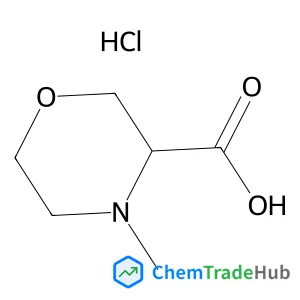
4-Methyl-3-morpholinecarboxylic acid hydrochloride (1:1)
CAS Number:
1240518-90-4
Molecular Formula:
C6H12ClNO3

Recommended Suppliers




Disclaimer
This page provides academic journal information for reference and research purposes only. We are not affiliated with any journal publishers and do not handle publication submissions. For publication-related inquiries, please contact the respective journal publishers directly.
If you notice any inaccuracies in the information displayed, please contact us at support@chemtradehub.com. We will promptly review and address your concerns.